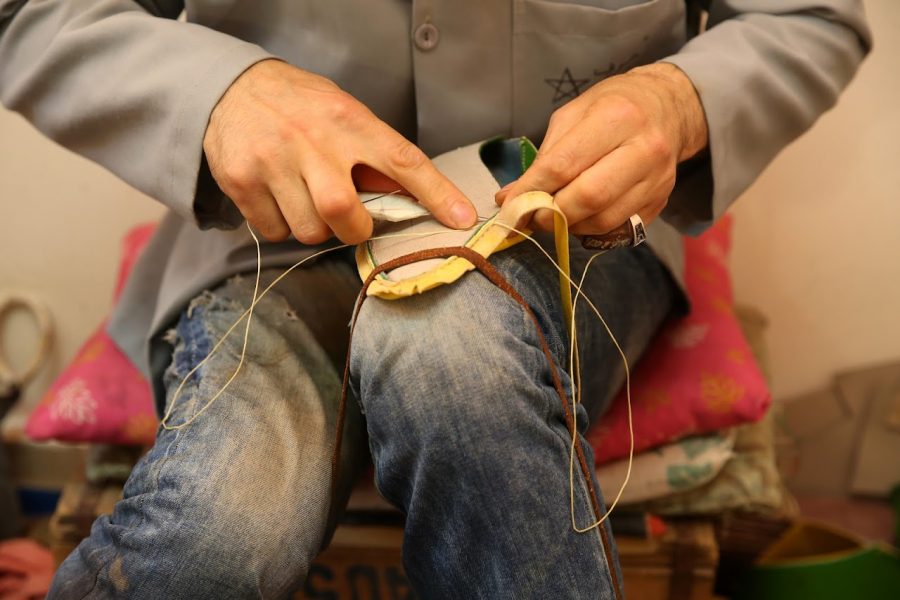
Morocco’s handicraft sector employs about 2.4 million people, or about 20 percent of the active population, contributing to the promotion of Moroccan exports with an amount of nearly 800 million dirhams annually.
Despite its good performance, the sector still suffers from a number of structural obstacles that prevent major transformations.
Obstacles for the contractors and workers are demonstrated in the weak level of governance, insufficient risk management, and lack of support in the field. Difficulties in accessing finance and markets, and the weak encouragement of Moroccans to consume local products and services also adds up to those challenges.
A digital seminar in which a number of experts were present was organized on Tuesday, by The Deposit and Governance Fund Institute organized under the question “What if the Moroccan craftsman became an entrepreneur?”.
Xavier Reilly, director of the Moroccan office at the International Finance Corporation subsidiary of the World Bank Group perceives the handicraft sector as strong in terms of creating jobs, shining the kingdom and supporting exports, which supports economic growth.
Reilly added that the handicraft industry is linked to the identity and culture of the Kingdom. It carries its DNA and highlights its diversity and richness. “When we lose knowledge related to handicraft industry in Morocco, we lose a large library,” as quoted by Hespress?
As for Tariq Seddik, General Manager of Dar Al-Sanea the traditional industry has a cultural, historical and heritage load. As it is the fruit of a hand-held knowledge shared by man for centuries, it needs modernization and adaptation to keep pace with current trends and respond to various requirements.
Seddik stated the number of transactions in the handicraft sector is about 77 billion dirhams, however most of it is achieved locally.
On the social level, the sector also contributes in the promotion and the inclusion of women in the various regions of Morocco both urban or rural.
During a period from 2021 to 2030, Morocco seeks to prepare a new strategy to revive the traditional industry sector and that is through training and modernizing the way the members of the sector work.






add your comment
Terms of publication : Not to offend the writer, people, sacred things, or attack religions or the divine self, and refrain from racist incitement and insults.