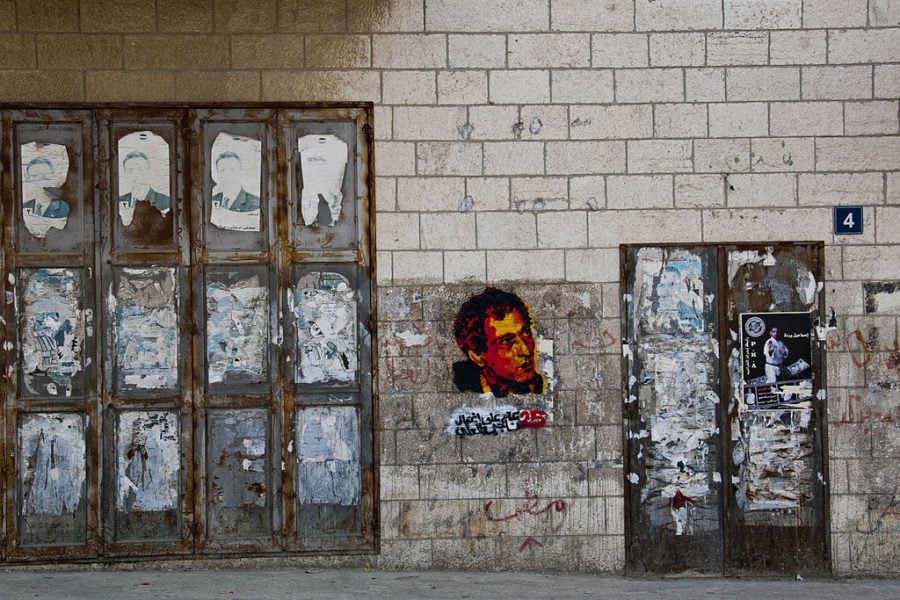
On July 22 1987, Palestinian political cartoonist Naji Al Ali was gunned outside the London offices of Kuwaiti newspaper Al-Qabas. He died five weeks later, on 29 August, at the age of 50, in Charing Cross Hospital.
Born in 1937 in Galilee, Al Ali was forced to move with his family to a refugee camp in southern Lebanon in 1948 due to the Naqba’s horrors. This, inevitably, had a profound effect on the cartoonist.
“I was a child of ten when we came to Ain al-Hilweh refugee camp. We were hungry, dazed and barefoot. Life in the camp was unbearable, full of daily humiliation, ruled by poverty and despair,” said the cartoonist.
The barefoot, destitute and deprived ten years old child haunted al Ali’s memory that he turned it into one of his most famous creations: Handala, a 10 years old boy frozen in time, a kind of refugee counterpart to Peter Pan.
« Handala was born at ten years old and will always be ten years old. At that age he left Palestine, and when Handala returns to Palestine, he will be ten years old and then begin to grow up. The laws of nature do not apply to him because he is an exception, just as losing a homeland is an exception» said Naji Al Ali.
Handala’s hands were clasped behind his back, and his back is always turned away from the viewer, “in protest of the world’s complicity in the occupation of Palestine”, according to Al Ali.
As a young man, Al Ali was detained several times by the Lebanese intelligence service, which was cracking down on political activity in the Palestinian refugee camps. During his detention, he drew on anything he could get his hands on — paper, the cell walls, and cloth.
The cartoonist worked first as a journalist in Kuwait, but his talent for drawing cartoons was quickly recognized and, from 1963 until his death, his work was published in newspapers across the Middle East.
In more than 40,000 cartoons, Al Ali, who was damning of both the Israeli and the Arab regimes, never once compromised his views. He refused to endorse any agreement that did not include the Palestinian right to all of historic Palestine.
When Naji Al-Ali was asked when we will see Handala’s face, he replied: “When Arab dignity is not threatened, and when the Arab person regains his sense of freedom and humanity.”
Thirty-four years on from Al Ali’s murder, Handala’s face is still mysterious as the identity of Al Ali’s killer.
Naji Al Ali died but Handala is immortal. He is still ten years old standing with his bare feet and crossed hands in every corner of Palestinian walls and streets. He became a symbol of resistance and hope that one day Palestinian refugees’ feet will experience the warmth of shoes, the humiliation will dissolve, their hands will be untied, their faces will be recognized, they will return to their homeland and Handala will grow up again.


add your comment
Terms of publication : Not to offend the writer, people, sacred things, or attack religions or the divine self, and refrain from racist incitement and insults.