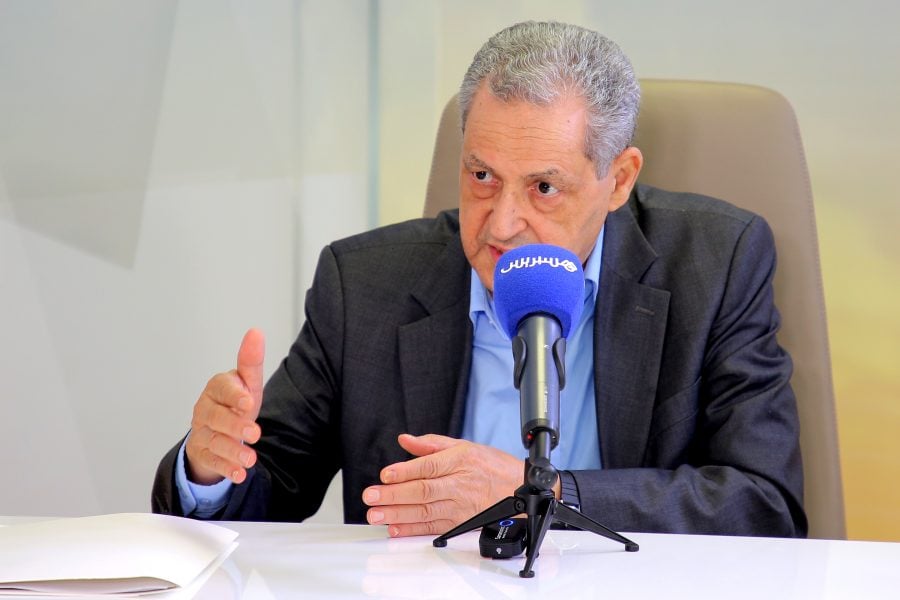
Mohand Laenser said he expects his party to come in at least third in Morocco’s legislative elections, hoping to push forward an ambitious agenda for Morocco’s underdeveloped regions, the teaching of Amazigh in schools and improving health and education.
Speaking in the second episode of a Hespress launched program on elections, Mohand Laenser said his party does not have enough weight to achieve a majority in the legislative elections, but opted to run anyways, with hopes to get some of its targets up and running.
“We prefer to achieve at least part of our electoral program, or leave things as they are,” he said. The leader of the traditionally ruralist party said his party’s campaign for the upcoming 5 years is an extension of work already done, namely to push for the inclusion of Amazigh in schools and official use in Morocco.
He criticized parties who are still reluctant about the advancement of the Amazigh language, saying: “there is a difference between discourse and practice, because there are those who still refuse to use the Tifinagh letter, and are working to distort it.”
His party’s consistent goal he said was to develop the remaining 40 percent of populations in the rural world that continues to suffer from water scarcity and poverty.
He showcased his experience as Chairman of the Council of the Fès-Meknes Region, saying under his leadership the council spent eighteen billion dirhams in five years to eliminate disparities, including roads, water, electricity and hospitals, helping associations and promoting the cultural field.
But he said the government scene in Morocco is lacking harmony among members of the government, “there is a big problem that some ministers carry out individual work within the government, and when the government’s outcome is presented, it is presented as the outcome of each sector and not as the outcome of the government as a whole.”
The same party actor added that the problem of poor coordination between government sectors “refers to the system as a whole,” noting that this matter was what prompted the change of Prime Ministers.”
In the 2016 elections, the Popular Movement won 27 seats, which represents a loss of 5 seats compared to the 2011 election and 14 seats compared to the 2007 election.






add your comment
Terms of publication : Not to offend the writer, people, sacred things, or attack religions or the divine self, and refrain from racist incitement and insults.