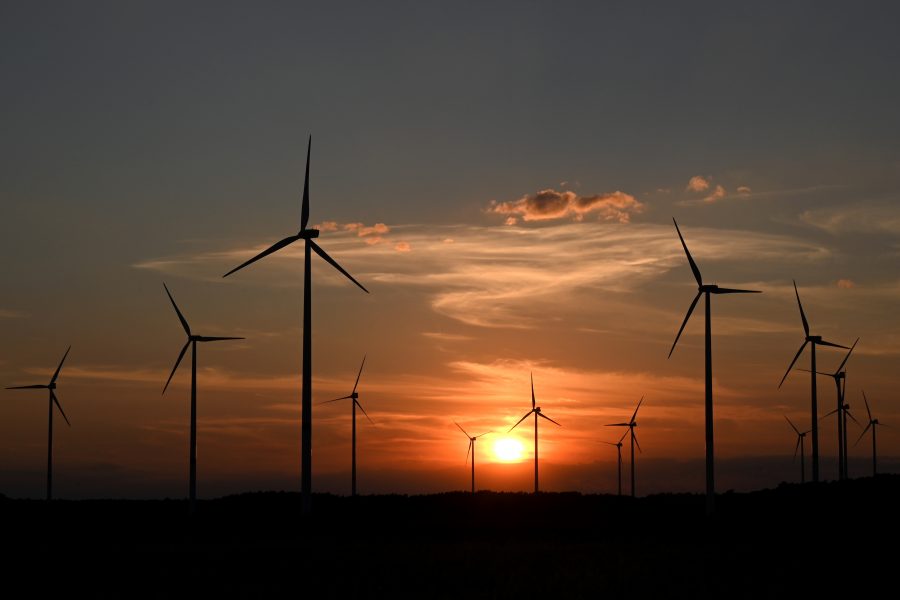
A recent Moroccan study said Morocco has suitable areas that could be exploited for the development of offshore wind energy farms that contribute to electricity needs at the national level.
An offshore wind farm is a group of turbines powered by offshore wind energy, where the electricity generated by the turbines is transmitted through undersea wires connected to the electricity grid.
This study was published in the “Energy Conversion and Management” journal by Meryem Taoufik and Ahmed Fikri from the Laboratory of Applied Geology and Environment at the Faculty of Sciences Ibn M’sik, and Hassan II University in Casablanca.
The study highlighted a large offshore area in the Atlantic Ocean that is considered the most suitable for the development of wind farms, namely Essaouira, Boujdour, and Dakhla, which in total are capable of generating about 13.3 gigawatts of electric power.
The three sites are considered very suitable for the establishment of floating wind farms due to their proximity to ports and the power grid, as well as their recorded wind speed and depth of water, according to the same study.
Interest in offshore wind energy comes at a time when fossil energy resources have dwindled, oil prices have risen and global warming continues to pose risks, driving new national policies that support sustainable energy sources.
Projections indicate that fossil energy-based stocks could be depleted earlier than expected, and increased consumption in developed and developing countries in terms of the carbon footprint.
Energy in Morocco increased on average by about 5% in recent years due to the continuous rise in electricity consumption, and it is expected that Morocco’s energy requirements will triple before 2030, according to this study’s data.
This study’s conclusions stated that Morocco can practically achieve 52% of renewable energy by 2030, as well as the capacity of wind energy within the national territory that is estimated to be about 25 gigawatts.
Morocco has put into place several actions, aiming to achieve sustainable development goals of 2030 that include 17 goals.
The 7th goal is to guarantee clean energy at an affordable price while promoting investment in energy infrastructure and clean energy technology in order to supply modern and sustainable energy services in Morocco.






add your comment
Terms of publication : Not to offend the writer, people, sacred things, or attack religions or the divine self, and refrain from racist incitement and insults.