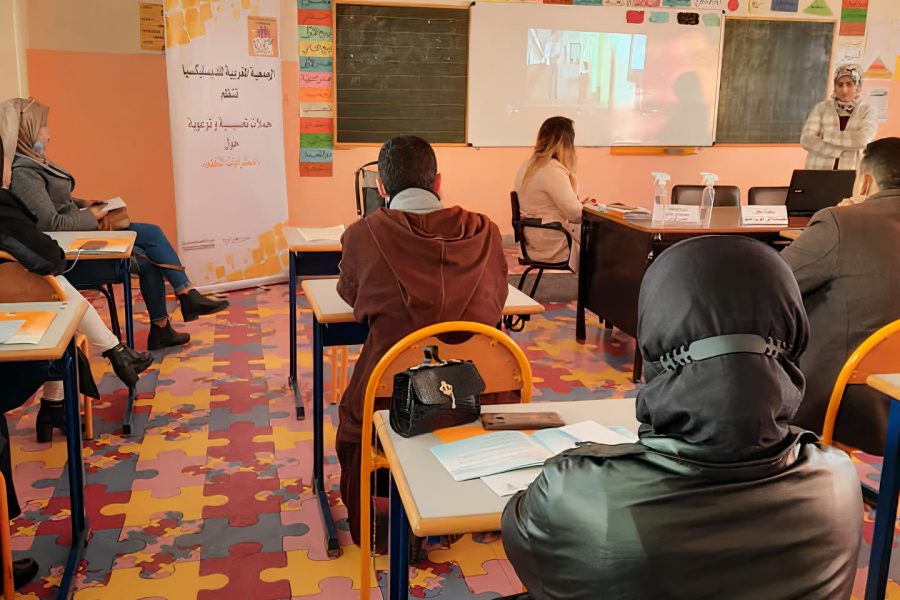
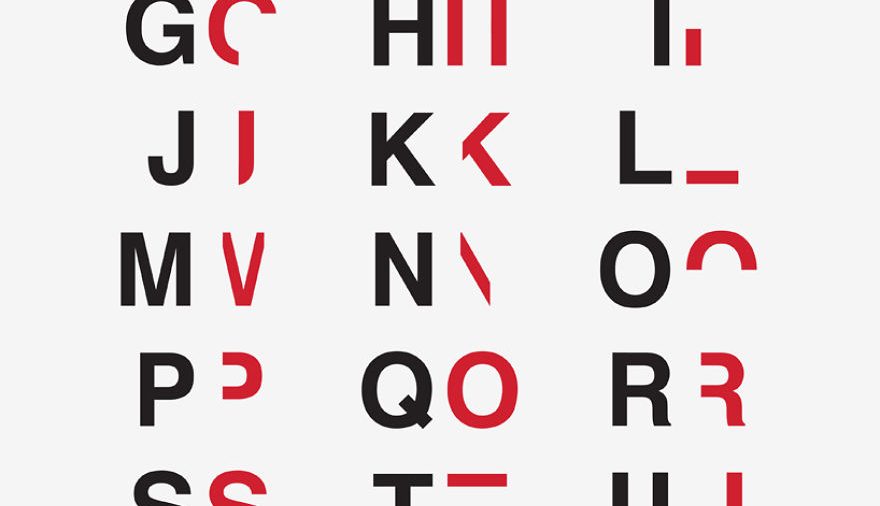
Psychology student Youssef Baja went for the third time to the same classroom, sat for the same exam and each time the same thing happens over and over: words and letters begin to swap and dance around the lines of the paper and hand can barely write straight.
He suffers Dyslexia – a learning disability characterized by difficulty in learning, spelling and reading at average and above-average intelligence rates.
“It is the 5th year I’m spending in university. I had to remain there for two additional years repeating 2 subjects that I failed to pass during my second year since the professors were not aware of my case,” Youssef Baja, 27, a university student who has been dealing with dyslexia since birth told Hespress English.
Recently declared by the World Health Organization (WHO) as a handicap, Dyslexia is a disorder that involves learning difficulties.
People with reading difficulties are 70-80% are likely to have some form of dyslexia. It is estimated that between 5-10% of the population has dyslexia, but this number can also be as high as 17%, according to Dyslexia Help.
“My requests were rejected various times before, until my professors finally agreed I could pass my exams with assistance,” Baja said.
Hespress English spoke to several students who reported being told by teachers and professors “You can’t read nor write, what are you doing in school then?” “You write words that nobody can understand but you.” “You are 15 years old yet you are failing every exam because of your unreadable handwriting,” forcing many to drop an academic career.
“What is chaining me from pursuing my masters in psychology is the difficulty of some subjects. I attend all my classes and study for my exams yet I fail repeatedly. I wish I could have an adapted exams that meets my disabilities but it is currently not possible in university.” Baja added.
A major factor that decelerates the graduation of Moroccan dyslexic students or leads them to quit schools is the lack of awareness of this disorder.
As there are few professors who count dyslexia as a handicap and cope up with any cases identified in their class, some in contrast do not take the same procedure but abandon the student instead. The abandonment does not occur alone, but comes with various forms of ignorance and public humiliation.
Hayat Touil, a mother of a dyslexic daughter talks about her journey: “I discovered my daughter suffers from dyslexia when she was 6. I was worried at that time. I couldn’t succeed in having a proper diagnostic. As a mother, I can assure you that dealing with dyslexia is one difficult task. It is dealing with both the behavior of the kid as well as his disorder.”
Touil’s daughter also highlighted the big challenges confronted in school. “There were times when I hated going to high school. I once heard one professor telling mum just take your daughter somewhere else other than school, she does not reside here.” She expressed.
Hayat and her daughter worked hand in hand despite the boundaries put by some professors. With the strong ambition of the mother and help of the Moroccan Association of dyslexia, she could graduate from high school. However, she remains in a constant fight with her dyslexia seeking recognition and the help of society that does not offer enough opportunities for dyslexic people.
Formed in 2012, with a location in the heart of Salé, the Moroccan Association of Dyslexia is one of the premier associations to shed light on the dyslexia disorder. With its numerous branches in the Moroccan cities, the association works on diagnosing the case of the child as well as providing assistance during his national and regional exams.
“Two ministerial notes that target the problems confronted by dyslexic students in higher education were introduced to the Minister of National Education Said Amzazi and were fully approved by him. However, the question lies on when will these notes be finally applied.” asserts Samria Laghrib, president of the Moroccan Association of Dyslexia.
Until this day, the association’s biggest burden is convincing teachers and professors that dyslexia is a real disorder, a handicap that can lead the student to failure when not well handled.
“This year, numerous students in their ultimate year of primary school have failed their year with the hopes of succeeding just like normal kids.” Said the president of the association.
“I have asked many vagabonds about the reason why they dropped out of school. Their answers were slightly the same, they had difficulties in reading and writing and they couldn’t escape the harassment from their teachers and classmates.” stated Mme Elghrib. “It actually pains me,” she added.
Another boundary faced by the associations is the nonsuccess to comply with every note agreed on in the petition signed by the Minister of Education. As illustrated by Samira Elgharib, procedure number 9 from the petition states that a dyslexic student has the right to eliminate a subject they find difficult, however, the latter was never applied though requests were made.
Students like Youssef are already suffering the consequences of the disapplication of this petition.
“Generally, dyslexia does not come alone but accompanied with other neurodevelopmental issues.” Said Chaimae Ksaksa, a psychomotor in the Moroccan Association of Dyslexia. “It is an unnoticed handicap that can be depicted through implicit ways during the learning and reading processes.”
“Dyslexia can be accompanied with clumsiness in the behaviour. When asking a dyslexic person to bring you a glass of water, for instance, they’d break the glass as soon as they brought it. Which causes frustration and angriness in the dyslexic person first due to the clumsiness and second because of the absence of control over the body,” explains psychomotor Ksaksa.







What an amazing article, very informative, thank you !