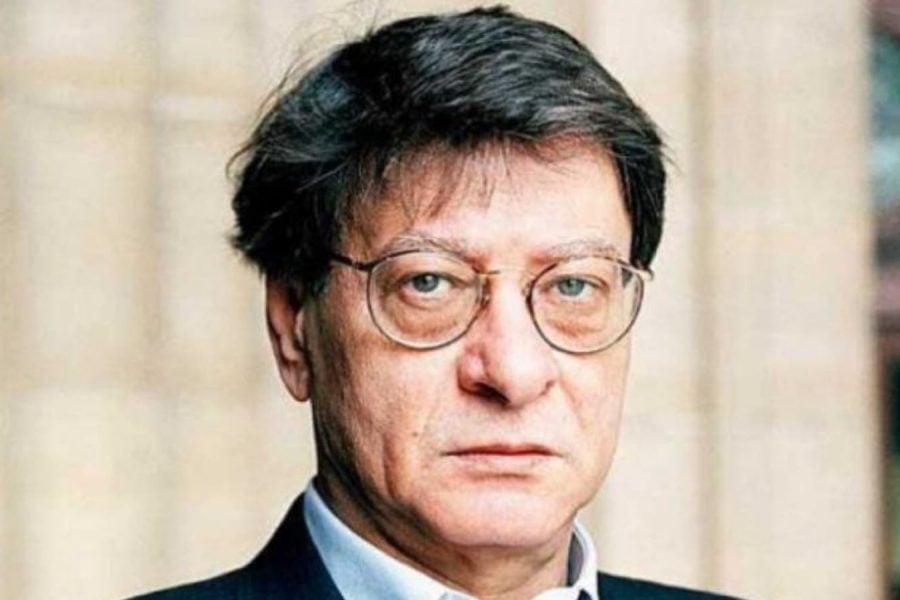
“Who am I to disappoint nothingness? Who am I, who am I” this is how Mahmoud Darwish ended his last poem “dice player,” standing in Ramallah’s cultural palace stage, tall in posture, straight hair, brown hazel eyes, piercing across wire-rim glasses and into the ears of hundreds of Palestinians.
With this “lament lullaby”, Darwish said goodbye to his Palestinian audience for the last time. A month later on August 9, 2008, Darwish died following complications that resulted from open-heart surgery in the United States.
Today, 13 years after his death, Palestine’s poet, Darwish is still widely viewed as one of the greatest contemporary Arab poets. His works are still being published and his legacy as the poet of love and resistance has never faded.
Born in 1941 in Birwa, a village near Galilee, Darwish was arrested several times by Israel due to his sharp criticism of the occupation’s politics. In early 1970’s, the Palestinian poet left his motherland to start a long exile’s journey. He moved between Russia, France, Syria, Tunisia, Lebanon, Cyprus and Cairo before returning to Palestine in 1990.
Darwish joined the PLO executive committee in 1987 and helped to draft the Palestinian Declaration of Statehood, and the famous speech of Yasser Arafat at the UN general assembly: “Today I have came bearing an olive branch and a freedom fighter’s gun. Do not let the olive branch fall from my hand”. However, Darwish left politics over the 1993 Oslo Agreements between Israel and the PLO.
He was a refugee, revolutionary, nationalist, humanist, lover, Oum Kalthoum admirer, themes that chronicled in his poetry. Using imagery, methodology, religions, and his personal experiences in prison and exile, Darwish crafted more than 30 poems and prose in a language of an apparent simplicity that delivered several layers of meaning. His works have been translated into at least 39 languages.
Most of his famous poems were brought to us by Marcel Khalifa delicate voice, as “Rita and the riffle” and “I yearn for my mother’s bread”, a poem that Darwish wrote on the back of his cigarette pack in prison because they prevented his mother from visiting him while in priso,.
Poetry wasn’t for Darwish just an act of resistance but also an art of living and empathy. He was once quoted saying: “poetry is perhaps what teaches us to nurture the charming illusion: how to be reborn out of ourselves over and over again, and use words to construct a better world, a fictitious world that enables us to sign a pact for a permanent and comprehensive peace with life.”




add your comment
Terms of publication : Not to offend the writer, people, sacred things, or attack religions or the divine self, and refrain from racist incitement and insults.