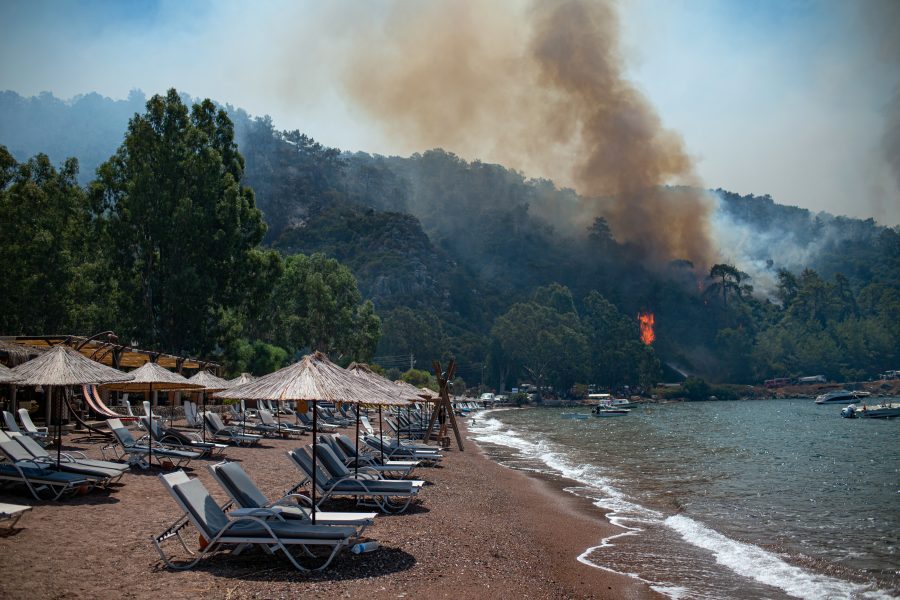
Wildfires that have been ravaging Turkey’s southern coastline for the seventh day have killed eight people and burned at least 118,789 hectares of land, are engrossing the country’s 84 million population in horror and speculation over the seemingly unending tragedy.
The Turkish Agriculture and Forestry Ministry said at least 111 fires have been burning across the country since last Wednesday, becoming the country’s worst fires in at least a decade.
Thousands of people are still being evacuated from areas on the Mediterranean and Aegean coasts, where fumes and flames are blazing in the sky, forests and farmland completely destroyed.
“If we cannot stop the fire by an aerial intervention (…), it will move towards the thermal power station. The situation is very serious”, said the mayor of Milas (south) Muhammet Tokat in a video he shared on Twitter.
The fires in his city are speeding across a thermal plant, leaving locals worried over what might happen next.
The fires have been feeding on high temperatures and conditions, that experts say are caused by climate change.
In cities like Istanbul and Ankara, temperatures soared to above 40 degrees, causing blackouts due to record use of electricity for cooling.
The European Union sent three water bomber planes to help Turkey tame the fires.
Prior to the announcement of EU aid, Turkey had borrowed planes from Russia, Ukraine, Azerbaijan and Iran.
Neighboring Greece is likewise feeling the impact of the fires. Prime Minister Kyriakos Mitsotakis said on Monday that the country is “facing the worst heatwave since 1987.”
Europe roasted under one of its worst heatwaves in decades on Monday, as scientists and governments prepared to sign off on a major new warning about the severity of climate change.
Temperatures in Greece were forecast to approach Europe’s all-time record of 48 degrees and wildfires raged in Turkey, Greece, Italy and Finland.
Fires, floods and soaring temperatures are hitting Europe at an all-time high.
“Every heatwave that is happening today is made more likely and more intense by climate change,” said Friederike Otto, associate director of the Environmental Change Institute, University of Oxford.
He is part of a UN Intergovernmental Panel on Climate Change, expected to release its sixth Assessment Report August 9, to establish clear conclusions on the links between climate change and extreme weather.



add your comment
Terms of publication : Not to offend the writer, people, sacred things, or attack religions or the divine self, and refrain from racist incitement and insults.