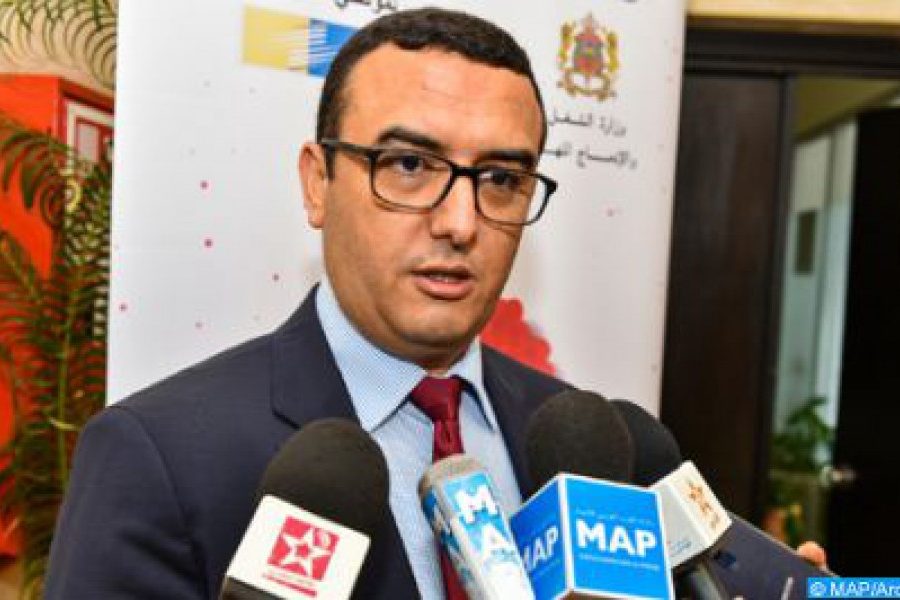
The government has developed several projects aimed at improving the economic and social situation of the working class, stressed minister of Labor and Professional Integration, Mohamed Amekraz in an address on the occasion of May 1st.
These projects, which stem from the importance of the working class in building a cohesive and solidarity-based society, include the development of social sectors, the institutionalization of social dialogue, the promotion of the concept of decent work in all its manifestations, the harmonization of the legal arsenal with international standards, as well as the promotion of working conditions, health and safety at work and the extension of the social protection system, said the minister.
On this occasion, Amekraz stressed the symbolism of the celebration of May 1st as an opportunity to assess achievements in favor of workers, noting that the celebration of this international event takes place this year in a particular context marked by the spread of the new coronavirus.
“Today, I commend the enormous sacrifices made by the Moroccan working class, with courage, dedication and resolute and effective commitment, whether in the public or private sectors,” the minister said, stressing in this regard the patriotic spirit that animates the workers, particularly in terms of respect for the government guidelines and measures put in place, in accordance with the royal High directives to combat the repercussions of the pandemic.
The measures are being implemented in consultation with social partners as part of the social dialogue process, said the minister, recalling that the signing of the tripartite agreement of 25 April 2019 between the government, trade unions and the Moroccan Employers’ association, has brought a series of gains for the benefit of the working class.
He cited, inter alia, a general increase in the salaries of civil servants in public administrations, local authorities and public administrative establishments, a 10 per cent increase in the minimum wage over two years in the sectors of industry, trade, services and agriculture, and the increase in family allowances of MAD 100 for each child up to a limit of three children, paid since 1 July 2019 for employees in the public and private sectors.
This agreement also included provisions relating to the institutionalization of dialogue at the national and territorial levels, the consolidation of the legal arsenal, particularly the organic law on strikes, the law on trade unions and the decree relating to article 16 of the Labor Code, the minister added, considering that these provisions will help to improve the material conditions of the working class, support its purchasing power, revive the economy and promote a climate of social cohesion.




add your comment
Terms of publication : Not to offend the writer, people, sacred things, or attack religions or the divine self, and refrain from racist incitement and insults.