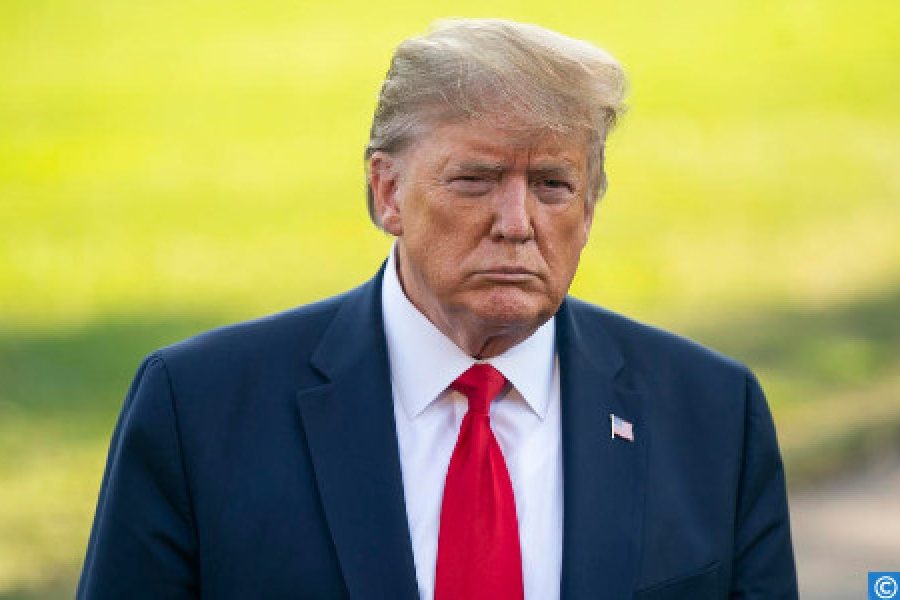
Facebook banned former president Donald Trump “indefinitely” after the insurrection on January 6 at the US Capitol in Washington DC. Facebook’s Oversight Board upheld the suspension on Wednesday, but seemed undecided on the final decision of for how long.
Facebook’s ban was indefinite, not time-delimited. Faced with growing criticism, the social network referred the question of whether the decision was appropriate to the independent review body. This outside group of experts, created and funded by Facebook through a trust, was established to review the company’s most complicated policy choices.
Facebook held a public comment period, and the Trump case received more than 9,600 public comments, more than all of Facebook’s other cases combined. A decision was scheduled for April, but the Board said it needed more time.
While it upheld Facebook’s January 7 decision to restrict then-President Trump’s from posting content on his Facebook page and Instagram account, the Board found that it was not appropriate for Facebook to impose an “indeterminate and standardless penalty of indefinite suspension.
”That was outside the bounds of its usual penalties, such as “removing the violating content, imposing a time-bound period of suspension, or permanently disabling the page and account,” according to the Board decision.
Although the Board cannot require Facebook to do anything, it urged the company to “reexamine the arbitrary penalty” within six months “to determine and justify a proportionate response” consistent with the rules it applies to other users.
It stated, “The penalty must be based on the gravity of the violation and the prospect of future harm. It must also be consistent with Facebook’s rules for severe violations, which must, in turn, be clear, necessary and proportionate.”
The Board also made recommendations for Facebook to develop “clear, necessary, and proportionate policies that promote public safety and respect freedom of expression.”
The Board explicitly recognized the possibility of further violations, however, it said that the company “must” address them “promptly and in accordance with its established content policies.”
While Democrats support the decision, the Republican GOP is up in arms. Trump supporters went ballistic, with a handful protesting with Trump flags outside Facebook’s offices in New York City.
Representative Kevin McCarthy, the House GOP Leader, tweeted hyperbolically, “If they can ban President Trump, all conservative voices could be next.”
Being reinstated on Facebook would have been a major win for Trump. Indeed, he and his closest confidants see his reinstatement on Facebook as critical to his increasingly likely run for President in 2024.
Trump’s former White House chief of staff Mark Meadows immediately threatened regulatory retaliation against Facebook. In a Fox News interview, he said several Congress members are considering breaking up the social media giant’s “monopoly.”
The Facebooks of the world have enjoyed a “very wild, wild West kind of regulatory environment,” according to Meadows. “I can tell you that’s going to change.”
In the meantime, Trump is building his own social media network, according to a close advisor. However, creating a social media site with broad appeal like Facebook or Twitter is a significant technological, social, and financial undertaking, and it will likely take some time before Trump can reach the level of the 88 million followers he had on Twitter when his account was closed.
On January 7, Facebook was the first social media to suspend Trump from posting on its platform. It was by no means the last.
Twitter soon followed suspending Trump’s personal account for 12 hours, and then two days later, after two more incendiary tweets, permanently. Instagram and YouTube immediately followed suit.
In a statement following Facebook’s Oversight Board ruling, Trump said Facebook, as well as Twitter and Google, had taken away his free speech.
“These corrupt social media companies must pay a political price,” he said echoing America’s heated debate over major tech companies’ power over speech.






add your comment
Terms of publication : Not to offend the writer, people, sacred things, or attack religions or the divine self, and refrain from racist incitement and insults.