
Morocco’s armed forces and national police command the highest levels of public trust among the country’s institutions, at 91% each, while public hospitals rank considerably lower at 53%, according to a study by the Moroccan Institute for Policy Analysis (MIPA).
The findings reveal a substantial divide between confidence in security institutions and public services, particularly healthcare, where citizens’ experiences of service quality, accessibility and administrative procedures play a central role in shaping perceptions.
The Royal Armed Forces (FAR) and the General Directorate of National Security (DGSN) jointly recorded the highest confidence levels, followed by the Royal Gendarmerie at 87%.
Trust in the judiciary stood at 76%, compared with 75% for the Ministry of Endowments and Islamic Affairs and 72% for the Interior Ministry.
MIPA attributed confidence in security institutions partly to perceptions of effectiveness, integrity and fair treatment, including their ability to protect citizens, enforce the law and reduce crime.
The research institute noted that confidence can decline when citizens perceive inadequate performance, corruption or unequal treatment.
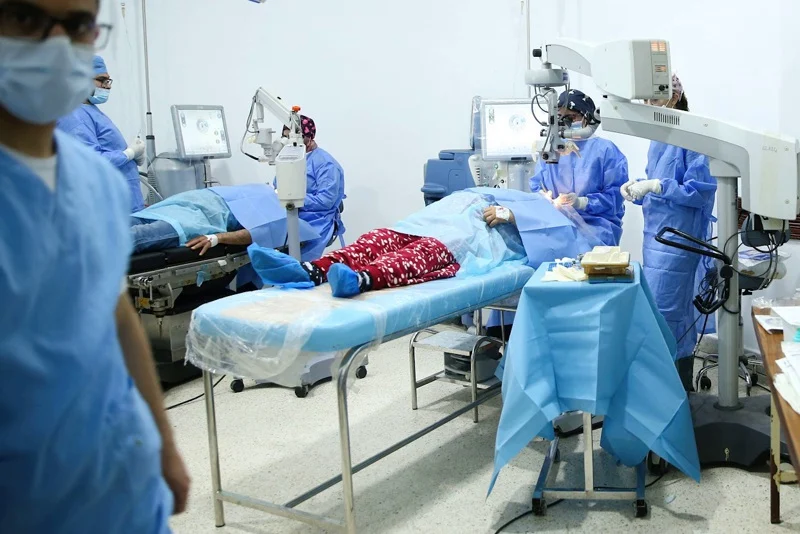
Healthcare produced one of the study’s widest institutional gaps. Public health facilities recorded a 53% trust rate, compared with 65% for private healthcare providers, a difference of 12 percentage points.
Education showed a different pattern, with public schools receiving a 73% confidence rating, exceeding the 69% recorded by private educational institutions.
According to MIPA, confidence in public services depends heavily on citizens’ direct experiences, particularly the quality and efficiency of services, fairness of access and the responsiveness of staff.
For the judiciary, the institute identified judicial independence, impartiality, protection of human rights and equal access to justice as important factors influencing public confidence. Experiences involving favoritism or corruption, it said, can weaken trust in the institution.
Religious institutions were assessed through factors including their perceived independence from political interference, their spiritual guidance and their role in promoting shared values.
The findings suggest that institutional trust varies considerably across sectors, with security bodies enjoying substantially stronger public confidence than some services citizens rely on for healthcare and education.







add your comment
Terms of publication : Not to offend the writer, people, sacred things, or attack religions or the divine self, and refrain from racist incitement and insults.