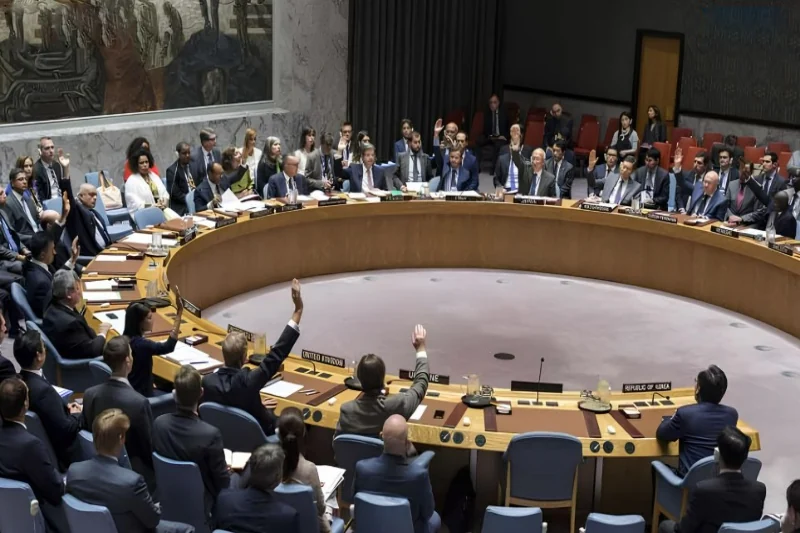
Arab, African, European and Latin American states reaffirmed support for Morocco’s autonomy plan for the Sahara on Monday, during a UN General Assembly debate on Russia’s veto of a U.S.-drafted Security Council resolution. Mauritania restated its “positive neutrality.”
The debate was triggered under resolution 76/262, the veto initiative, and began on Nov. 10. Russia vetoed the U.S. draft, which proposed removing the reference to a referendum from MINURSO’s name, while the United States vetoed Moscow’s competing draft calling for a straightforward one-year extension of the mission’s mandate.
Saudi Arabia’s representative said the kingdom supported Morocco’s efforts to reach a realistic political solution based on consensus and relevant Security Council resolutions. He stressed respect for Moroccan sovereignty and territorial integrity, and said the Moroccan proposal had been viewed positively in the Security Council since 2007.
Jordan’s representative reaffirmed his country’s support for negotiations based on the autonomy initiative, which he called a realistic basis for a settlement. He said Jordan backed Morocco’s sovereignty over its territory and its territorial integrity.
Kuwait welcomed Security Council resolution 2797, adopted in 2025, and called for negotiations to continue in good faith. Its representative said Kuwait supported efforts led by Secretary-General António Guterres and his personal envoy, Staffan de Mistura.
Mauritania’s representative said positive neutrality did not mean abandoning responsibility for helping resolve the dispute. He said Mauritania had borne economic, social and security costs from the conflict, and he praised three rounds of negotiations held after resolution 2797. He also cautioned against rushing to impose outcomes that lacked the conditions to last.
Zambia’s representative described the autonomy initiative as the most workable solution. He welcomed Morocco’s commitment to the ceasefire and its pledge to cooperate fully with the United Nations as MINURSO is wound down.
Benin said the autonomy plan formed the basis for negotiations toward a just, lasting and mutually acceptable solution. Gabon called it the only workable, credible and serious basis for a final settlement, and said the use of the veto should not end dialogue.
Belgium’s representative called the 2007 initiative the most appropriate, serious, credible and realistic basis for a solution. She also raised the situation of people in the Tindouf camps and called for continued humanitarian aid and durable solutions for refugees under international law.
Hungary said resolution 2797 was clear that genuine autonomy under Moroccan sovereignty could be the most workable solution. It called for UN-led negotiations to resume without delay after MINURSO’s mandate ends.
Paraguay said any solution should rest on respect for Morocco’s sovereignty and territorial integrity, and it praised Morocco’s commitment to the ceasefire.
Russia has argued that the U.S. text sidelined the Sahrawi pro-independence movement and imposed Morocco’s autonomy plan as the only route to a settlement.




add your comment
Terms of publication : Not to offend the writer, people, sacred things, or attack religions or the divine self, and refrain from racist incitement and insults.