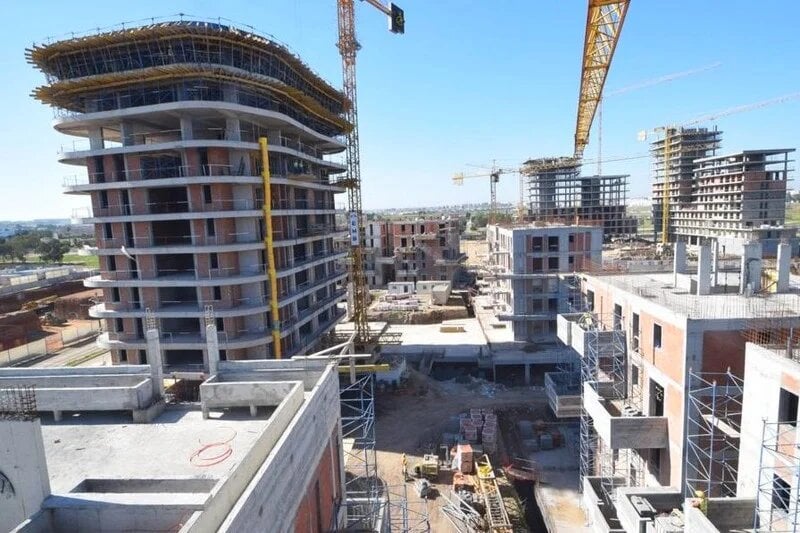
Morocco plans to expand its emerging urban centers program from 12 to 24 centers in each region as part of a broader effort to redevelop cities and improve housing conditions, Housing Minister Samir Belfqih told lawmakers on Tuesday.
Speaking during an oral question session in the House of Councillors, Belfqih said the government had an integrated plan to redevelop several urban areas, alongside the expansion of the emerging centers program.
He acknowledged that land ownership and property issues in rural areas remained complex, requiring solutions that take into account the specific characteristics of rural communities and residents’ needs.
The minister said the government was committed to simplifying administrative procedures, particularly for residents of rural villages, and accelerating the resolution of outstanding cases.
Housing aid program reaches 131,000 beneficiaries
Addressing the direct housing assistance program, Belfqih said nearly 127,000 applications had been registered since January 2024.
The scheme provides MAD 100,000 in assistance for homes priced at no more than MAD 300,000, and MAD 70,000 for properties costing between MAD 300,000 and MAD 700,000.
He said the program allows beneficiaries to choose their own homes and property developers, while a digital platform ensures transparency and transfers the assistance directly to eligible recipients.
According to the minister, around 131,000 people had benefited from the scheme out of 137,000 eligible applications, up from 128,000 beneficiaries in September.
To address growing demand, the government allocated an additional MAD 600 million in two phases, enabling it to process approximately 3,700 applications that had been awaiting assistance.
Belfqih said the ministry would conduct an internal assessment to improve the program’s targeting and expand access among both urban and rural populations. An external evaluation is also planned.
The ministry is working on a broader framework covering the 2024-2028 period to improve the program’s effectiveness and extend its reach, he added.
Government steps up efforts to address unsafe buildings
Belfqih described adequate housing as a constitutional right and part of the government’s broader social-state agenda to protect the dignity of citizens and their families.
He said government housing interventions, largely financed through the Housing Solidarity Fund, focus on three areas: combating slums and substandard housing, addressing buildings at risk of collapse, and upgrading under-equipped neighborhoods.
Regarding unsafe buildings, the minister said authorities had identified approximately 43,000 structures housing 79,000 families. Around 27,000 buildings, affecting 53,000 families, had undergone interventions ranging from full or partial demolition to restoration and structural reinforcement.
He said several agreements had been signed for coordinated action with the Interior Ministry and regional and provincial authorities, covering the identification, assessment and treatment of at-risk buildings.
The government is seeking to accelerate implementation of these agreements, he said, particularly as the risks associated with unsafe structures become more pressing during the rainy season.
Resettlement to replace rehousing approach
On housing for vulnerable populations, Belfqih said the government was prioritizing resettlement over temporary rehousing or neighborhood restructuring.
He argued that resettlement provides a more integrated and coherent living environment for vulnerable households, while previous rehousing programs had revealed limitations linked to uneven construction progress and difficulties maintaining the overall appearance of housing developments.
The minister identified Casablanca, Temara, Skhirat, Salé and Guercif among the cities facing significant challenges in this area.
He said the government was determined to resolve the issue during its current term.




add your comment
Terms of publication : Not to offend the writer, people, sacred things, or attack religions or the divine self, and refrain from racist incitement and insults.