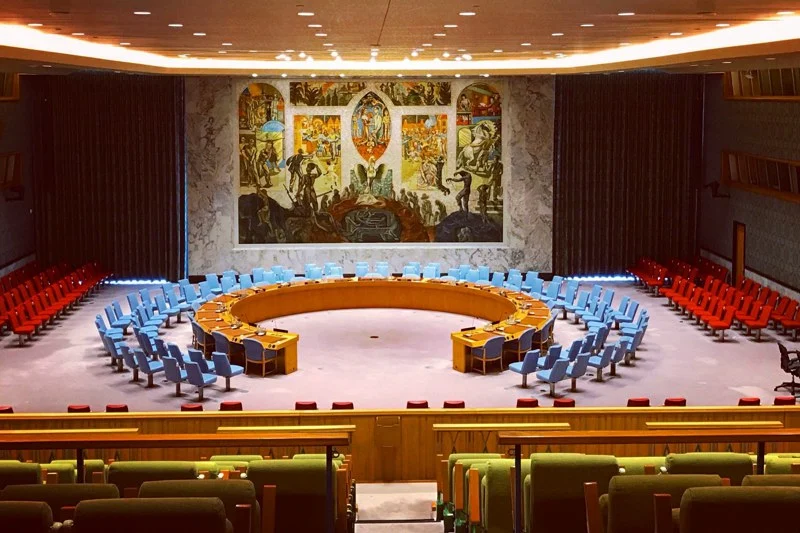
I spent nearly twenty years inside the United Nations system. I know its slowness, the compromises that leave everyone a little unhappy, the reforms that are always announced and always postponed. And yet I remain proud of it.
In Bangui, in the Central African Republic, I led communications for the UN peacekeeping mission, MINUSCA. I worked every day alongside Moroccan peacekeepers. When Morocco lost men in the field, I was there with their comrades for the tributes.
Those soldiers had come to protect civilians they did not know, in a country that was not theirs, because a mandate had been voted in New York. It was in Bangui that I understood what multilateralism really means: countries choosing to act together for people far away, and sometimes accepting that the price will be paid in their soldiers’ lives.
Over the past few days in New York, heads of state and government have spoken a great deal about peace and cooperation. But I also heard plenty of blame in those speeches, and a hostility that is less and less disguised, coming from several directions at once. Against one another, and almost all of them against the system itself.
Listening to them, I couldn’t help thinking that too many decisions that matter are now taken outside that hall and outside the Security Council, in power struggles where collective negotiation carries less and less weight.
Great powers have always clashed. That is nothing new. What is new is that the very idea of a rule that applies to everyone is losing ground. Imposing comes more easily than negotiating.
Trade, aid and political support are tied to alignment. Countries act alone and leave the rest to adjust. The most worrying part is that we are getting used to it. Each new breach shocks a little less than the last, and what should have remained the exception is slowly becoming the method.
We also need to understand where this weariness comes from. The system has disappointed. Reforms promised for decades have never been delivered.
The Security Council still reflects the balance of 1945, when most African countries were not yet independent. When institutions no longer look like the world they serve, the temptation to go around them grows. I understand that frustration. But turning our backs on the rules is the wrong cure.
This debate has to come back where it belongs: to the multilateral table, which exists for exactly this. No state, large or small, whoever it may be, gets everything it wants there. You negotiate, you give ground on one point to gain on another, and sometimes you have to stop pushing every one of your views, or defending only your own interests, for anything to move.
I have seen negotiations stuck for years come unstuck in a matter of days, simply because one delegation agreed to take a step towards the others. That is not weakness. It is the price of an agreement.
In a world where might makes right, middle-sized countries have the most to lose. They have neither the power nor the money to impose their interests alone, but they have everything to gain when the same rules apply to all. Multilateralism will not be saved by the great powers on their own. It will also be saved by those who need it, who still believe in it, and who decide to invest in it for real.
Morocco can be one of them. Its soldiers have served under the UN flag for decades, and in Bangui I saw what that commitment can cost. Since rejoining the African Union in 2017, it has deepened the African roots of its diplomacy and made cooperation with the rest of the continent one of its main priorities. And it can speak to Africa, to Europe, to the Arab world and to the Americas alike, which is becoming rare.
Being a driving force starts with showing up where decisions are prepared: skilled negotiators, files followed over time, proposals rather than mere reactions. It also means pushing for a reform that has become unavoidable, a Security Council that finally reflects today’s world, where Africa’s call for two permanent and five non-permanent seats is taken seriously. By 2050, more than one person in four on this planet will be African.
The continent cannot keep watching from the sidelines while decisions that concern it first are made by others.
Multilateralism has never been perfect, and it never will be. But what replaces it is not a more efficient world. It is a world where those with power or money get what they want, and everyone else adapts. So it has to be rebuilt, with those who still believe in it and by persuading the rest, and by being willing to discuss every proposal, wherever it comes from, as long as it serves the common good.
The Moroccan peacekeepers I worked with in Bangui had chosen to stand for a simple idea: that the safety and dignity of others is their country’s business too. That idea deserves to be carried to New York today.
Hervé Verhoosel is a former senior United Nations communications official and spokesperson who spent nearly twenty years within the multilateral system, in Geneva, New York and Africa, including as director of communications for the UN peacekeeping mission in the Central African Republic (MINUSCA). He now writes on international affairs and the changing practice of diplomacy, and advises organisations and public figures committed to social causes on strategic communications.



add your comment
Terms of publication : Not to offend the writer, people, sacred things, or attack religions or the divine self, and refrain from racist incitement and insults.