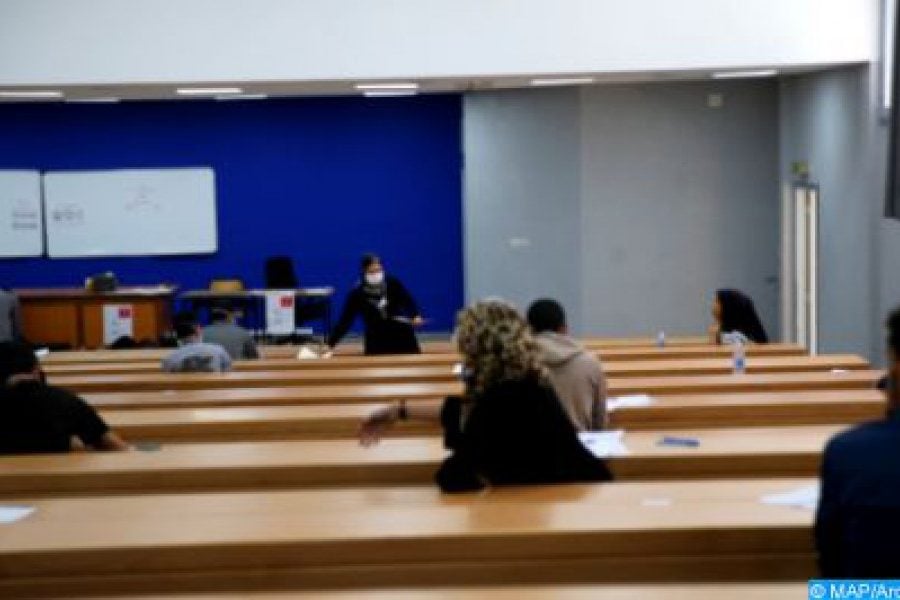
A group of Moroccan university professors has pledged to forgo their teaching and supervision compensation if students are required to pay fees for flexible-schedule programs, as debate over the planned charges at public universities intensifies.
The Progressive Researchers’ Professors Current within the National Union of Higher Education said the move was intended as a gesture of solidarity with students, while stressing that it does not amount to acceptance of mandatory fees or a retreat from its demand that they be scrapped.
The group also rejected any move to make flexible-schedule programs mandatory for working students. It called for regular university programs to remain accessible to all students, regardless of their employment status, and for students who meet the academic requirements to be allowed to choose between regular and flexible schedules.
The professors said employment status alone should not be used to force students into flexible-schedule programs or prevent them from enrolling in regular programs without a clear legal basis.
Debate over university funding
The dispute comes as Morocco prepares to introduce tuition fees for flexible-schedule programs at public universities beginning in the 2026-27 academic year.
Sociology professor Ibrahim Hamdaoui of Ibn Tofail University in Kenitra said the debate goes beyond class schedules and raises broader questions about free education, academic quality, equal access and university funding.
Hamdaoui said flexible-schedule programs were primarily introduced to allow employees and workers to pursue higher education through evening and weekend classes while maintaining their jobs. He said employees account for between 70% and 80% of students in some master’s and doctoral programs.
He defended the fees as a means of diversifying university funding without affecting students’ access to regular programs.
Morocco’s higher education sector needs additional resources for infrastructure, laboratories, scientific research and faculty training, he said. At the same time, Hamdaoui warned that higher fees could make flexible-schedule programs inaccessible to lower-income employees.
RNI student federation rejects fees
The National Federation of RNI Students, the student wing of the National Rally of Independents (RNI) party, has also rejected the planned fees.
In a statement, the federation criticized the Forum of University Presidents, saying its response had failed to address questions raised by students and instead defended the Education Ministry’s approach.
The federation rejected the use of university autonomy to justify tuition fees, arguing that autonomy should instead be used to improve governance and education quality.
It questioned whether public universities should remain accessible on the basis of merit or gradually become tied to students’ ability to pay.
The federation also warned against what it described as the commodification of higher education, arguing that it would not resolve the sector’s structural problems.
“The university is not a company looking for customers, the student is not a customer, and education is not a commercial product,” the federation said.
It called on the government to address university funding shortages through increased public investment, better governance and infrastructure, and diversified funding sources rather than shifting the cost onto students and their families.
Universities defend flexible-program fees
The Forum of University Presidents, meanwhile, has maintained that public universities have the authority to organize flexible-schedule programs and determine their conditions.
The forum said the fees do not affect students’ free access to regular programs and noted that similar arrangements exist in university systems in other countries.
The fees are scheduled to take effect nationwide in the 2026-27 academic year at MAD 5,000 ($540) annually for Licence programs, MAD 18,000 for bachelor’s programs, MAD 15,000 for master’s programs and MAD 20,000 for doctoral programs.
Houcine Azeddouk, president of the Forum of University Presidents, told Hespress Arabic that there are currently no plans to reduce the fees, saying they are intended to cover the additional costs associated with evening and weekend classes.
Azeddouk said the fee structure followed a year of study and preparation. He said Licence fees were unchanged from previous years, while master’s fees were reduced to make them more accessible to employees and workers.
For doctoral programs, he said the higher fees reflect the costs associated with researchers, staff and laboratories. Under the proposed model, 40% of the fees would go toward operating and investment costs, while 60% would be allocated to scientific research and researcher compensation.
Azeddouk also rejected suggestions that the decision was politically or electorally motivated, saying the fees would not generate profits for universities but would instead cover the additional costs of running flexible-schedule programs.








add your comment
Terms of publication : Not to offend the writer, people, sacred things, or attack religions or the divine self, and refrain from racist incitement and insults.