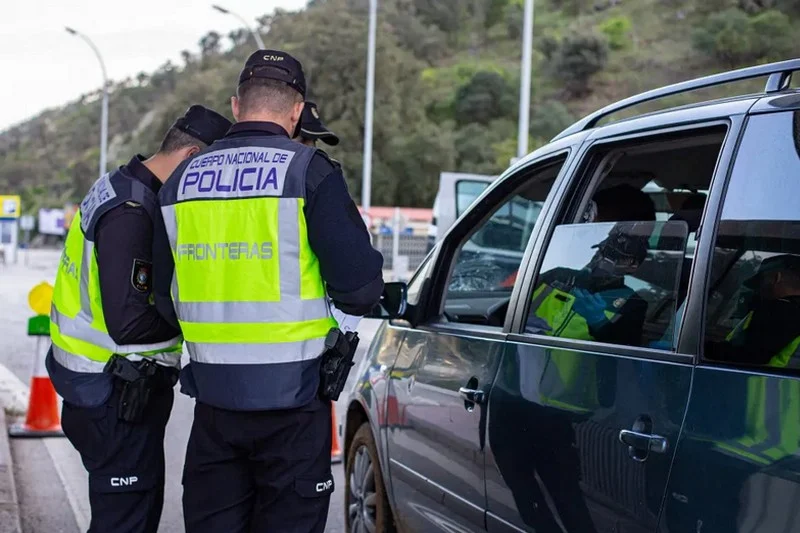
Spain has announced temporary border controls on travelers arriving from Italy after Prime Minister Giorgia Meloni’s government refused to lift restrictions imposed on arrivals from Spain following the recent mass migration crisis in Ceuta.
The measures, announced Friday evening, will take effect at midnight between Friday and Saturday and remain in place until Sept. 7, although the Spanish government said the timeframe could be adjusted depending on how the situation evolves.
Under the new rules, Spanish authorities will conduct random identity checks at airports and ports on travelers arriving from Italy. Officials will verify passengers’ identities and nationalities using passports, while non-European Union nationals will also be subject to checks on visas and residence permits.
Madrid justified the decision by citing what it described as the “continued pressure of irregular migration” affecting Italy, mirroring the reasoning used by Rome when it reintroduced controls on travelers arriving from Spain after the Ceuta migration crisis.
Madrid responds in kind
Earlier on Friday, Spain had intensified pressure on Rome by giving the Italian government until Sunday, Aug. 9, to withdraw the restrictions, warning it would otherwise adopt “proportionate measures to protect the interests and dignity of its citizens.”
However, Madrid moved ahead with reciprocal measures hours after the Italian government made clear it would not reverse its decision.
The Meloni government defended its position, saying it “does not accept ultimatums or dictates from abroad when it comes to national security and border control.”
Italian officials said they would not reconsider the restrictions before Aug. 15 at the earliest, linking the timeline to concerns about another possible mass migration attempt toward Ceuta.
Rome argued that intelligence pointing to a possible new migration attempt around mid-August justified maintaining the controls. Those concerns stem from calls circulating on Moroccan social media platforms encouraging another attempt to reach the Spanish enclave.
Spanish authorities, however, have taken a different view.
According to Spain’s El País, government sources said officials continue monitoring social media activity but do not currently believe another migration event on the scale of July 30 is likely.
Italian authorities have maintained that the measures will remain until they are satisfied there is no security or terrorism threat and no risk of a new migration wave affecting Europe. Rome has also argued that similar temporary border checks have previously been used by several Schengen countries.
Italy has insisted the restrictions are not directed at Spanish citizens themselves but rather at non-EU nationals arriving from Spain. In practice, however, the measures have affected all passengers on flights and ferries from Spain by routing them through dedicated border inspection lanes.
At Rome’s Fiumicino Airport, which receives between 55 and 60 daily flights from Spain during the summer season, passengers arriving on Iberia flights from Madrid reported being asked to present travel documents immediately after disembarking. Iberia has also informed customers in recent days that Italian authorities had temporarily reinstated border controls.
Millions of travelers affected
The dispute carries significant implications given the scale of travel between the two countries.
According to Spanish airport operator Aena, more than 11 million passengers traveled by air between Spain and Italy during the first half of 2026, including more than 2 million in June alone.
Tourism flows are similarly substantial. Spain welcomed more than 5.7 million Italian visitors in 2025, according to Spain’s National Statistics Institute, while Bank of Italy data show approximately 5.8 million Spanish tourists traveled to Italy during the same period.
Diplomatic tensions escalate
The current dispute began on July 31 when Italy announced temporary border checks for arrivals from Spain by air and sea, describing the move as a necessary security measure following the mass migration into Ceuta.
Spain argued the decision was taken unilaterally and without prior consultation, describing it as unprecedented in the modern history of bilateral relations.
Madrid has also challenged Italy’s legal justification, arguing that the measures do not comply with the Schengen Borders Code because Ceuta operates under a unique legal regime within the Schengen framework.
Spanish authorities have stressed that entering Ceuta irregularly does not automatically grant migrants free movement throughout the Schengen Area.
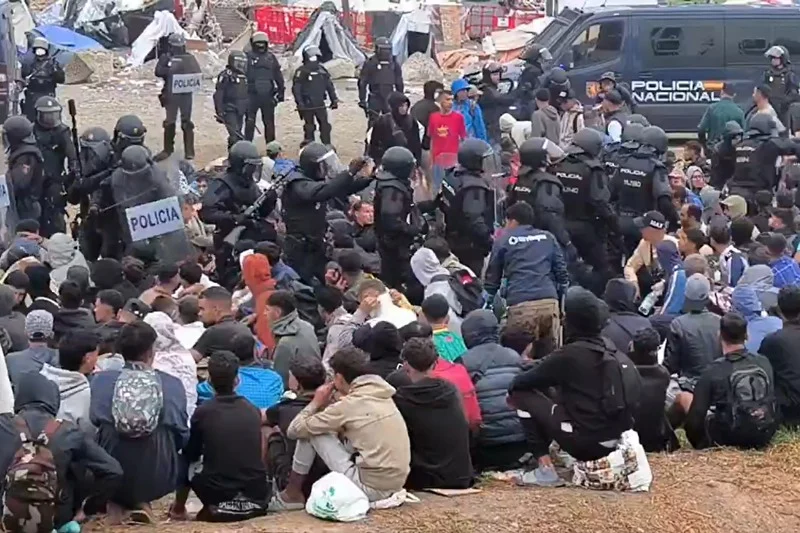
Interior Minister Fernando Grande-Marlaska has said approximately 72,000 people entered Ceuta irregularly during the recent migration surge, while around 70,000 have since left the enclave, figures Madrid cites to argue that Italy’s fears of secondary migration into Europe are overstated.
The disagreement has since evolved into a broader diplomatic dispute.
Spain summoned Italy’s ambassador, while Foreign Minister José Manuel Albares criticized Rome’s response, saying some European partners had failed to demonstrate solidarity during Spain’s migration crisis.
Albares also recalled Spain’s support for Italy during previous migration emergencies, particularly during the 2023 Lampedusa crisis, when Madrid backed Rome politically, accepted the relocation of some migrants, and opened Spanish ports to migrants rescued in the central Mediterranean.
Italian Foreign Minister Antonio Tajani responded by highlighting that irregular migration to Italy has fallen by roughly 60% since 2023 and defended Rome’s measures as consistent with European rules.
Interior Minister Matteo Piantedosi likewise sought to ease tensions, saying the controls were not directed against Spain but were temporary measures linked to border security and migration management.
Those assurances, however, failed to resolve the dispute, with Spain ultimately deciding to implement reciprocal controls.
Ceuta crisis reverberates across Schengen
Spanish officials have repeatedly compared the current situation with the September 2023 migration crisis on Italy’s island of Lampedusa, when more than 8,000 migrants arrived within three days, overwhelming local reception facilities.
At the time, European Commission President Ursula von der Leyen visited Lampedusa alongside Meloni before unveiling a 10-point European plan that included stronger external border management, faster returns, anti-smuggling measures, and assistance relocating migrants from the island.
Madrid argues that Spain showed solidarity with Italy during that crisis and never imposed travel restrictions on Italian arrivals.
Spanish officials have also accused Italy of failing since 2022 to fully implement parts of the Dublin Regulation governing asylum responsibilities, arguing that the shortcomings have shifted additional burdens onto other EU countries.
Spain has further cited Frontex data showing Italy has consistently recorded among the highest levels of irregular migration into the European Union in recent years while maintaining that Madrid nevertheless supported Rome during those periods.
The reciprocal restrictions illustrate how the Ceuta migration crisis has expanded beyond Spain’s North African enclave into a broader dispute over freedom of movement within the Schengen Area.
For Italy, the temporary controls are necessary security measures linked to migration management. Spain, meanwhile, argues the restrictions are disproportionate and based on risks that do not reflect the actual situation in Ceuta.
Beginning Saturday, travelers arriving in Spain from Italy will therefore be subject to random document checks at airports and ports, with authorities verifying passports, identities, and, where applicable, visas and residence permits.
While Rome intends to maintain its restrictions until at least Aug. 15, Spain’s reciprocal measures are scheduled to remain in force until Sept. 7 unless circumstances change.







add your comment
Terms of publication : Not to offend the writer, people, sacred things, or attack religions or the divine self, and refrain from racist incitement and insults.