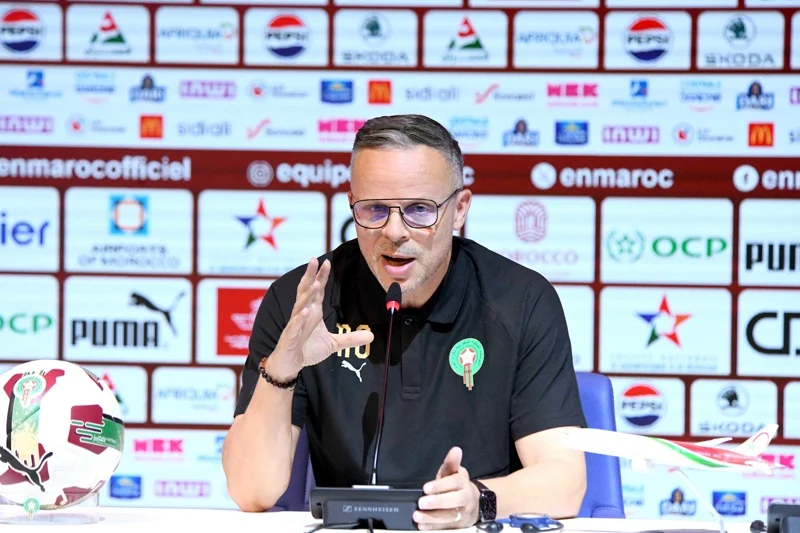
Morocco head coach Mohamed Ouahbi has dismissed speculation surrounding the future of assistant coach João Sacramento, insisting that the Portuguese coach remains committed to the national team despite the disappointment of the Atlas Lions’ World Cup exit.
Speaking Tuesday at the Mohammed VI Football Complex in Maamora during a press conference reviewing Morocco’s 2026 FIFA World Cup campaign, Ouahbi rejected reports suggesting Sacramento was considering leaving the coaching staff.
“He tells you every day how much he loves working here,” Ouahbi said. “Whenever there’s a defeat or a difficult moment, rumors start to spread.”
The national coach praised Sacramento’s contribution to the team, describing him as an important member of the coaching staff.
“We’re very happy to have him, and he’s very happy to be here,” Ouahbi added.
Ouahbi addresses Amrabat controversy
Ouahbi also responded to comments made by Mohamed Amrabat, the brother of midfielder Sofyan Amrabat, following Morocco’s quarterfinal defeat to France.
After the Atlas Lions’ 2-0 loss, Mohamed Amrabat told Dutch radio station FunX FM that his brother was frustrated by his limited playing time and had “probably had enough” of Ouahbi.
The Morocco coach downplayed the remarks, attributing them to disappointment rather than any personal conflict.
“He was simply disappointed not to play more,” Ouahbi said. “I don’t think he has a problem with me.”
Ouahbi described Sofyan Amrabat as a player with a strong personality who would have raised any concerns directly with the coaching staff.
Despite emerging as one of Morocco’s standout performers during the 2022 World Cup in Qatar, Amrabat was no longer an automatic starter in 2026, with Ouahbi opting to rely on younger midfielders Ayyoub Bouaddi and Neil El Aynaoui.
Physical demands and squad selection
Addressing questions about Morocco’s performance against France, Ouahbi rejected the suggestion that fatigue was the main reason behind the defeat.
He acknowledged that the team struggled to find its rhythm in the opening stages but said the players improved after halftime.
The coach argued that the issue was more complex than physical exhaustion, pointing to the demanding nature of international tournaments.
“Players who regularly compete in high-intensity matches are naturally better prepared for a World Cup, where games are played every four or five days,” he said.
“For most of Morocco’s players, that level of intensity only comes during major tournaments.”
Ouahbi also defended his squad selection, insisting there was little difference in quality between those who made the final 26-man roster and those who missed out.
“The level between the players was very balanced,” he said, adding that the coaching staff kept the selection process open until the final stages and made decisions based on player profiles, fitness and tactical needs.


add your comment
Terms of publication : Not to offend the writer, people, sacred things, or attack religions or the divine self, and refrain from racist incitement and insults.