
Global credit insurer Coface maintained Morocco’s country risk assessment at B and its business climate rating at A4, forecasting that major infrastructure investment will support growth in 2026 while unemployment, social strains and dependence on European demand remain significant vulnerabilities.
The B classification denotes a significant risk that companies may fail to meet short-term commercial obligations, rather than an endorsement of Morocco’s overall financial management. The A4 business climate rating indicates that corporate information and debt collection are generally acceptable but can still present difficulties.
Coface expects Morocco’s economy to grow by 4% in 2026, slowing from an estimated 4.6% in 2025. Inflation is forecast to rise to 3%, while the budget deficit is expected to narrow slightly to 3.4% of gross domestic product.
Construction will remain a principal growth driver as Morocco prepares to co-host the 2030 World Cup. Coface cited the extension of the high-speed railway to Marrakech, a planned $1 billion terminal at Casablanca’s Mohammed V airport and construction of the $490 million Hassan II stadium.
Investment in renewable energy, water infrastructure and logistics projects in the southern provinces should provide further support. Tourism, financial services and phosphate production are also expected to sustain activity.
However, Coface said weak European demand could reduce automotive and textile exports, while phosphate export earnings may slow as fertiliser prices decline. Europe accounts for 64% of Morocco’s goods exports, leaving the economy exposed to conditions in its largest market.
Imports of equipment for infrastructure projects are expected to widen the structural trade deficit. Tourism receipts, remittances and foreign investment should nevertheless keep the current-account deficit manageable. Foreign reserves covered about 5.5 months of imports at the end of 2025.
Coface described Morocco’s fiscal trajectory as sustainable despite rising public expenditure. Tax revenue increased an estimated 16% in 2025, but spending also rose sharply because of wages, interest payments and social programmes.
The government raised the monthly minimum public-sector wage from 4,000 to 4,500 dirhams, while health and education funding is expected to increase by more than 15%.
Morocco’s debt remains relatively resilient because about three-quarters is domestic, denominated in dirhams and largely issued at medium or long maturities.
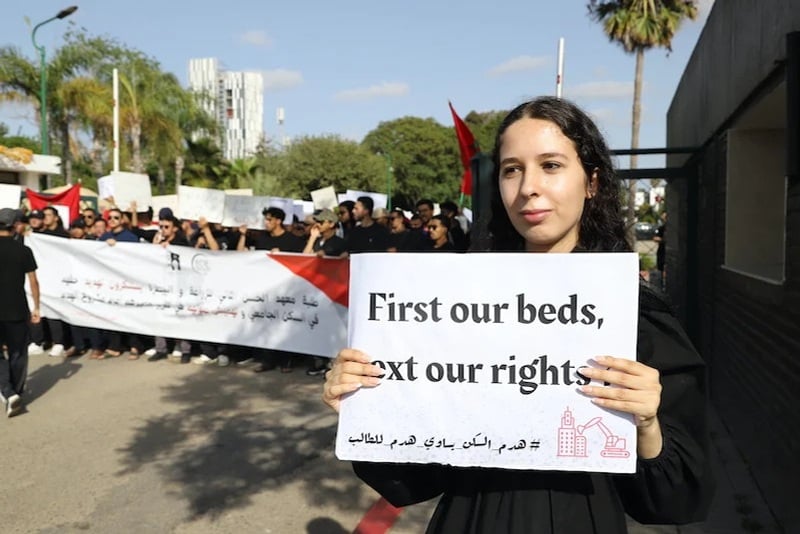
Coface nevertheless listed youth unemployment, regional inequality, informality, judicial weaknesses, water scarcity and corporate bad loans among the country’s persistent risks as parliamentary elections approach in September.





add your comment
Terms of publication : Not to offend the writer, people, sacred things, or attack religions or the divine self, and refrain from racist incitement and insults.