
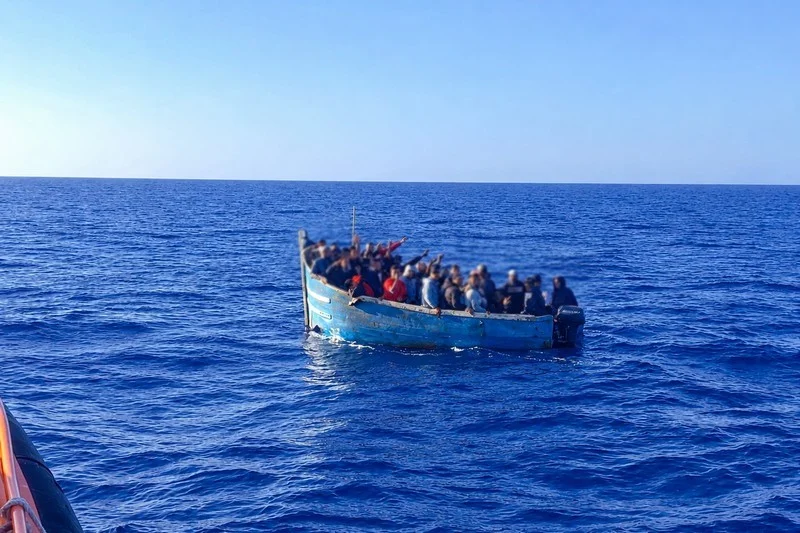
Spanish media outlets reported that the city of Ceuta experienced a heightened security alert over the weekend after several groups of migrants, including minors, attempted to reach the enclave’s coastline by swimming from nearby Moroccan shores, particularly from areas around Fnideq.
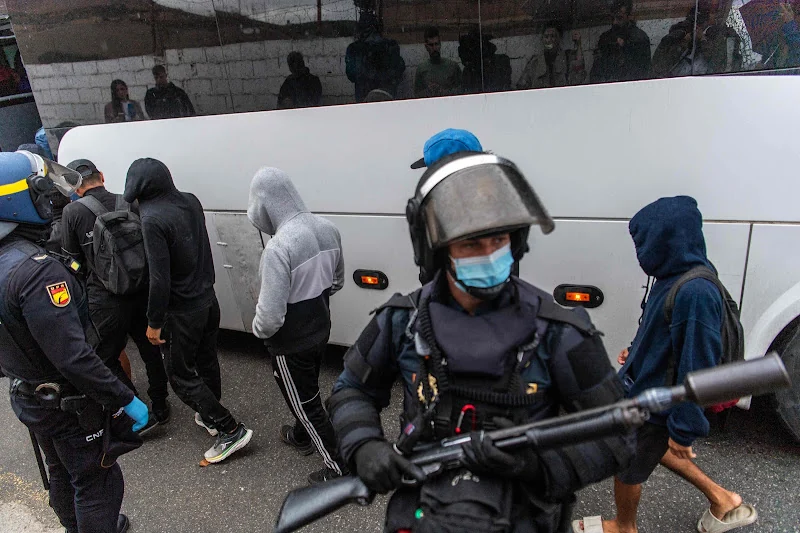
According to the reports, the attempts occurred in groups and within a short period of time, taking advantage of crowded beaches and favorable sea conditions. The situation prompted Spain’s Civil Guard to reinforce maritime surveillance and intervene to contain the crossings.
Moroccan migration experts said the issue of minors attempting to enter Ceuta and Melilla could once again become a prominent political topic during the summer months.
Abdelhamid Jmour, a researcher specializing in population dynamics and South-South development and a member of the International Center for Security, Migration and Development, said the phenomenon should be viewed through both social and political lenses.
“The migration of minors toward Ceuta and Melilla combines two interconnected dimensions,” Jmour said. “There is a concrete reality reflected in the continued migration flows, but there is also a political and media dimension in which the issue is used in debates surrounding migration management at the regional level.”
He argued, in a statement to Hespress AR, that the phenomenon cannot be reduced to a single factor and should instead be understood as a complex social and territorial issue influenced by economic, social, cultural and psychological factors.
According to Jmour, migration decisions are not driven solely by poverty. They are also shaped by what he described as a “culture of migration” and a collective perception of migration as a path to social advancement.
He added that the geographical proximity between Morocco and Europe gives some young people the impression that crossing into a space offering greater opportunities is within reach.
Jmour also pointed to the role of social media in shaping perceptions of migration. Platforms often circulate images and videos highlighting success stories and lifestyles in Europe while overlooking the legal, social and psychological challenges migrants may face.
At the same time, he acknowledged that migration has become a political and media issue in European debates on border management, but warned that excessive focus on those dimensions can obscure the underlying causes of migration.
“A scientific approach requires comprehensive developmental and educational responses that strengthen youth inclusion, support families and schools, and reinforce security cooperation,” he said.
Abdelrafii Talidi, a Moroccan university professor based in Spain, said attempts at irregular migration occur throughout the year and tend to increase during the summer due to calmer seas and more favorable weather conditions.
“These attempts are neither new nor unusual,” Talidi said. “They are part of a continuing phenomenon.”
However, he argued that some political actors seek to exploit migration issues for electoral purposes, particularly as Spain prepares for upcoming elections.
According to Talidi, migration flows are unlikely to disappear entirely, but their intensity varies depending on weather conditions and the seasons.
“When the sea is rough, attempts decline because the risks are higher,” he said. “In summer, calmer waters and better weather encourage more people to try reaching Ceuta or other destinations.”
He concluded that migration remains a recurring issue in political discourse and that some parties use it as part of broader electoral strategies aimed at mobilizing voters.







add your comment
Terms of publication : Not to offend the writer, people, sacred things, or attack religions or the divine self, and refrain from racist incitement and insults.