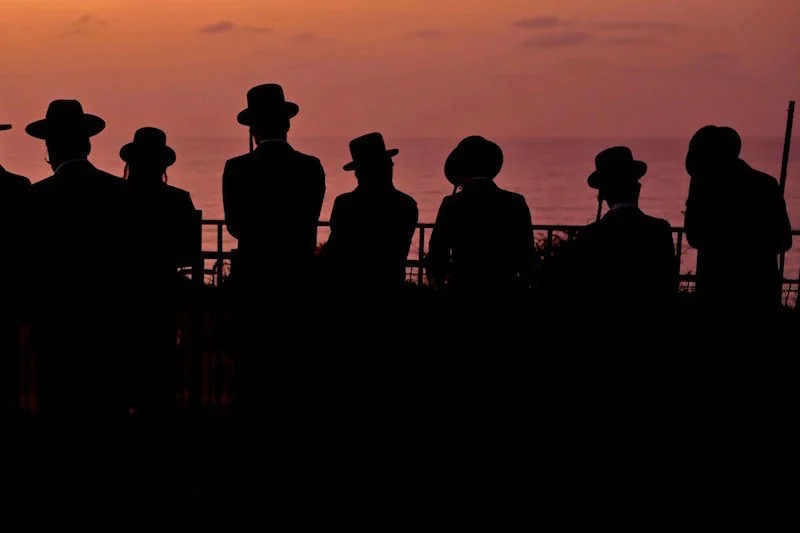
The debate surrounding a legislative petition aimed at simplifying access to Moroccan citizenship for Jews of Moroccan origin and their descendants has prompted renewed discussion about identity, citizenship and constitutional pluralism in Morocco.
The proposal, first drafted more than two years ago, returned to public attention in April after sparking political and media debate. In a detailed analysis shared with local media, Abdellah Benhssi, executive director of Maromed Initiatives, outlined six potential scenarios for how Moroccan authorities could handle the petition, in an interview with Hespress AR.
According to Benhssi, one possibility is that the Speaker’s Office of the House of Representatives could reject the petition on procedural or substantive grounds. Such a decision could be justified by citing the strict provisions of Morocco’s nationality law or concerns about the proposal’s practical implementation.
Under this scenario, the issue would effectively be shelved while remaining a topic of public discussion. Benhssi argued that this outcome could help authorities avoid domestic tensions linked to the Israeli-Palestinian conflict and debates surrounding Morocco’s relations with Israel. However, he noted that such a rejection could be viewed as inconsistent with the spirit of Morocco’s 2011 Constitution, which recognizes the country’s plural identity, including its Hebrew heritage.
A second scenario would involve accepting the petition procedurally and referring it to parliamentary committees, where it could become the subject of lengthy technical discussions, amendments or indefinite postponement. Benhssi described this as a traditional approach often used in politically sensitive matters, allowing institutions to project openness while avoiding immediate legislative change.
A third and, in his view, more realistic option would be a limited amendment to Morocco’s nationality law. Such a reform could facilitate the recovery of citizenship by individuals able to prove Moroccan ancestry or simplify naturalization procedures for specific categories of applicants.
Benhssi said this approach would preserve state control over nationality matters while sending a positive signal to Moroccan Jewish communities abroad and minimizing political controversy.
Another possibility would be a partial adoption of the petition accompanied by strict conditions, such as proof of ancestry, evidence of a continuing connection to Morocco, residency requirements or investment commitments. This option would likely result in a limited number of beneficiaries while addressing concerns about large-scale naturalization.
Benhssi considered full adoption of the proposal to be the least likely scenario. While such a move could enhance Morocco’s international image as a pluralistic society and generate positive attention in countries such as the United States and Israel, he said it would also likely trigger intense domestic political and ideological debate.
The final scenario would involve avoiding changes to nationality legislation altogether and instead offering alternative measures. These could include facilitating residency procedures and expanding cultural and religious programs designed to strengthen ties between Moroccan Jews abroad and their ancestral homeland.
According to Benhssi, such an approach could provide Morocco with significant symbolic benefits while limiting domestic political repercussions.
The debate over the petition has intensified in recent weeks. Government officials have clarified that the initiative is not a government proposal but rather a citizen-led legislative petition. Meanwhile, some members of parliament have stated that no such petition has formally reached either the House of Representatives or the parliamentary bodies responsible for reviewing petitions and legislative initiatives.
Benhssi concluded that regardless of its ultimate fate, the proposal has reopened an important discussion about citizenship and identity in a changing Morocco, while highlighting broader debates over pluralism, national heritage and the country’s evolving social and political landscape.





add your comment
Terms of publication : Not to offend the writer, people, sacred things, or attack religions or the divine self, and refrain from racist incitement and insults.