Twenty‑three years after suicide bombers killed 45 people in coordinated attacks in Casablanca, Morocco has emerged as a global counter‑terrorism power. The adopted counter-terrorism model ranks today among the world’s most effective, blending social development, religious restructuring, and investigative intelligence.
On the evening of Friday, 16 May 2003, five coordinated terrorist explosions targeted various areas of Casablanca within the space of just 20 minutes. The attacks claimed 45 lives -33 civilians and 12 suicide bombers- in what remains the deadliest terrorist attack in Morocco’s history, urging the kingdom to declare a state of emergency.
The attacks targeted a Spanish restaurant, a five‑star hotel, a Jewish cemetery, the Belgian consulate, and an Italian restaurant. As reported, the bombers, aged between 16 and 23, came from Sidi Moumen, a marginalized shantytown in Casablanca’s outskirts at that time.
The attacks marked a turning point not only in the kingdom’s security departments but also in its entire approach to counter-terrorism, led by legal and social reform and intelligence‑led prevention.
Sidi Moumen: A Marginalized Neighborhood
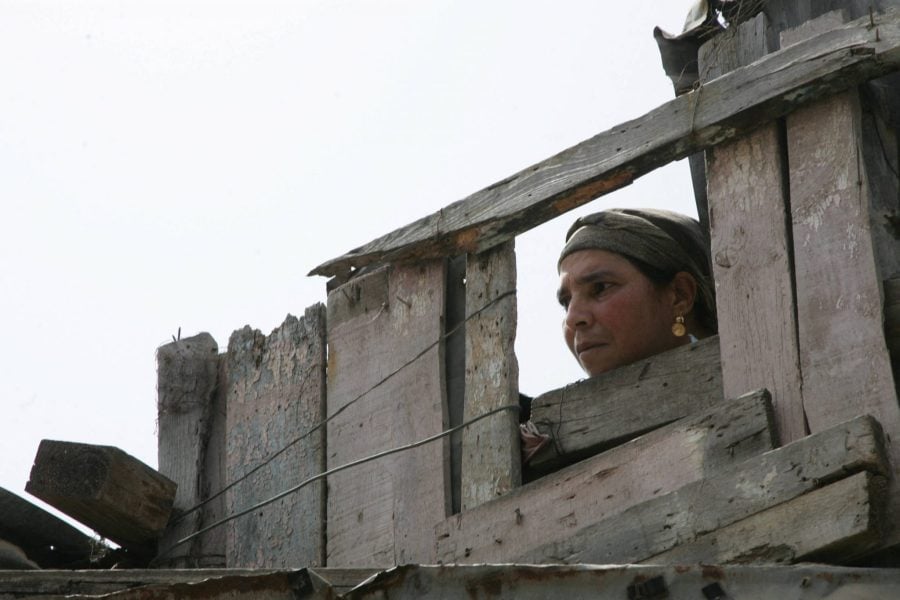
Up until 2003, Sidi Moumen was a crowded settlement of tin shacks built on a garbage dump. Most of the attackers were unemployed young men with no prospects.
In a previous statement to Hespress English, Sofia Akhmiss, who grew up near the neighborhood and now runs the Ali Zaoua Foundation, recalls, “We were young, and there were no initiatives or cultural centers capable of accommodating us.” Similarly, one of the bombers’ mothers described her son simply as “the product of poverty.”
Nabil Ayouch’s acclaimed film Horses of God (2011) offers a cinematic reflection of this reality. The Moroccan director revisits the events from the perspective of the attackers themselves – young men subject to social marginalization and lack of prospects, result of the environment they grew up in.
The aftermath of the attacks
According to examined press reports at the time, forces raided fundamentalist strongholds across the country, detaining dozens of militants in Casablanca, Fez, and Tangier, with American and French anti-terrorism experts assisting the investigation.
The Moroccan parliament enacted Law No. 03.03, an anti-terrorism law that allows authorities to investigate, arrest, and dismantle networks. The detained were sentenced from 17 years to death, although the death penalty remains suspended in practice.
After the trials concluded, Morocco adopted a broader, multi-dimensional security strategy. Security expert Mohamed Akdid, former head of the Central Bureau of Judicial Investigations (BCIJ), explained that Morocco moved from “circumstantial management to deep institutional, social, and security restructuring.”
In 2015, the BCIJ was established as a dedicated counter‑terrorism unit with police forces operating in coordination with the intelligence services. In the same year, both the DGSN (national security) and DGST (territorial surveillance) were placed under a single competent commander for intelligence coordination and imminent decision-making.
In November 2025, Morocco’s Interior Minister Abdelouafi Laftit confirmed before the House of Representatives that Moroccan security units have dismantled over 200 terrorist cells since 2002. Similarly, in late 2024, BCIJ director Abdelhak Khiame stated that 49 terrorist cells have been dismantled by the BCIJ alone since its establishment in 2015, leading to the arrest of 772 individuals.
Due to its consistent foiling of attacks in their planning phases, Morocco has earned a global reputation as a trusted partner for the CIA, FBI, and European intelligence services, as seen recently in joint operations.
Rebuilding Sidi Moumen
The post-attack transformation Sidi Moumen has witnessed emphasizes that poverty and marginalization can fuel extremism. Between 2007 and 2010, a development program helped improve housing, roads, and utilities. In 2021, authorities demolished the last remaining tin shacks.
Global recognition
Morocco’s counterterrorism strategy continues to generate international praise after the 2026 Global Terrorism Index gave the kingdom a score of 0.00, as one of the most secure and stable countries in the world. A model that has made Morocco a case study in counter‑terrorism that many African and South American nations now seek to emulate.





add your comment
Terms of publication : Not to offend the writer, people, sacred things, or attack religions or the divine self, and refrain from racist incitement and insults.