
Moroccan authorities are moving to tighten oversight of livestock markets ahead of Eid al-Adha, as prices show signs of decline amid abundant supply while concerns persist over intermediaries, informal sales practices and consumer protection.
Central services at the Interior Ministry have issued urgent directives to local authorities across the country, calling for the rapid adoption of temporary measures to organize the seasonal sale of sacrificial animals.
The instructions require municipalities to designate specific spaces for livestock markets, define operating hours and assign oversight responsibilities as part of a broader effort to regulate one of Morocco’s largest annual commercial activities.
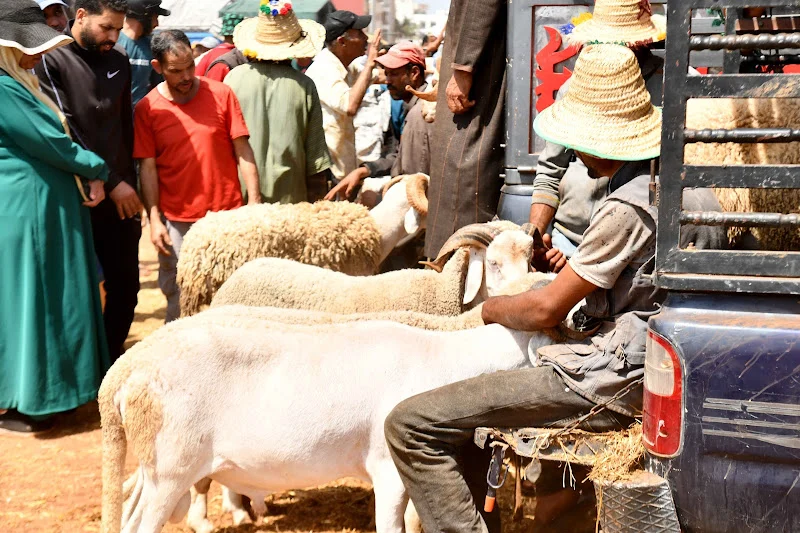
The move comes as sheep prices have dropped by an estimated 10% to 15% compared with 2024, according to professional sources, reflecting improved supply conditions following last year’s Eid season. Market participants say the decline has been more visible in traditional public markets, while prices remain relatively higher in informal “garage” sales, which authorities are now seeking to restrict.
Ibrahim Sahraoui, head of the Loukkos livestock breeders’ group affiliated with the National Association of Sheep and Goat Breeders, said the price decrease is driven by supply dynamics but warned against unrealistic expectations fueled by social media claims of a 2,500 dirham price cap. He said such levels do not cover production costs, particularly as feed prices remain elevated and have increased further in recent weeks.
Despite the relative price easing, market activity remains uneven. While informal sales points continue to attract buyers, public markets are experiencing a temporary slowdown. Professionals expect demand to accelerate in the days leading up to Eid, traditionally a peak period for household spending.
Bouazza Kharrati, president of the Moroccan Consumer Protection Federation, described current market conditions as stable, with no sharp fluctuations in prices. He said lessons from previous seasons and increased awareness among breeders and intermediaries could contribute to improved market performance this year.
Eid al-Adha represents a major economic cycle in Morocco, with financial turnover estimated at around 21 billion dirhams based on average livestock prices. The figure can rise to as much as 30 billion dirhams when factoring in related spending on food products and holiday preparations over a short period.
However, Kharrati criticized the lack of adequate legal and tax frameworks governing the sector, calling for clearer regulation to distinguish between small-scale breeders, who benefit from tax exemptions, and commercial intermediaries, who operate as traders and should be subject to taxation.
Authorities say the new measures are also aimed at addressing recurring problems reported during previous Eid seasons, including the informal occupation of public spaces, environmental concerns and disputes between buyers and sellers. Field reports have documented cases involving the sale of unhealthy livestock, fraud and conflicts over quality standards.
Under the new directives, designated sales areas must meet safety, hygiene and public health requirements, with enforcement involving local authorities, security services and municipal bodies. The measures also reiterate a ban on selling livestock in residential neighborhoods and enclosed garages, with penalties предусмотрed for violations.
The National Office for Food Safety is expected to reinforce inspections by deploying veterinary teams to approved market sites to verify the health of animals before sale. Sellers will be required to provide documentation on livestock origin and transport, amid heightened consumer concerns over disease risks.
Officials say the effort to organize Eid livestock markets reflects a broader push to bring structure and transparency to a sector that combines religious tradition with significant economic stakes, while protecting both consumers and breeders from market distortions.






add your comment
Terms of publication : Not to offend the writer, people, sacred things, or attack religions or the divine self, and refrain from racist incitement and insults.