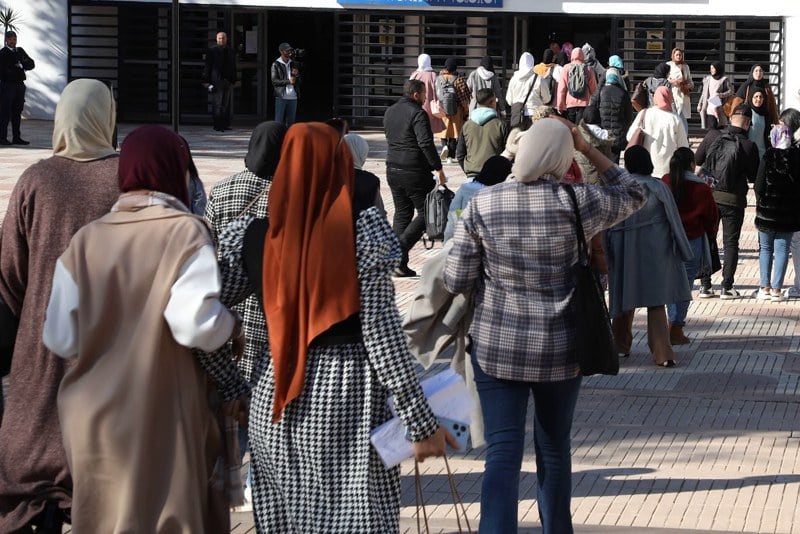
Morocco’s Gen Z is leaning heavily toward economic security and social stability rather than political change, according to a new study by the Middle East and North Africa Journal for the Study of Violence and Extremism.
Nearly two-thirds of respondents (61.2%) said ensuring stability and strengthening social welfare is their top priority. In comparison, only about one in five chose promoting democracy (20.5%) or expanding religion’s role in politics (18.3%).
According to the study, the findings reveal a generation juggling global values, local social norms, and religious frameworks while facing rising economic pressures and declining trust in public institutions. Young Moroccans are navigating freedom, identity, and citizenship in a country undergoing rapid social and economic change.
The study drew on six weeks of digital ethnography on the Discord platform, an online survey with 3,387 responses, and thematic analysis of online content. Only 3,057 responses met the study’s criteria.
Results show that Moroccan youth express what researchers call “hybrid liberalism.” They strongly support gender equality, particularly among women, the highly educated, and urban residents.
Moroccan youth also support the rights of religious minorities and freedom of expression, including questioning tradition or religion. However, support declines on more controversial social issues such as equality in inheritance.
At the same time, religion remains a core part of identity, though interpretations are increasingly individualized. Many young people see ways to reconcile personal freedoms with religious norms, while others struggle with tensions between the two.
The study also found widespread self-censorship online. To avoid social or legal consequences, many users rely on pseudonyms, alter their voices, or limit political and religious expression to private circles.
Researchers conclude that Moroccan Gen Z is pragmatic, valuing immediate economic security over political experimentation. They recommend policies that reduce economic vulnerability and create accessible, low-cost spaces for youth to express themselves and engage with institutions.



add your comment
Terms of publication : Not to offend the writer, people, sacred things, or attack religions or the divine self, and refrain from racist incitement and insults.