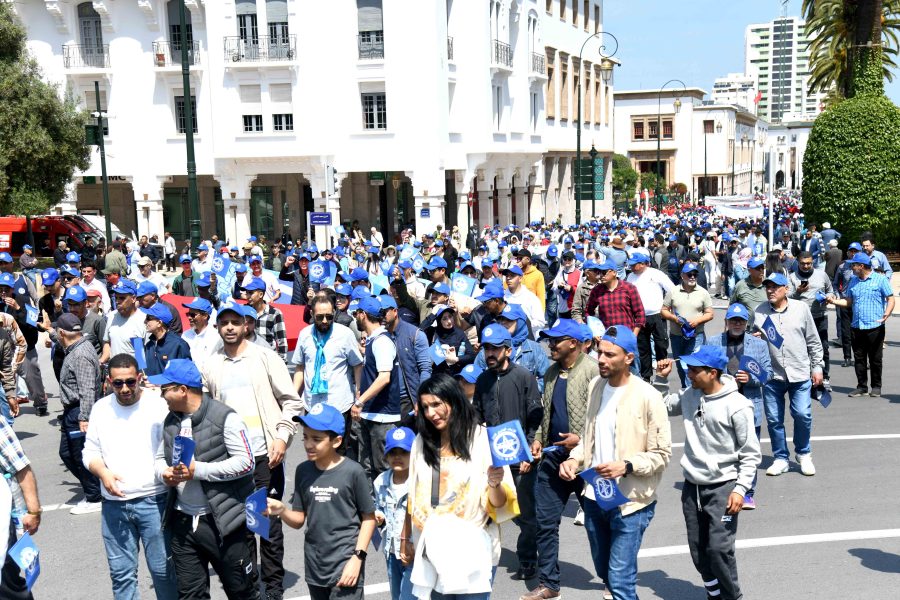
Morocco’s main labor unions used May Day rallies on Friday to warn of a widening gap between economic growth and living standards, as subdued turnout and fragmented messaging pointed to both rising anger and weakening mobilization.
In Casablanca, Khalid El Miloudi of the Democratic Confederation of Labour denounced what he called a “stark and persistent contradiction” between rising GDP and declining purchasing power, urging a new round of social dialogue before the government’s term ends.
He said current talks remain “occasional and dependent on political context,” calling for binding agreements with fixed timelines on wages, social protection and labor rights.
Across unions, inflation and stagnating incomes dominated messaging. The National Union of Labour in Morocco, affiliated with the Justice and Development Party, accused the government of a “deafening silence” in the face of what it described as a deepening social crisis.
“We are not here to beg, but to defend dignity and the right to a decent life,” its secretary general Mohamed Zouiten told supporters, citing union figures that more than 80 percent of families saw their living standards deteriorate over the past year.
On the ground, slogans called for immediate wage increases, tax relief and automatic adjustments linking salaries to rising prices. “It is not enough to announce increases on paper if inflation erases them,” said a public sector employee in the crowd.
In a separate rally, Miloudi Moukharik of the Moroccan Labour Union said recent social dialogue rounds fell short of the country’s “critical social moment,” describing them as closer to “managing a political image at the end of the term” than establishing a new social contract.
He said wages no longer reflect rising costs of housing, transport and healthcare, calling for broad salary increases, pension hikes and measures to curb fuel and basic goods prices.
By contrast, Youssef Alakouch of the General Union of Moroccan Workers, aligned with the ruling majority, pointed to progress including wage adjustments and steps toward institutionalizing dialogue, while urging continued implementation of April agreements.
Political criticism also surfaced, with Driss Lachgar of the Socialist Union of Popular Forces accusing the government of favoring large corporations over small and medium-sized firms and failing to deliver on key commitments.
Despite the sharp rhetoric, turnout appeared lower than in previous years, particularly in Rabat, where local media reported smaller crowds, reduced participation from rank-and-file workers and a reliance on organized union cadres. Fragmented slogans and muted mobilization weakened the traditional show of force associated with May Day.
The contrast between declining street presence and increasingly urgent demands underscores mounting pressure on the government over purchasing power, labor conditions and the credibility of social dialogue as it approaches the end of its mandate.



add your comment
Terms of publication : Not to offend the writer, people, sacred things, or attack religions or the divine self, and refrain from racist incitement and insults.