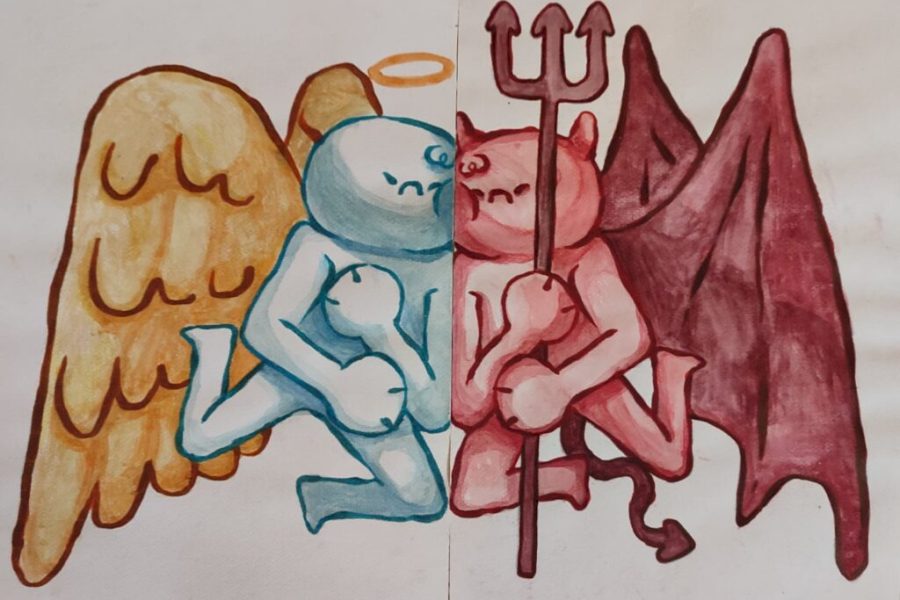
A year ago, Moroccan artist Mizmiz had painted his first surface in the city as part of the Jidar street art festival’s Collective Wall, a training panel reserved for young Moroccan artists and art students. This year he had the whole building.
A diptych in which a blue angel and a red devil sit in mirrored postures, knees drawn up, eyes closed. The angel has folded golden wings and a halo. The devil has dark wings, horns, a tail and a trident. The two figures hold the same shape.
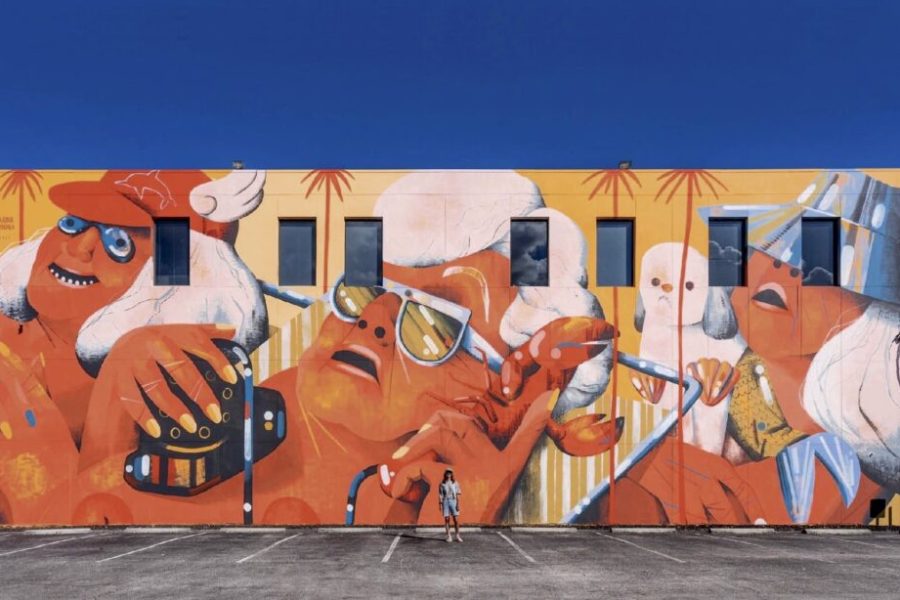
That progression, from training wall to commissioned facade, is the story Jidar’s 11th edition tried to tell.
The festival ran April 16-26 and brought murals to the neighborhoods of Hassan, Yacoub El Mansour, El Youssoufia and Agdal-Riad under the theme “Urban Dialogues.” Its closing days overlapped with the opening of Rabat’s year as UNESCO’s World Book Capital, an institutional designation that placed two cultural programs, books and walls, on the same urban map.
In Agdal-Riad, the artist Jumu Monster painted hybrid creatures drawn from pre-Columbian folklore: masked figures, ritual stances, on a residential block face. In Hassan, the Russian muralist Marat Morik worked in fragmented realism, splitting urban scenes into geometric panels.
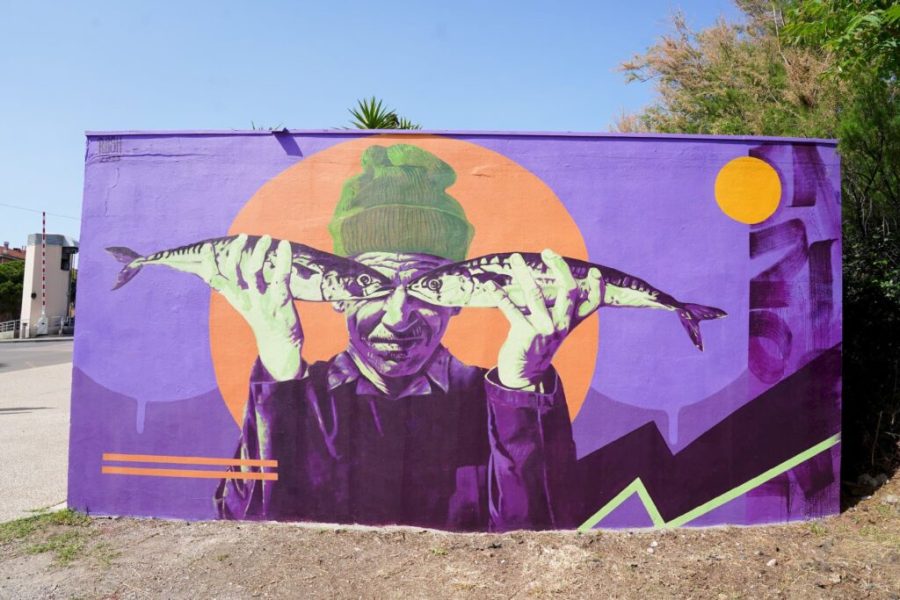
The Collective Wall, Jidar’s training panel, returned this year with a larger student roster than in 2025, said the festival’s organizing collective EAC-L’Boulvart. The mechanism is the same each edition: emerging artists test their work in public, in a format that opens commission opportunities the following year. Mizmiz’s diptych is what year two of that pipeline looks like.
Jidar’s program also included Rabat Art Explore, a series of guided neighborhood walks built around the commissioned murals. Festival organizers have not released attendance figures for the 2026 edition.



add your comment
Terms of publication : Not to offend the writer, people, sacred things, or attack religions or the divine self, and refrain from racist incitement and insults.