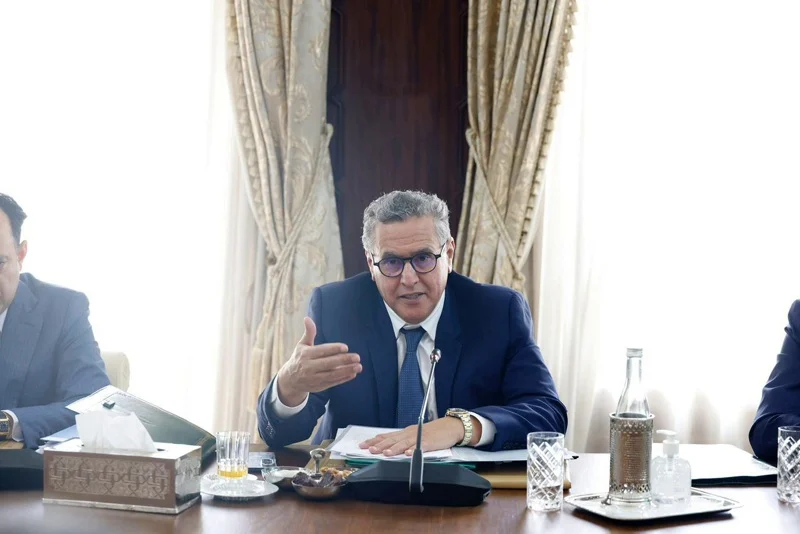
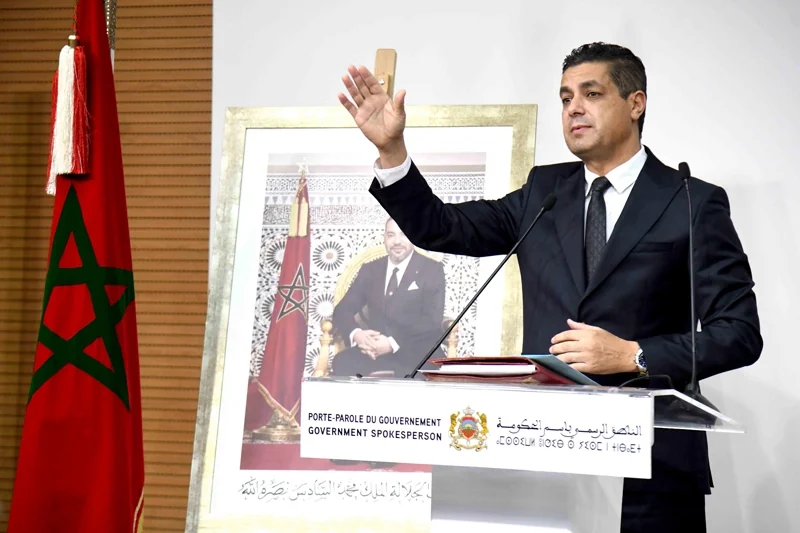
The Head of Government, Aziz Akhannouch, stated on Friday in Rabat that the government has never approached social dialogue as a mere cyclical commitment, but rather as a clear political choice.
Considering that supporting purchasing power, protecting workers’ dignity, and improving incomes are levers in the process of building the Social State, the government has made a point of transforming social dialogue into concrete results. The impact of these results is felt by civil servants, employees, and Moroccan families through their monthly income and their ability to meet living expenses, Akhannouch emphasized during the social dialogue round for the April 2026 Session.
In line with the High Guidelines of His Majesty King Mohammed VI, may God assist Him, the government has elected to rehabilitate social dialogue by shifting from a logic of occasional events and crisis management to a regular institutional dialogue, backed by clear deadlines, mechanisms, and commitments, he stressed.
Akhannouch also recalled that the agreement of April 30, 2022, marked a major turning point in the revival of social dialogue, “which is no longer a simple declaration of intent, in that it translates into practical and direct measures targeting the daily lives of the working class,” noting that in the public sector, the net minimum wage was raised to 3,500 dirhams, then to 4,500 dirhams, with the elimination of scale 7, the upward revision of the promotion quota to 36%, and the improvement of family allowances.
In the same spirit, a series of measures were taken in favor of the private sector, with a 20% increase in the minimum wage (SMIG) in the industrial, commercial, and liberal professions sectors, and 25% in the agricultural sector (SMAG), in order to improve working conditions, he added.
At the same time, the government took a humanitarian decision by lowering the threshold required to benefit from a retirement pension from 3,240 to only 1,320 days of contribution, while increasing the old-age pension by 5% retroactively, with a view to guaranteeing the dignity of thousands of employees, Akhannouch continued.
He further noted that after this foundational stage, the social dialogue entered a second, deeper phase, focused mainly on broadening the social and financial impact of the measures taken, specifying that the agreement of April 29, 2024, once again confirmed the government’s determination to act to honor its commitments.
Under this agreement, a general net increase of 1,000 dirhams was approved for civil servants and State employees, territorial authorities, and public establishments who had not benefited from previous revisions, he explained.
He also pointed out that the income tax (IR) reform, materialized by the 2025 Finance Bill, is among the priority projects where the government has taken bold decisions in favor of purchasing power. He noted that this reform is of paramount importance in that it allowed the tax exemption threshold to be raised from 30,000 dirhams to 40,000 dirhams per year, which means that monthly salaries below 6,000 dirhams are now exempt from income tax.
In addition to the central dialogue, the government has ensured the continuation of sectoral dialogues, marked by significant progress, particularly in the fields of education and health, he insisted.
Furthermore, he noted that the government, in line with its commitments regarding wage increases and to ensure their effective implementation, has mobilized significant financial resources expected to reach approximately 46 billion dirhams by 2026. He specified that the number of beneficiaries of income improvement since the launch of the social dialogue sessions stands at 4.25 million citizens, including 1.25 million public sector civil servants and 3 million private-sector employees.
He added that the government has laid the groundwork for a sustainable social and economic policy that goes beyond the framework of this governmental term. He added that the concrete measures taken to limit price increases, support transport professionals, and reduce electricity bills were by no means palliative solutions, but rather genuine protection for businesses and citizens. Support for road transport reached an estimated budget of 8.63 billion dirhams, distributed in 16 tranches between March 2022 and May 2024.
On the other hand, he indicated that the Royal direct social assistance program has become a pillar for strengthening the purchasing power of the most vulnerable families, emphasizing that the total amount of aid paid since December 28, 2023, has reached 52 billion dirhams, benefiting over 3.9 million families totaling more than 12 million people.
Akhannouch emphasized that the social dialogue has also contributed to improving the incomes of wage earners and employees in the private sector. He stated that this integrated system has made it possible to preserve the purchasing power of Moroccans and alleviate the pressure on production costs, which has allowed the Kingdom to preserve macroeconomic stability and major balances, which are the only guarantees for continuing to build the social State on sound foundations.




add your comment
Terms of publication : Not to offend the writer, people, sacred things, or attack religions or the divine self, and refrain from racist incitement and insults.