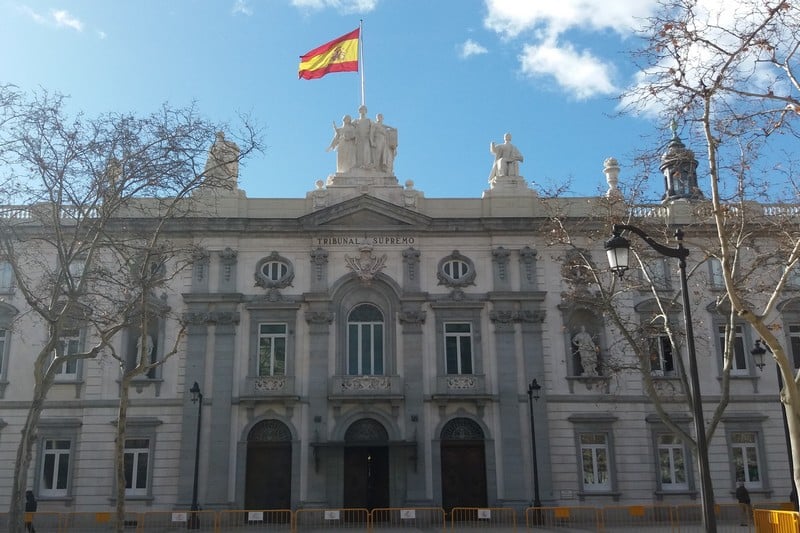
A court in the Madrid suburb of Majadahonda has ordered a Spanish insurance company to pay 296,461 euros in compensation to the family of a 19-year-old Moroccan man who died in a traffic accident in Morocco, despite the crash occurring outside Spanish territory.
The ruling has drawn attention in Moroccan legal circles, where it is being described as a significant decision in the field of conflict of laws and international civil liability, particularly in cross-border traffic accidents.
The judgment was based on the Rome II Regulation, formally known as European Regulation No. 864/2007, which determines the law applicable to non-contractual obligations, including tort liability arising from traffic accidents.
Under the regulation, the applicable law is generally that of the country where the damage occurred — in this case, Morocco.
However, Article 4(2) provides an exception when both the victim and the person responsible for the damage have their habitual residence in the same country at the time of the incident, in which case the law of that country applies.
A broader exception under Article 4(3) allows courts to apply the law of another country if the case is more closely connected to that state.
Shuaib Lamsahel, a lawyer with the Casablanca Bar Association and head of the Moroccan Center for Legal Awareness, said the Spanish court determined that the legal relationship was more closely connected to Spain than to Morocco.
He noted that the victim had been legally residing in Spain and that his family, social and economic interests were centered there. The insurance company is also subject to Spanish law.
“As a result, the court applied Spanish and European standards in calculating the compensation,” Lamsahel said.
The case involved a Moroccan teenager who was living in Spain and died in a traffic accident during a visit to Morocco. His family pursued compensation following what Lamsahel described as a lengthy legal battle with the Spanish insurer.
The dispute did not concern the establishment of liability. A court in Oujda had previously convicted the driver involved in the crash. Instead, the core issue before the Spanish court was determining which national law should govern the calculation of damages.









add your comment
Terms of publication : Not to offend the writer, people, sacred things, or attack religions or the divine self, and refrain from racist incitement and insults.