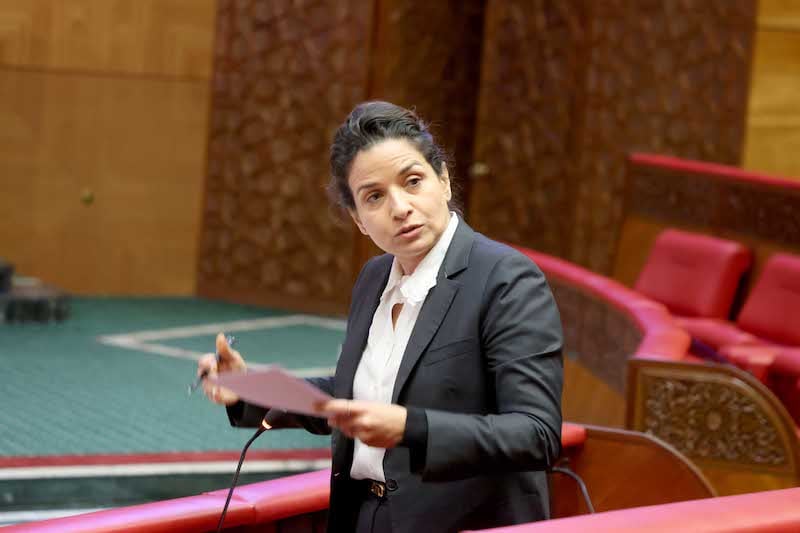
Morocco’s energy bill remains “very high,” the country’s energy transition minister said Wednesday, as the government pushes a new bill to convert the National Office of Hydrocarbons and Mines into a publicly controlled joint-stock company.
Minister Leila Benali described the draft law, Bill 56.24, as an “unconventional framework” that signals the state’s intention to play a more active role in energy sovereignty and the development of the minerals sector.
“Today, we have reached a stage where the transformation of the National Office of Hydrocarbons and Mines into a joint-stock company reflects the state’s commitment, through parliament and public institutions, to take responsibility for energy sovereignty and promote the mining sector,” Benali said during a session of the House of Representatives’ Committee on Infrastructure, Energy, Mines, Environment and Sustainable Development.
A strategic shift, not privatization
Addressing concerns about potential privatization, Benali said the ministry received a formal letter from the budget directorate reaffirming the bill’s strategic and sovereign nature.
“This reform aims to protect consumers, improve management efficiency, and guarantee the right to sustainable development and a healthy environment,” she said. “Morocco is today a model in energy and mineral management, and one of the leading countries in climate action. This path is not about privatization or surrender; it is about strengthening the foundations of the state’s energy and mineral sovereignty.”
She added that the government will not “hand over the keys” to energy sovereignty to another country or allow any external actor to control it.
Learning from the phosphate model
Benali said Morocco must treat its minerals sector with the same strategic approach applied to phosphate, citing the success of the OCP Group, which became more competitive internationally after being converted into a joint-stock company.
“Countries abroad invest heavily in their mining sectors due to intense international competition,” she said. “We must ensure the competitiveness of our mining sector globally, just as we did with phosphate.”
Benali also highlighted the importance of energy infrastructure, particularly the Maghreb-Europe gas pipeline, which has been under Moroccan control since 2021. She said the infrastructure helped Morocco withstand international pressure during the Ukraine war and maintain energy supply to industry.
“When gas supplies were cut off, the state mobilized all its resources to ensure electricity continued and industrial activity did not stop,” she said.
She noted that ongoing infrastructure projects, including connections to the Maghreb-Nigeria gas pipeline, will further strengthen Morocco’s energy sovereignty by safeguarding jobs and industrial continuity.
Benali said many Moroccan regions still face electricity supply challenges, describing the situation as fragile. She emphasized that dependence on neighboring countries for energy, whether to the east or north, must end.
“In this context, the transformation of the National Office of Hydrocarbons and Mines into a joint-stock company is part of a strategic vision,” she said.







add your comment
Terms of publication : Not to offend the writer, people, sacred things, or attack religions or the divine self, and refrain from racist incitement and insults.