
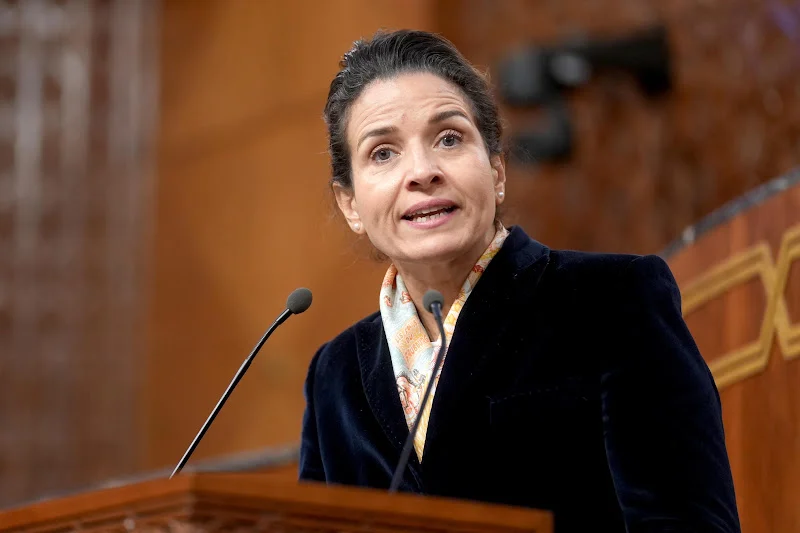
Morocco has increased its energy storage capacity by 30% since 2021, reaching 3.2 million cubic meters in 2025, Energy Transition and Sustainable Development Minister Leila Benali said Monday during a parliamentary question session.
Benali said the government has developed a monitoring program through 2030 to track storage capacity and support energy infrastructure projects, particularly by streamlining administrative permitting procedures.
She said Morocco’s energy storage capacity is expected to reach about 1.5 billion cubic meters by 2030, supported by an estimated investment of 6 billion dirhams (about $590 million), with one-third of that investment expected to be completed in 2026.
According to the minister, national analysis shows that current storage levels are sufficient for diesel, gasoline, and fuel oil, including storage facilities at the La Samir refinery, which resumed operations in 2023 after being idle for years.
However, she noted ongoing gaps in storage capacity for liquefied petroleum gas (butane) and jet fuel. The government has planned new projects to increase capacity by about 400,000 cubic meters for butane and 100,000 cubic meters for aviation fuel by 2030.
Benali also said the government is working to diversify the geographic distribution of energy storage infrastructure to avoid concentration in the Casablanca-Settat and Tangier-Tetouan-Al Hoceima regions. She cited the Nador West Med port as a key future hub for fuel and natural gas storage.
Parliamentary criticism over pricing and refining capacity
In response, Mohamed Mkhnater, a member of the Haraki parliamentary group, criticized Morocco’s energy strategy, arguing that storage policy has not been fully effective and that the country lacks a clear refining policy following the closure of the La Samir refinery.
He also raised concerns over fuel pricing transparency, including taxation structures such as value-added tax and consumption taxes, calling for lower fuel-related taxes to ease pressure on consumers.
Mkhnater said citizens are seeking clearer government measures to shield household purchasing power from global price fluctuations, and urged support programs for fuel-dependent professionals, including farmers and fishermen.
Electricity infrastructure investment and rural service
Separately, Benali said the National Office of Electricity and Drinking Water allocated more than 270 million dirhams between 2022 and 2026 for replacing deteriorating electricity poles and maintenance work, before these responsibilities were gradually transferred to regional multi-service companies.
She defended the quality of public electricity services, saying criticism of regional utilities is “unacceptable,” and highlighted that Morocco achieved about 99% rural electrification coverage through significant national investment.
Benali also emphasized the importance of distinguishing between planned and unplanned power outages in rural areas, as well as between legal and illegal electricity connections.





add your comment
Terms of publication : Not to offend the writer, people, sacred things, or attack religions or the divine self, and refrain from racist incitement and insults.