
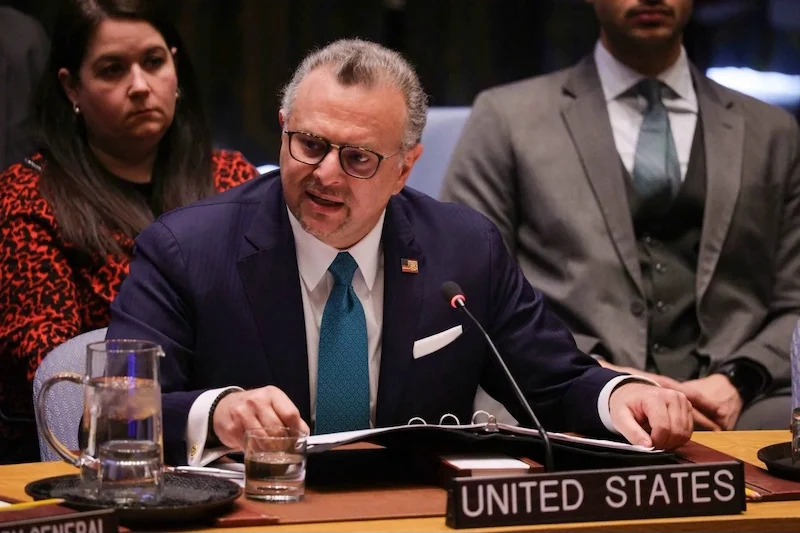
U.S. President Donald Trump has signed a presidential memorandum ordering the United States to withdraw from 66 international organizations, including 31 United Nations-affiliated bodies and 35 non-U.N. entities, citing concerns that their activities conflict with U.S. national interests, sovereignty and economic and security priorities.
According to a White House fact sheet released last week, the directive instructs U.S. government departments and executive agencies to halt participation in and funding for the listed organizations as part of the administration’s “America First” approach.
The White House said the move aims to end what it described as the misuse of U.S. taxpayer funds on organizations that promote “globalist agendas” or policies that do not directly serve U.S. interests.
However, the withdrawal list does not include United Nations peacekeeping missions, notably the U.N. Mission for the Referendum in the Sahara, known as MINURSO. The mission was not mentioned among the entities affected by the decision, signaling continued U.S. engagement in the U.N.-led process related to the Sahara issue.
Observers said the exemption underscores the importance Washington continues to place on the Sahara file and its desire to maintain a role within the U.N. framework on the issue, despite a broader shift toward reducing involvement in international organizations.
Said Bouchakouk, a researcher specializing in development and African affairs, said Trump’s return to the White House has been followed by a renewed push to assert U.S. strategic interests under the “America First” doctrine.
He told Hespress that one of the clearest manifestations of this policy was Trump’s Jan. 8 signing of the memorandum withdrawing from 66 international organizations, arguing that the administration views many of them — particularly those focused on climate-related issues — as no longer serving core U.S. interests.
Bouchakouk said the administration intends to redirect funds previously allocated to international membership contributions toward domestic priorities, including social welfare, health care and education.
He added that MINURSO’s exemption aligns with U.N. Security Council Resolution 2797, which extended the mission’s mandate through Oct. 31, 2026, and reflects Washington’s commitment to honoring its obligations within the U.N.-sponsored process.
The move, he said, also points to deeper shifts in the international system, suggesting a reconfiguration of alliances and power blocs that could reshape global geopolitics in the coming years.
Najib Tannani, president of the Mediterranean Center for Human Rights, said the current U.S. political outlook reflects far-reaching geoeconomic considerations, including a reassessment of strategic priorities through the suspension or cancellation of activities by several security and social institutions, as well as a review of U.S. military deployments worldwide.
Tannani told Hespress that international research centers increasingly predict China could emerge as the world’s leading economic power early in the next decade, driven by technological advancement and a strategy of avoiding direct military conflicts, allowing Beijing to preserve resources and accelerate growth.
He pointed to China’s development of fifth-generation aircraft carriers as evidence of its economic strength and diversified energy sources, arguing that this has prompted Washington to tighten its strategic containment of China’s regional environment in an effort to secure energy supplies and limit Beijing’s commercial and military influence.
Tannani said this shift also explains changes in Washington’s approach to international peace and security, noting that the United States may reduce support for traditional multilateral mechanisms, including funding for U.N.-backed initiatives, in favor of a more interest-driven interpretation of global stability.
“The United States now views international stability primarily through the lens of strategic and economic interests rather than the traditional frameworks that dominated previous decades,” he said.
He added that this shift has direct implications for the Sahara issue, noting that Security Council Resolution 2797 was drafted with U.S. initiative and support. He said Washington is expected to remain closely involved, potentially facilitating talks between the parties and briefing the Security Council later this month on progress and future prospects in the negotiation process.


add your comment
Terms of publication : Not to offend the writer, people, sacred things, or attack religions or the divine self, and refrain from racist incitement and insults.