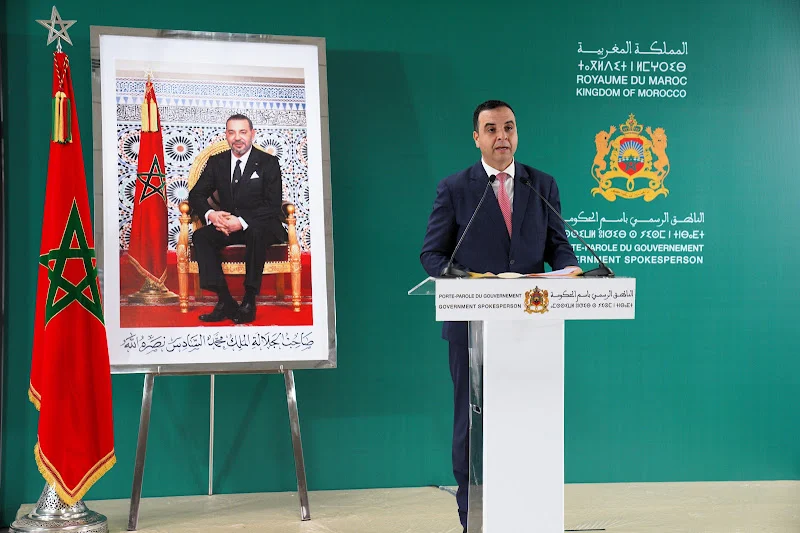
Morocco’s government says its decision to expand territorial health groups across all regions is based on “tangible results” from the pilot launched in the Tangier–Tetouan–Al Hoceima region, according to government spokesperson Mustapha Baitas.
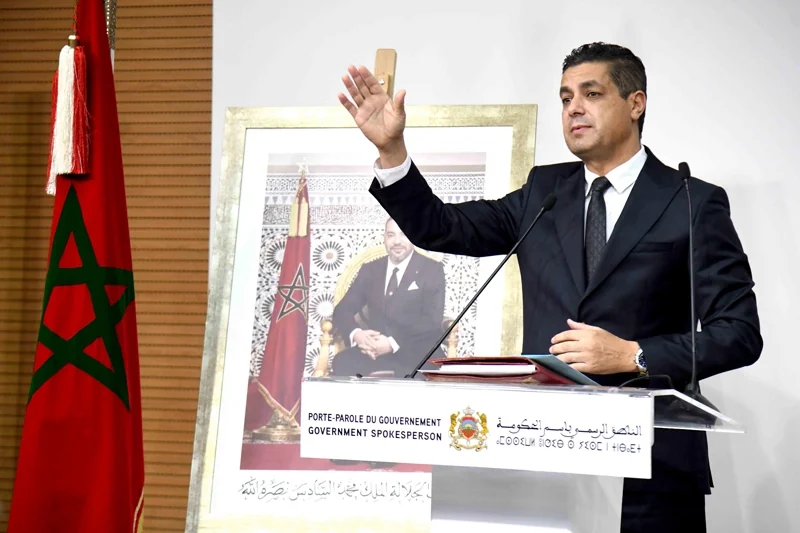
Speaking at the weekly press briefing following Thursday’s cabinet meeting, Baitas said the pilot phase “was launched, tested, and assessed,” and that its outcome justified national implementation. The government approved 11 decrees setting the official start date for the groups’ operations in the remaining regions.
His remarks came in response to criticism from the health sector’s union coordination, which rejected what it called a premature generalization only four months after the pilot began. The unions argue that the government is “experimenting recklessly” with the health system and the future of its workers, and that no formal evaluation has been conducted.
Baitas said the reform is grounded in the law establishing 12 territorial health groups nationwide, describing it as a shift from centralized management to a regionalized model meant to improve service delivery, resource mobilization and health governance.
He framed the rollout as part of the implementation of King Mohammed VI’s directives to overhaul the health system, adding that the decrees mark “a complete transition” to a unified and regionalized health structure.
Pilot results in Tangier
According to Baitas, the Tangier model produced “concrete results,” including the formation of its board, integration of health professionals and continuity of services such as pharmaceuticals and patient nutrition. He said the regional medical plan was activated to optimize health services and align resources with local needs.
The group now manages a broad network of infrastructure under a single governance system, he added, noting that more than 300 health institutions in the region are currently operating within this unified structure.
Under the newly approved decrees, each territorial health group will formally begin exercising its powers on the first day of the third month following its inaugural board meeting.
The council approved decrees setting dates for the groups in all regions, including Rabat–Salé–Kenitra (2.25.1044), Fes–Meknes (2.25.1045), Laayoune–Sakia El Hamra (2.25.1046), the Oriental region (2.25.1047), Guelmim–Oued Noun (2.25.1048), Souss–Massa (2.25.1049), Draa–Tafilalet (2.25.1050), Beni Mellal–Khénifra (2.25.1051), Dakhla–Oued Eddahab (2.25.1052), Casablanca–Settat (2.25.1053) and Marrakech–Safi (2.25.1054).





add your comment
Terms of publication : Not to offend the writer, people, sacred things, or attack religions or the divine self, and refrain from racist incitement and insults.