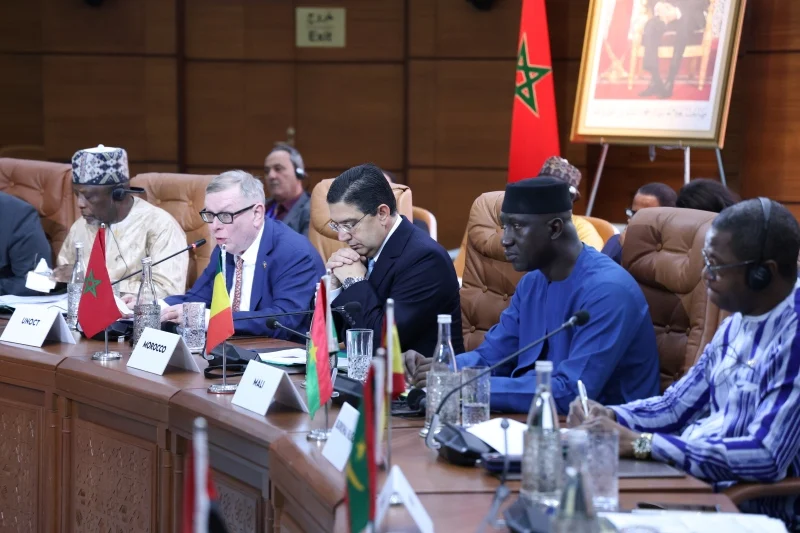
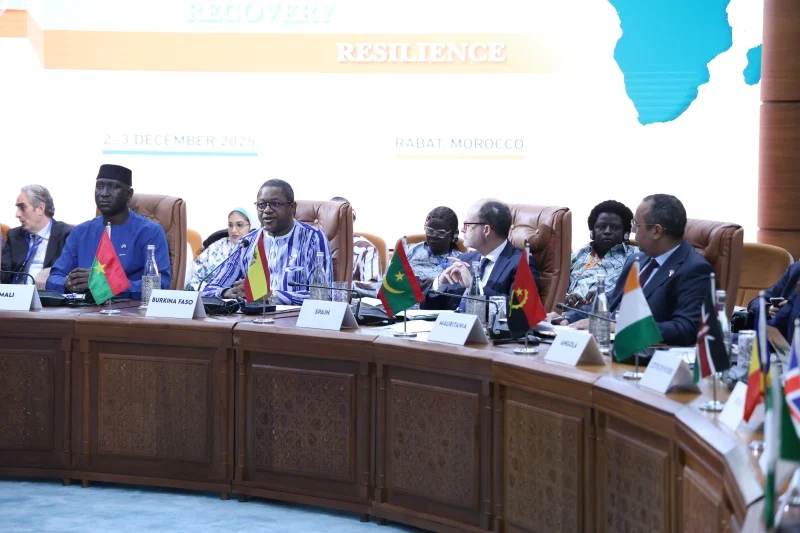
Morocco’s minister of foreign affairs, African cooperation, and Moroccan expatriates, Nasser Bourita, warned on Tuesday that Africa faces a complex threat targeting individuals and communities, during a conference on African victims of terrorism taking place on December 2–3 in Rabat.
Held under the theme “Standing with African Victims of Terrorism: Toward Justice, Recovery, and Resilience,” and supported by the United Nations Office of Counter-Terrorism (UNOCT), Bourita said that West Africa alone, according to reports, saw around 450 terrorist attacks in 2025, while the Sahel has become one of the world’s main hotspots in terms of attacks and casualties.
Yet, Morocco refuses to view Africa solely through a lens of vulnerability, he said, but as a continent of resilience, social solidarity, and renewal.
He stressed that Africa has a real chance to move beyond simply acknowledging victims by giving them a stronger role in public policy and improving tools that measure how well their voices are heard.
In this regard, the foreign minister presented during the conference a set of practical pathways that Morocco considers essential for achieving common goals and a unified African approach that can translate into concrete initiatives to support victims of terrorism and strengthen their resilience.
First, he stressed the need to restore dignity to victims and survivors by listening to their voices and testimonies, which he described as valuable knowledge that should guide policy and be taken into consideration.
The minister also called for a comprehensive approach to psychological, social, and economic support, including long-term mental-health care and mechanisms for social and professional integration.
Second, Bourita stressed the need to build a shared African vision that places victims at the center of policymaking, treating them as active partners in combating terrorism and violent extremism, and drawing on the continent’s diverse experiences to better understand their stories.
Third, he called for launching a digital platform highlighting best practices in supporting victims, saying it would help African states and institutions share experiences and provide a practical reference point for policymakers.
Bourita noted that this conference, which comes only three months after the ministerial meeting of the Group of Friends of Victims of Terrorism in New York, co-chaired by Spain and Iraq, aims to give this issue an African dimension by placing victims at the heart of the discussion and of a new African vision for counter-terrorism.
He stressed that the conference is part of Morocco’s long-standing strategic choices in foreign policy under King Mohammed VI, who has repeatedly affirmed that Africa, for Morocco, is more than geography or history, but it is a deep human connection built on solidarity.
The conference, attended by the UN Assistant Secretary-General for Counter-Terrorism, along with African and foreign ministers, reflects Morocco’s commitment to African solidarity, he added.
Bourita highlighted that Morocco’s comprehensive counter-terrorism strategy rests on three pillars.
This includes a security pillar based on vigilance and dismantling terrorist cells, a development pillar through human-development programs, and an ideological pillar focused on reforming religious institutions, promoting moderation, and training imams.
Putting the victims at the center of efforts:
Alexandre Zouev, Acting Under-Secretary-General of the United Nations Office of Counter-Terrorism, emphasized that central to collective efforts to combat terrorism, noting that current measures are not enough.
He stressed the need to focus on the human cost of terrorism in Africa and to establish political and humanitarian frameworks that ensure justice for victims.
He highlighted that terrorism has caused serious harm to communities across Africa and, because terrorist groups are linked, the problem goes beyond one country or region and is global.
Zouev added that Africa, especially West Africa and the Sahel, is becoming a hotspot for terrorism, with communities there facing increasing danger, noting that the attacks displaced millions of people last year.
Zouev said that the conference, which aims to identify solutions providing victims with support tailored to their realities, is built on a strong legacy of cooperation.
It aligns with the philosophy of the International Conference of Victims of Terrorism, as well as the UN’s Global Counter-Terrorism Strategy, which urges states to support victims and respond to their needs in both the medium and long term.



add your comment
Terms of publication : Not to offend the writer, people, sacred things, or attack religions or the divine self, and refrain from racist incitement and insults.