
Since the outbreak of the conflict over the Moroccan Sahara in the mid-1970s, this issue has occupied a central place in Moroccan political consciousness, becoming a cornerstone in rebuilding the relationship between state and society. The Sahara issue was not just a regional sovereignty dispute, but also a strategic tool for restoring political legitimacy and strengthening the internal front during a critical period in Morocco’s modern history.
This issue, which remains one of the most important national issues, contributed to the unification of the Moroccan people. In the past, it formed the basis for building national consensus around the ‘first national issue’ and contributed to launching the democratic process in 1975. It also helped to ease the political tension that followed the coup attempts of 1971 and 1972, during which time the authorities exploited this issue to restore internal confidence and divert part of the military establishment towards the south.
At that time, Morocco was experiencing an internal crisis of confidence and facing external isolation. The Sahara issue served to unify the nation, transforming from a geopolitical issue into a cause that brought the state and political and social forces of various orientations together. The Green March of 1975 was a tangible manifestation of this consensus, turning popular support into a unified political act and restoring the regime’s national legitimacy through participation and unity.
After nearly half a century, the Sahara issue is back to play the same role, but in a different context. Today, there is no longer a need for traditional political consensus, but rather a need to consolidate popular legitimacy and strengthen trust between the state and society, in light of social changes and the growing awareness of new generations of their rights and demands.
Despite changing circumstances, the issue remains strategically important. The recent Security Council resolution on the autonomy proposal for the Sahara region was a new victory for quiet royal diplomacy. It shifted the issue from a regional dispute to a matter of national sovereignty. The international community now recognizes the Moroccan proposal as the only realistic solution to end the long-standing conflict.
On October 31, 2025, the UN adopted Resolution No. 2797, which cemented international recognition of the Kingdom’s territorial integrity. This resolution ushered in a new phase of diplomatic resolve, based on the wisdom and foresight that have characterized King Mohammed VI’s leadership on this issue. Morocco is no longer on the defensive; it is now in a position to solidify its progress and strengthen its role as a responsible and influential regional power in North Africa and the Sahel.
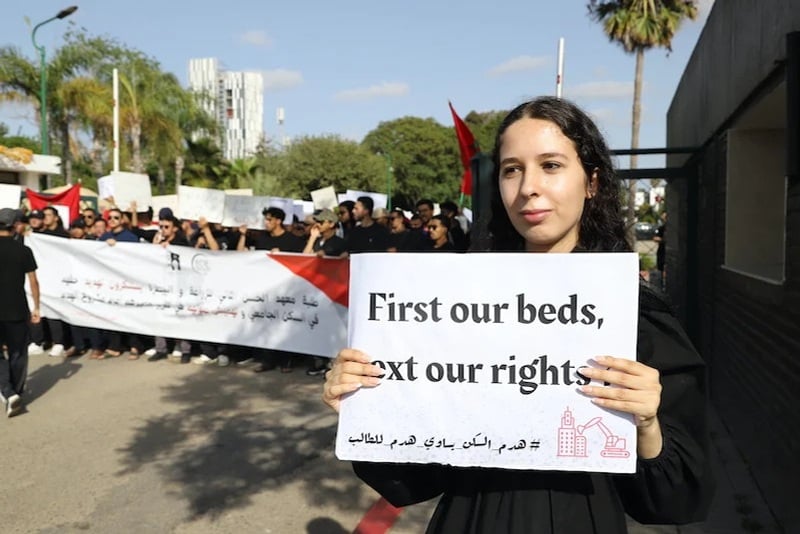
This diplomatic victory coincided with a social movement led by young people, who raised legitimate demands related to health, education, social justice, and the fight against corruption. This explains the widespread popular response to these demands, which reflect the development of social awareness and broader participation in the public debate on development and governance, and point to increasing political and civic maturity within Moroccan society.
In this context, the Sahara issue once again emerges as a unifying symbol that renews the trust between the state and society. This renewal is not achieved through traditional rhetoric, but rather through a shared sense of destiny and collective belonging. Recent diplomatic gains have created an opportunity to rebuild national unity and shift the focus of the debate toward priorities for reform and development.
The King Hassan II once said that the Sahara is the source of all goodness. He was quoted as saying: “All goodness comes from the Sahara, and all evil comes from the Sahara.” This statement sums up the dual role the Sahara has played in Moroccan history: it is both a source of national unity and a measure of political maturity. For decades, it has been a sacred issue and a red line. However, the current phase is redefining this sanctity, shifting from an official conviction to a popular awareness that defending territorial unity is integral to defending a comprehensive national project for development and justice.
Today, the Sahara issue continues to play a strategic role in consolidating the monarchy’s legitimacy and strengthening its popular support. It serves as a lever for reform and modernization. After contributing to the regime’s political legitimacy in the past, the Sahara issue has become a tool for consolidating its popular legitimacy, given the significant international support for the Moroccan proposal from major powers, including the United States, France, Britain, and Spain.
Moroccans expressed their national pride through spontaneous celebrations sweeping across cities. They raised national flags and pictures of King Mohammed VI to show their support for his national unity and reform project.
Today, the Sahara issue is not just a matter of borders and sovereignty; it is also a symbol of Morocco’s renewed national path toward building a cohesive, democratic state based on popular legitimacy, justice, and development. From 1975 to 2025, the Sahara has reflected Morocco’s journey toward modernization and democracy without compromising its core values.
Once again, the Sahara is forcing a re-examination of the structure of the Moroccan state as a whole. This will open up the Moroccan political system to democratization, establishing a state based on rights and freedoms.
Indeed, good things come from the Sahara.
Mustapha Antra, Ph.D. Media And University Researcher



add your comment
Terms of publication : Not to offend the writer, people, sacred things, or attack religions or the divine self, and refrain from racist incitement and insults.