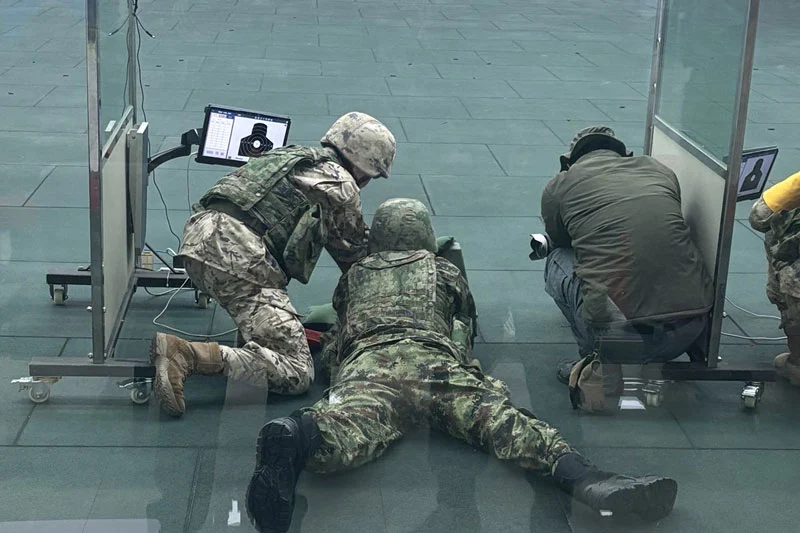
Moroccan military cadets participated this week in the 12th International Military Students Week at the Engineering University of the People’s Liberation Army in Nanjing, eastern China, alongside cadets from Serbia, Brazil, Pakistan, South Korea, Vietnam, and eight Chinese military academies.
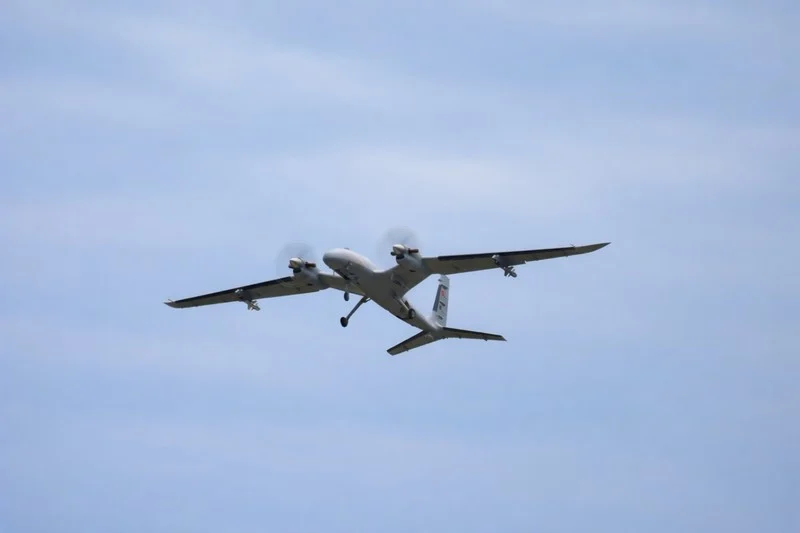
According to China’s Ministry of Defense, this year’s program, themed “The Impact of New Domain Forces with New Combat Capabilities on Future Warfare,” included training exercises and knowledge exchanges among participants. Discussions focused on topics such as the effects of unmanned equipment on future conflicts, modern warfare in contested environments, ethical standards, and the use of artificial intelligence in military training and operations.
Colonel Cai Ho, a retired Chinese officer, delivered a lecture on the key factors shaping future armed conflicts and new domains of warfare. Foreign cadets also engaged in AI-based military programs, mine-clearing workshops, unmanned systems operations, and tactical exercises using Chinese-made weapons near Nanjing.

Moroccan Military Engagement
Abderrahman Mkawi, a military affairs expert, told Hespress AR that Morocco’s participation provides cadets with exposure to emerging technologies and weapons, particularly those related to space and artificial intelligence. He said it also demonstrates the Moroccan military’s openness to international experiences, especially from Asian partners.
“Morocco places growing importance on developing the human resources of its armed forces,” Mkawi said, noting that training includes unmanned and nontraditional weapon systems. He added that Moroccan cadets previously sent to China to learn Chinese now serve as a communication bridge between the two militaries.
Participation in such events, Mkawi said, helps Morocco establish itself as a reliable and balanced international partner capable of engaging major global powers like China, which has reportedly shown interest in defense-sector investment in Morocco.

Strategic and Academic Significance
Hicham Moutadad, a researcher in strategic and security affairs, emphasized that Morocco’s involvement is more than ceremonial. “It reflects the Moroccan military’s strategic commitment to multidimensional training, combining education, innovation, and defense diplomacy,” he said.
Moutadad added that China’s selection as the host underscores Morocco’s strategic ties with Beijing through the Belt and Road Initiative, while also demonstrating Rabat’s approach of “balanced openness” in military relations.
He highlighted that activities focused on AI applications, unmanned systems, and electromagnetic warfare reflect a global shift toward technologically and cognitively driven future conflicts, rather than traditional numeric or conventional military superiority. “For Morocco, these areas represent a future priority in modernizing its defense forces on digital and intelligent foundations,” Moutadad said.
The researcher concluded that Moroccan cadets’ participation strengthens what can be described as “academic military diplomacy,” a soft tool of Moroccan defense policy, ensuring the next generation of officers is prepared for emerging security challenges.






add your comment
Terms of publication : Not to offend the writer, people, sacred things, or attack religions or the divine self, and refrain from racist incitement and insults.