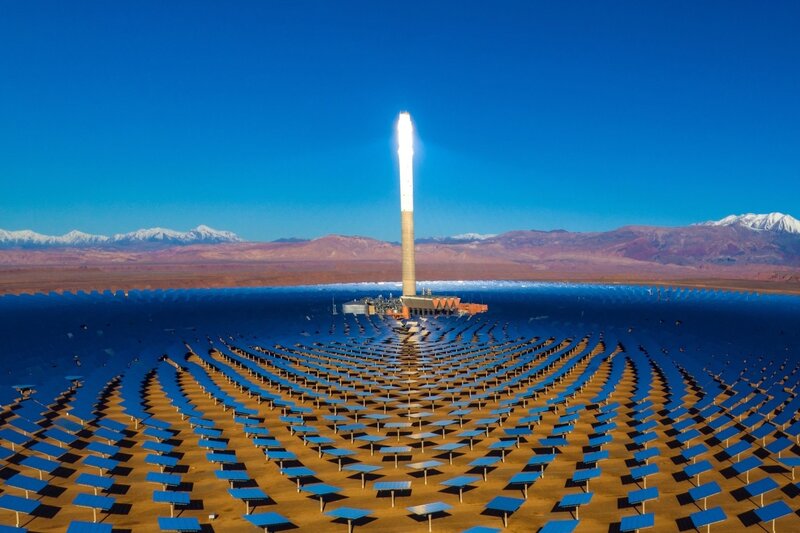
The Noor-Ouarzazate solar complex in Morocco proves that the situation “is not all gloomy” on the African continent, according to the United Nations Economic Commission for Africa (UNECA).
In an article published on its website, the UNECA highlights that the Noor-Ouarzazate Complex is a model for access to electricity, noting that this facility is often cited as one of the largest solar power plants worldwide.
The Commission points out that hundreds of millions of Africans still live without electricity and rely on kerosene, candles, and firewood, but notes that “the situation is not so all gloomy across Africa.”
UNECA points out that the oft-quoted figure of 600 million Africans without electricity has become alarming, estimating that the cost is measured in stalled growth, missed opportunities, and 700,000 preventable deaths each year.
Without electricity, hopes for job creation, value-added manufacturing and competitive exports remain out of reach, the UNECA insists, before asking whether stronger policies, fairer financing, and new technologies can finally turn the tide.
Reducing Africa’s energy deficit will determine the pace of industrialization, the strength of the Continental Free Trade Area (AfCFTA), and the credibility of Agenda 2063, the UN body continues.
The Commission believes that this will determine whether millions of people continue to die needlessly from energy poverty, or whether Africa seizes the chance to power a more equitable and sustainable energy future.




add your comment
Terms of publication : Not to offend the writer, people, sacred things, or attack religions or the divine self, and refrain from racist incitement and insults.