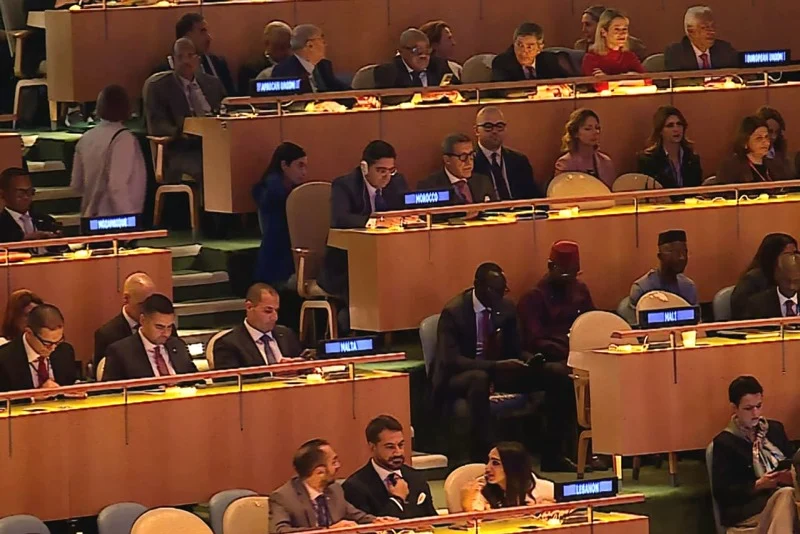
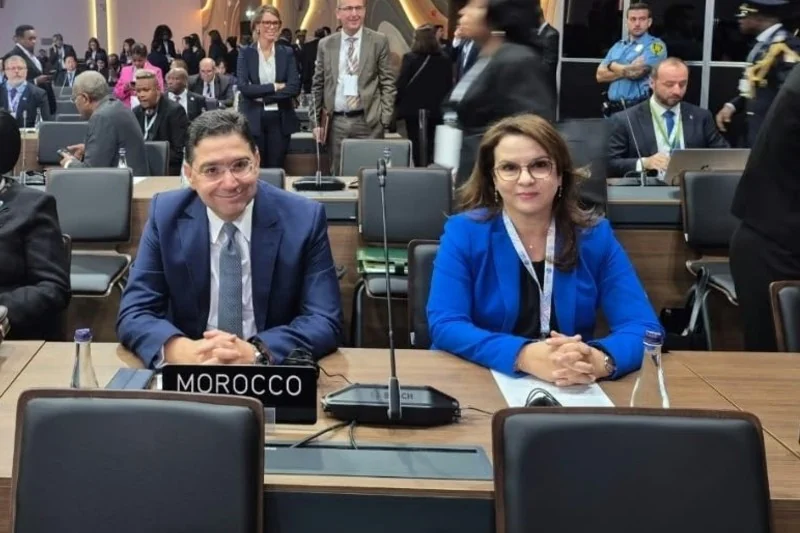
Morocco used the United Nations stage Monday to present itself as a standard-bearer on migration policy, with Foreign Minister Nasser Bourita urging governments to move beyond slogans and procedural reviews toward a more substantive global response.
Speaking at a high-level dialogue on migration held on the sidelines of the 80th U.N. General Assembly, Bourita said Morocco’s approach was anchored in “solidarity and shared responsibility,” citing both domestic reforms and international initiatives spearheaded by Rabat under the guidance of King Mohammed VI, whom the African Union designated its “Leader on Migration.”
He pointed to Morocco’s role in crafting the African Agenda on Migration, adopted by the AU as a continental reference framework , and to the African Migration Observatory in Rabat, which provides data to support evidence-based policy.
Bourita also flagged Morocco’s early championing of the Global Compact for Safe, Orderly and Regular Migration, adopted in Marrakech in 2018, and its long-standing partnership with the International Organization for Migration.
Bourita framed Morocco’s experience as unique: a country that is simultaneously of origin, transit, and destination. He said this vantage point allowed Rabat to push for pragmatic solutions, highlighting the “success” of cooperation with Spain as an example of bilateral arrangements that can ease pressures while respecting human rights.
But the minister also warned of “three paradoxes” shaping today’s debate. Migration, he argued, remains over-politicized and reduced to slogans, even as migrants represent “an essential economic and social force.”
The multilateral system, meant to help states manage migration, is undermined by a mismatch between its mandate and limited resources. And the next review of the Global Compact risks becoming “a procedural exercise” instead of a genuine chance to strengthen collective governance.
To avoid that outcome, Bourita proposed interlinking migration observatories across regions, scaling up successful experiences, and mobilizing greater resources.
“The responsibility is collective,” he said, calling on states to treat migration not as a liability but as “a lever for dialogue, solidarity and shared prosperity.”





add your comment
Terms of publication : Not to offend the writer, people, sacred things, or attack religions or the divine self, and refrain from racist incitement and insults.