
As Morocco is preparing for the 2026 legislative elections, political parties and civil society organizations abroad are once again raising calls for including Moroccan diaspora in the upcoming elections.
This call, which resurfaces every five years as elections approach, becomes evident as the Moroccan diaspora, now numbering between 6 and 6.5 million and spread across 100 countries, plays a crucial role in the country’s economy.
Last year alone, remittances from Moroccans abroad amounted to MAD 119 billion, a 3.3% increase over 2023.
Constitutional promise unfulfilled
Since the adoption of the 2011 Constitution, members of the Moroccan diaspora have been granted full citizenship rights, including the right to both vote and run in elections.
Article 17 explicitly states: “Moroccans residing abroad shall enjoy full citizenship rights, including the right to vote and to run in elections.”
But this right has largely remained on paper. Since 2011, three successive governments have not acted on this constitutional promise, which has left millions of Moroccans abroad without their political rights.
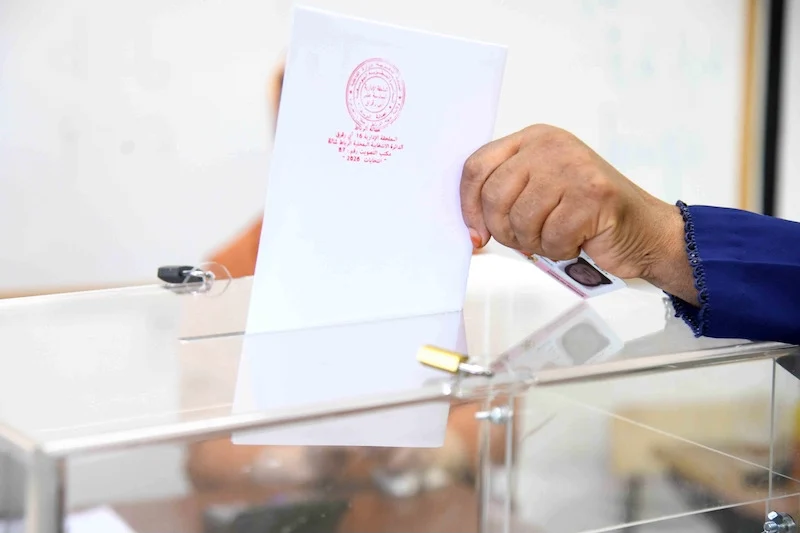
This includes the right to vote directly in polling stations abroad, instead of the proxy voting used in past elections.
There is also the right to run for office in local, regional, and national elections from their countries of residence, which is a constitutional right that has still not been implemented too.
These citizens have played a vital role in Morocco’s development through remittances, investments, and financial support for their families, as was seen during the COVID-19 pandemic, in addition to boosting the tourism sector.
They also act as Morocco’s ambassadors in their host countries, defending its territorial integrity and promoting its key national interests. And from the very beginning of his reign, King Mohammed VI has shown great care and attention to Moroccans living abroad.
Political parties’ push
This year, the Justice and Development Party (PJD) called for Moroccans living abroad to be given their right to vote and run in elections as part of the current talks on preparing for the upcoming legislative elections.
The PJD’s branches abroad have urged institutions, authorities, and political parties to ensure that citizens living outside Morocco can fully exercise their constitutional rights in the upcoming elections.
They have also committed to defending Morocco’s interests abroad and contributing to the development and progress of their homeland at all levels.
This call marks a major shift for the party, which had previously opposed direct participation in the 2021 legislative cycle.
The party now advocates for additional parliamentary seats reserved for diaspora representatives and proposes direct voting in countries of residence, with party representatives overseeing the process, similar to the procedure used during the 2011 constitutional referendum.
The Progress and Socialism Party (PPS), led by Secretary-General Mohamed Nabil Benabdallah, has criticized the absence of diaspora representation since 2011.
Benabdallah called for the creation of special constituencies for expatriates, based on their geographic distribution. He also urged for simplified procedures for registration and candidacy, which would eliminate the need to travel to Morocco or rely on proxy voting.
The party’s memorandum stressed the need for electronic voting options in these districts and for Moroccan consulates to handle voter registration, candidate submissions, and the voting and counting process.
The Unified Socialist Party (PSU) has also joined the call, proposing a national list specifically for Moroccans abroad and allowing them to participate directly in the electoral process.
Party Secretary-General Jamal Al Asri views the Moroccan diaspora’s exclusion in the 2026 elections as unacceptable, given their significant contribution to the national economy through remittances. “Their money counts, but their votes do not,” he wondered.
The PSU memorandum recommends establishing an independent body to supervise elections for expatriates. It also specifies that any Moroccan who has served in the Israeli army, held military, political, or civil positions in Israel, or served in any foreign army, cannot participate in the election.
Their stance is based on Moroccan nationality law, which can revoke the nationality of people who have served in a foreign army.
Civil society voices
Civil society organizations abroad have also long supported the practical implementation of their constitutional rights.
The Civil Democratic Council for Moroccan Migration has submitted a memorandum to the Ministry of Interior, calling for the diaspora’s explicit right to participate in elections.
The council also urged the creation of special constituencies abroad with additional seats that reflect the demographic, economic, and cultural importance of Moroccans worldwide.
They proposed simpler registration procedures, the establishment of an independent body to ensure electoral integrity, and an amendment to Article 63 of the Constitution to create a dedicated chamber for Moroccans abroad within the House of Councillors.
But some Moroccan diaspora members seemed disappointed by this repeated call.
Kacem Achehboune, a Dutch-Moroccan author, activist, and member of the Dialogue Institute, told Hespress English that “almost 15 years after their constitutional right to political participation was established, Moroccans abroad have become so deeply frustrated that political engagement in their homeland is no longer a priority for many.”
Many of them view the promises as nothing short of “repeated electoral slogans without any concrete measures” to enable the diaspora to truly exercise their rights and fulfill their civic duties, said Nadia Yakine, the only foreign woman on the Frankfurt city council and president of the Council of Moroccan Women of the World.
Faiiling to facilitate their inclusion, she emphasized, means Moroccans abroad have to travel back to Morocco to vote or rely on proxy voting, “both options are neither practical nor logical.”
It also means missing the expertise and skills of millions of Moroccans abroad ready to take part in Morocco’s political and institutional development.
“If integrated, this would give them a sense of full belonging and a direct role in shaping the future of their country,” said Kacem, stressing that “political participation for Moroccans abroad is not just a symbolic demand. It is a strategic priority.”




add your comment
Terms of publication : Not to offend the writer, people, sacred things, or attack religions or the divine self, and refrain from racist incitement and insults.