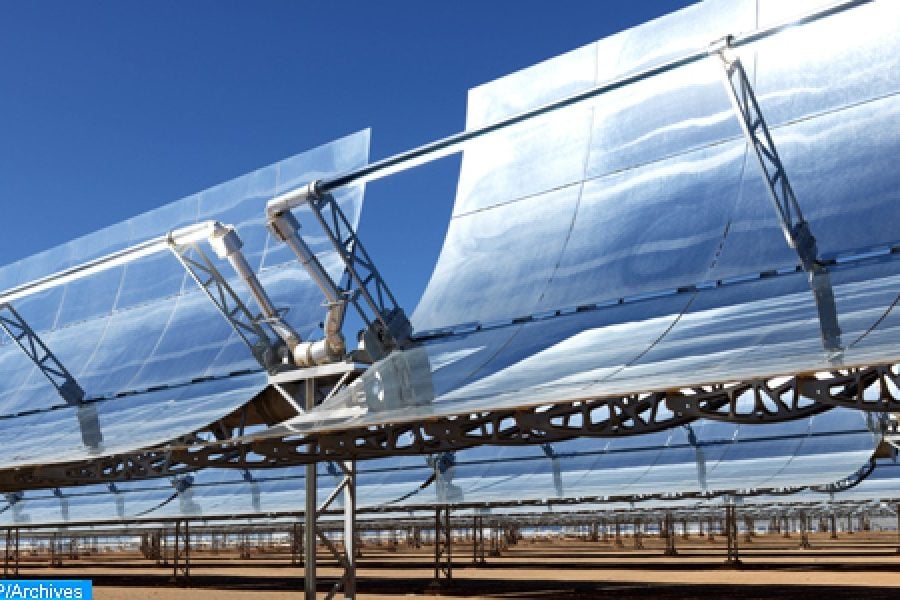
Morocco has emerged as the world’s second-largest recipient of Chinese green technology manufacturing investments, after Indonesia, with commitments exceeding $18 billion, according to a new report from Johns Hopkins University’s Zero-Carbon Industry Policy Lab.
The report, titled China’s Green Leap Abroad: The Rapid Expansion of Chinese Manufacturing Investment in Clean Tech, said Morocco ranked seventh globally in number of projects, with 15 initiatives, but second in terms of total investment volume.
Researchers attributed Morocco’s strong position to large-scale Chinese investments in battery materials, backed by the country’s vast phosphate reserves, as well as projects in green hydrogen. Morocco’s proximity to Europe, favorable trade agreements and supportive industrial policies have also made it an increasingly strategic hub for Chinese clean tech manufacturers seeking access to the EU market.
Globally, Chinese companies have pledged more than $220 billion in green tech investments since 2022, spanning batteries, solar, wind, new energy vehicles and green hydrogen across 54 countries. The study found battery materials to be the single largest sector, with announced commitments exceeding $62 billion, reflecting the capital-intensive nature of mineral processing and materials plants.
Much of China’s overseas clean tech investment is concentrated in Southeast Asia, especially Indonesia, where nickel and cobalt reserves underpin a growing regional hub. At the same time, Chinese firms are expanding into Latin America’s lithium triangle — Chile, Bolivia and Argentina — to secure supply chains, while Morocco has emerged as a leading site in the Middle East and North Africa for cathode and raw material projects.
Since 2022, Chinese firms have launched 387 clean tech projects worldwide, surpassing the total commitments made during the entire previous decade. While solar dominated before the COVID-19 pandemic, capital flows have since shifted toward batteries, EVs, charging infrastructure, wind and early-stage hydrogen.
The report noted that more than 75% of projects are located in the Global South or emerging markets, with host market access, third-market export potential and raw material availability driving investment decisions.





add your comment
Terms of publication : Not to offend the writer, people, sacred things, or attack religions or the divine self, and refrain from racist incitement and insults.