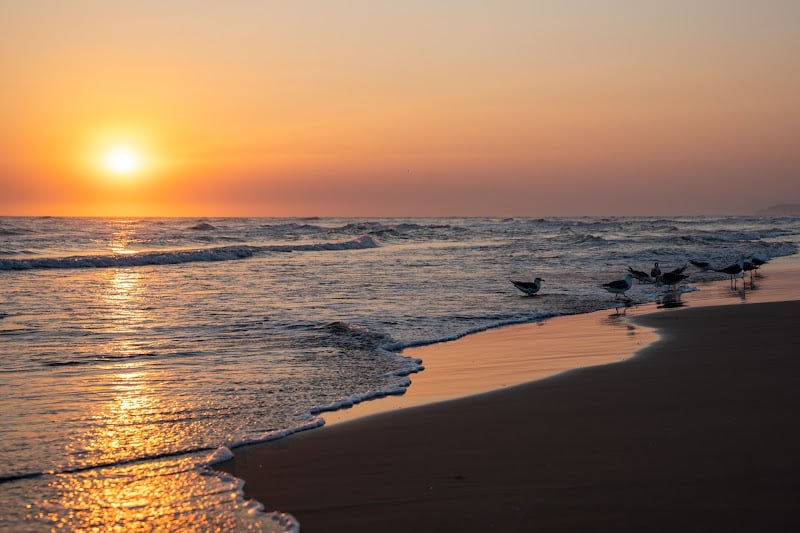
Morocco is experiencing marked weather fluctuations as the country transitions from summer to autumn, the General Directorate of Meteorology said this week.
“The current conditions reflect the seasonal shift,” said Hussein Youabed, the directorate’s communications officer. “Temperatures swing between hot and mild as we move gradually toward autumn, more than just a passing cold spell.”
With hot air masses retreating, western maritime currents carrying humidity have cooled northern and central coastal regions and parts of the interior, bringing cooler nights. Still, Youabed noted that signs of a renewed rise in temperatures remain, underscoring the instability of late summer weather.
Cooler Temperatures, Local Storms
Daytime temperatures along the northern coasts now range from 26 to 30 degrees Celsius (79–86 F), with nighttime lows between 18 and 24 C (64–75 F). Southern and eastern regions remain warmer.
Mountain areas, especially in the Middle and High Atlas, have seen unstable cumulus clouds producing local thunderstorms, sometimes with hail.
Forecast for Next Week
Youabed said relatively mild conditions will persist through midweek before temperatures climb again heading into the weekend and early next week. Local thunderstorms are expected in the Atlas, Rif, and Saïss regions. Nighttime conditions will remain cooler than in previous weeks.
Official forecasts show highs reaching 39 to 43 C (102–109 F) in the southeast and far south, 34 to 39 C (93–102 F) in southern slopes and inland plains, and no higher than 22 to 28 C (72–82 F) in the Atlas and near the coast. Dense low clouds may form along the Atlantic coast and parts of the southern provinces, occasionally producing light rain or fog. Strong winds could bring sandstorms to parts of the southeast and eastern Morocco.
Summer of 2025 Among Hottest on Record
The fluctuations come after an exceptionally hot summer. Morocco endured several heatwaves similar to Spain, which recorded its most extreme August heatwave since data collection began.
“Temperatures exceeded 46 and 47 degrees Celsius in many Moroccan cities,” Youabed said. Records included 46.6 C in Smara, 46.3 C in Ben Guerir, 45.6 C in Marrakech and 47.9 C in Essaouira in mid-August.
The mid-August heatwave lasted 17 days, particularly affecting central, southern and inland regions, but also reaching some coastal cities. On Aug. 17, maximum temperatures across much of the country exceeded long-term averages by 3 to 13 degrees, with the sharpest increases in inland plains and plateaus. Coastal areas such as Casablanca, Safi and Essaouira also recorded 5 to 8 degree spikes above seasonal norms.
Meteorologists attributed the extreme heat to the strengthening of a subtropical high-pressure system over North Africa combined with a Saharan thermal low, pushing hot, dry air masses northward. Local “foehn” winds on the western slopes of the Atlas and Rif mountains, along with clear skies, further intensified daytime heating.
“The unprecedented levels recorded in Morocco and Spain this summer highlight the scale of climate changes affecting the entire Mediterranean region,” Youabed said.




add your comment
Terms of publication : Not to offend the writer, people, sacred things, or attack religions or the divine self, and refrain from racist incitement and insults.