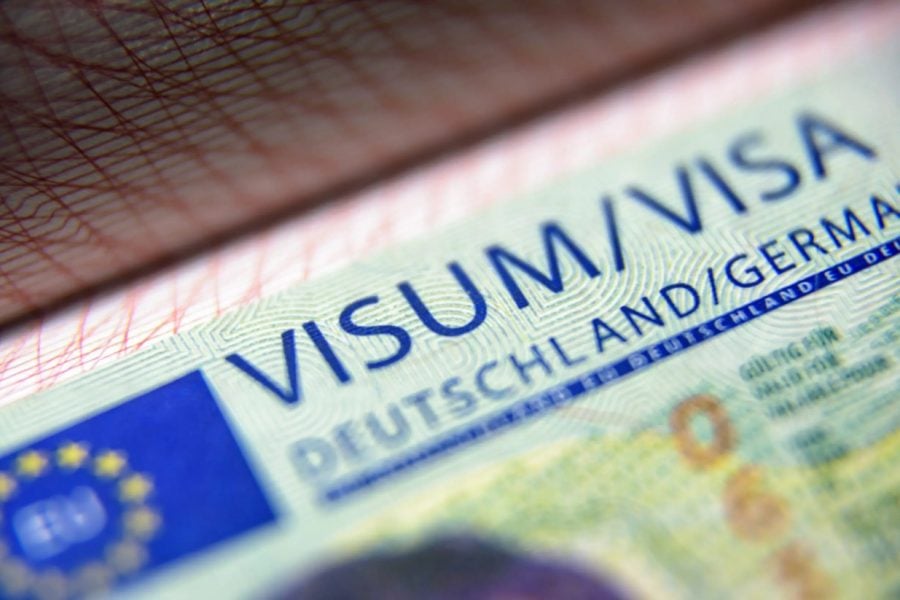
The European Commission has launched public consultations on a new visa policy strategy, aimed at shaping a system that strengthens the bloc’s economic competitiveness while addressing security and migration challenges.
The initiative, announced earlier this week, seeks a “modern and future-proof” framework, according to the Commission’s call for feedback.
The draft outlines priorities of tightening safeguards against irregular migration while easing mobility that supports growth and innovation.
It highlights persistent obstacles for EU states in attracting highly skilled workers, with lengthy procedures for long-stay visas and residence permits cited as barriers for employers and migrants, including researchers.
The Commission stresses that restoring competitiveness requires transparent, efficient migration channels to draw and retain top talent.
Khalid Mouna, a Moroccan academic specializing in migration, told Hespress the plan reflects Europe’s dual approach: political discourse stressing restrictions coexists with recognition that migrants are essential to the economy.
He cited Italy under Prime Minister Giorgia Meloni, where record numbers of migrants were regularized despite tough rhetoric. For Morocco, he noted that Schengen short-stay visas coexist with long-term work permits, particularly in medical and engineering sectors.
Mouna argued the EU’s reform could open opportunities for qualified Moroccan workers but warned of costs for Morocco, which faces demographic decline and shortages in critical professions.
He emphasized the need for national strategies to retain skilled workers, warning that remittances do not offset losses in human capital.
Expanding medical training and shortening study durations could mitigate shortages in health care, but other sectors remain vulnerable.
Hassan Bentaleb, a researcher on migration and asylum, noted the strategy coincides with the EU’s new digital visa system, launching in October, which will collect biometric and passport data instead of physical stamps.
He said the measures aim to tighten oversight of non-EU arrivals, while Europe also seeks to compete with Canada and the US in attracting global talent. He downplayed any major immediate impact on Moroccans, who remain among the largest recipients of Schengen visas.










add your comment
Terms of publication : Not to offend the writer, people, sacred things, or attack religions or the divine self, and refrain from racist incitement and insults.