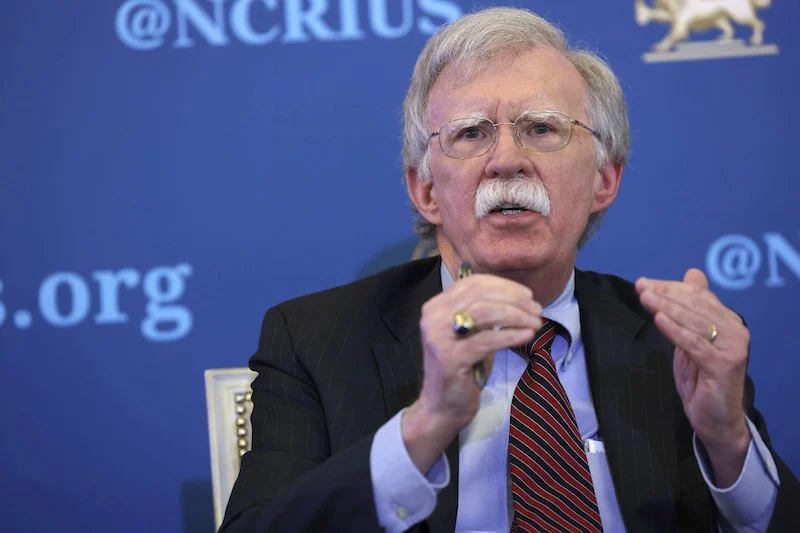
Former U.S. National Security Advisor John Bolton stirred controversy once again by challenging the White House’s recognition of Morocco’s sovereignty over the Sahara and its support for autonomy as a serious and realistic solution.
Bolton’s comments, during an interview with a Spanish journalist, seemed like a revival of an outdated narrative, siding with the separatist Polisario Front while overlooking UN resolutions, progress in Morocco’s southern regions, and recent political and diplomatic shifts that have solidified the U.S. position.
Bolton cited the “1991 commitments” on a self-determination referendum, ignoring that UN resolutions have since rendered them obsolete.
He also ignored the region’s development, including structured projects and the New Development Model, which have turned the south into an economic hub and a bridge for African and continental cooperation.
Bolton linked the conflict to Sahel security, ignoring Morocco’s key role in counterterrorism, migration control, and regional stability, which are facts already highlighted in international reports.
His position appears more politically driven than a realistic reading of the situation.
He also criticized MINURSO for not monitoring human rights, disregarding that its mandate focuses on ceasefire oversight and supporting the political process, in line with international consensus and Morocco’s sovereignty.
Bolton additionally accused France of bias toward Morocco, overlooking that Moroccan-French ties are based on strategic cooperation, with Paris’ support for autonomy aligned with international calls for a realistic political solution.
His statements come as calls grow in the U.S. and EU to classify the Polisario Front as a terrorist group due to its Sahel connections. Bolton’s attempt to revive separatist rhetoric contrasts totally with ongoing efforts to ensure regional security and stability.
Bolton’s flawed Sahara narrative:
Abdelouahab Al Kaine, head of Africa Watch and deputy coordinator of the Sahrawi NGOs Alliance, said John Bolton’s latest comments on the Moroccan Sahara reflect Algeria’s push against UN-led efforts to find a fair and practical political solution.
“UN resolutions consistently back Morocco’s autonomy plan as a legitimate framework to resolve the decades-long dispute,” he stressed.
Al Kaine told Hespress AR that Bolton’s call for a referendum reflects a personal agenda to oppose his own government after being sidelined for past diplomatic mistakes, including the Sahara file.
He stressed that a referendum is technically unfeasible, as determining who counts as a Sahrawi voter is impossible.
Also, relying on the flawed Spanish census, which excluded many tribes, or basing it on tribal affiliation, would unfairly exclude many Sahrawis who have no connection to the Algerian Sahrawi area.
The expert stressed that Morocco’s plan is based on a thorough UN assessment, which recognized that Algeria and the Polisario Front undermined voter identification by including thousands from Mauritania and Algeria.
He also dismissed Bolton’s claim that Morocco and the Sahara are separate, stressing that the region has long been part of Morocco historically, legally, and geographically.
Political provocation:
Bibout Ddai, a researcher in modern history, said former U.S. National Security Advisor John Bolton’s remarks to Spanish journalist Héctor Santorum coincided with the UN Security Council’s review of MINURSO’s mandate and days before the Tokyo International Conference on African Development, where the Polisario Front is barred from participation despite Algerian pressure.
Ddai told Hespress Ar that Bolton’s stance echoes Algeria’s bid to cover repeated diplomatic setbacks as global recognition of Morocco’s sovereignty grows and support for the autonomy plan strengthens.
Algeria, he noted, continues to pour resources into influencing regional and international forums, from the African Union to UN bodies.
He stressed that denying the Sahara’s Moroccan identity lacks a historical or legal basis, citing unity since before the Almoravid state and centuries of ties between Sahrawi tribes and the Alaouite monarchy, including joint resistance to colonial powers.
Such claims, Ddai argued, aim to distort facts and dismiss Morocco’s diplomatic gains, rooted in history, law, and the declared will of Sahrawis engaged in building a modern, democratic Morocco, unlike Algeria, where political instability prevents the establishment of a similar system.






add your comment
Terms of publication : Not to offend the writer, people, sacred things, or attack religions or the divine self, and refrain from racist incitement and insults.