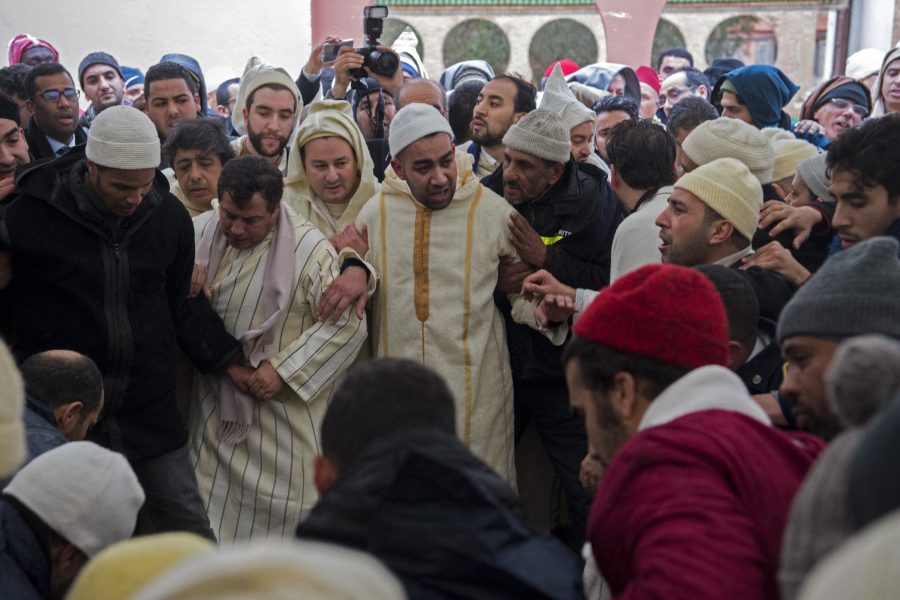
The Boutchichiya order is one of Morocco’s largest and most visible Sufi brotherhoods. Founded centuries ago in the Berkane region, it traces its spiritual lineage back to the Qadiriyya order of Baghdad but became distinctly Moroccan under the Boutchich family.
Its current reputation stems from its global reach, charismatic leadership, and ability to blend deep-rooted mysticism with modern organizational capacity.
Why does the Boutchichiya matter?
The order has an outsized role in Moroccan religious and political life. Thousands of disciples, both in Morocco and abroad, look to it for spiritual guidance. The monarchy views the Boutchichiya, and other Sufi brotherhoods, as a bulwark against radical interpretations of Islam, presenting them as custodians of Morocco’s “moderate” religious identity.
The order is also a hub of pilgrimage and tourism: its headquarters in Madagh draws tens of thousands during religious festivals, generating both cultural and economic impact.
What do the Boutchichiya believe and practice?
The Boutchichiya emphasize inner purification, remembrance of God , and moral discipline. Their practices include collective chanting, rhythmic recitations, and meditative breathing, all aimed at cultivating spiritual presence and humility.
The Boutchichiya frames Sufism as an ethic of daily life, emphasizing education, hospitality, and ethical refinement.
What triggered the current debate?
The death of Sheikh Jamal Qadiri Boutchich, who led the brotherhood until recently, has left the order in a leadership vacuum. Unlike political parties or corporations, succession in Sufi orders typically follows hereditary lines, but it is rarely transparent.
Two of the late sheikh’s sons are seen as potential successors, sparking speculation about whether the order will stick to tradition, split internally, or adapt to new institutional forms.
The bigger question: how do Sufi orders renew themselves?
Academic Ahmed El Farrek told Hespress, Moroccan Sufism faces a dual challenge:
- Pedagogical renewal: moving beyond ritual blessings to a focus on ethical and spiritual training.
- Institutional renewal: shifting from the dominance of a single sheikh to collective, institutional leadership.
What comes next?
The Boutchichiya’s future will be a test case for Morocco’s wider religious landscape.
If it transitions smoothly, it could set a precedent for institutionalizing Sufi leadership. If not, it risks internal division or waning influence, weakening one of Morocco’s key “soft power” tools both domestically and internationally.



add your comment
Terms of publication : Not to offend the writer, people, sacred things, or attack religions or the divine self, and refrain from racist incitement and insults.