
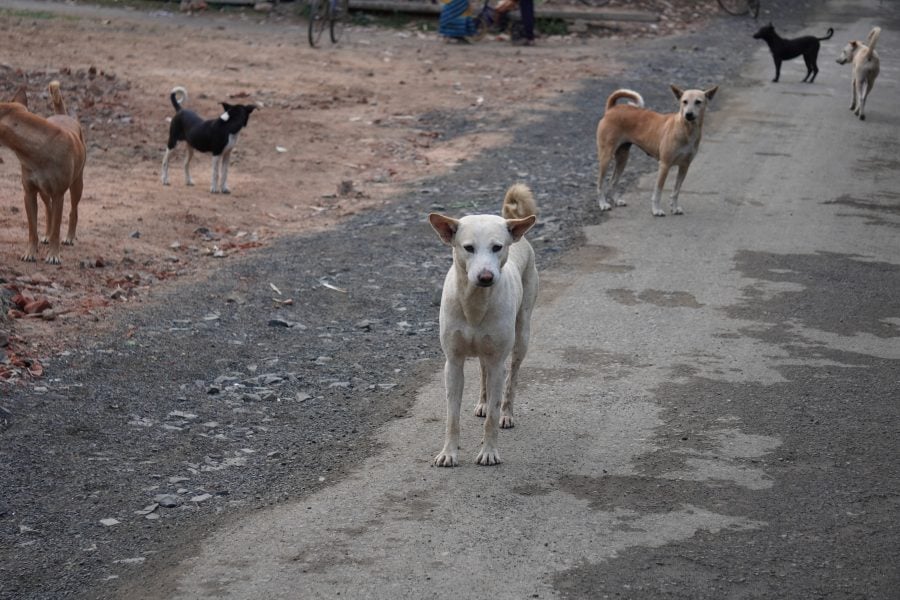
The controversial new draft law criminalizing the feeding of stray animals has sparked widespread debate among Moroccan netizens, including animal welfare advocates, as it imposes fines of up to 3,000 MAD on those who offer help.
This decision is based on Article 5 of Draft Law No. 19.25, which deals with protecting stray animals and preventing related risks. It states that “no one may care for a stray animal by sheltering, feeding, or treating it.”
Violations carry fines ranging from MAD 1,500 to MAD 3,000 for anyone breaking the rule in public spaces, including streets and shared residential buildings.
The news split public opinion between those worried about public safety and those who want to protect animals.
Government spokesperson Mustapha Baitas previously emphasized that the growing stray animal population poses a significant threat to public safety, with frequent incidents involving disease transmission, road accidents, and attacks on people.
The law aims to balance public safety and animal welfare by ensuring stray dogs receive humane care, in line with international standards like those from the World Organisation for Animal Health.
Yet, the law also imposes penalties for animal cruelty, with anyone who deliberately kills, tortures, or harms a stray facing jail time from 2 to 6 months and fines between MAD 5,000 and MAD 20,000.
Owners who fail to register their animals or keep health records face fines ranging from MAD 5,000 to MAD 15,000.
Banning the feeding of stray animals, especially cats and dogs, has long been common in many countries around the world, mainly due to health and safety concerns for both animals and people, or tourists.
Spain:
Feeding stray animals on public roads or land without permission is banned in parts of Spain, with fines that can exceed €1,000.
Only volunteers officially registered with the Animal Welfare Department are allowed to feed cats in designated areas. Feeding animals without official approval risks their safety and undermines the work of authorities and volunteers.
Madrid previously implemented a licensing system for feeding stray cats, requiring volunteers to attend a one-day course.
“I used to feel like a criminal. We had to hide to give food to the cats, and we were afraid because we could be fined,” says Araceli Jurado, who received her license in 2017 and cared for six cats in Madrid’s Moratalaz district at that time.
United Arab Emirates:
Feeding stray animals in the UAE has been prohibited for years, with fines ranging from 200 to 500 dirhams depending on the area.
In 2012, a woman feeding a cat outside her home learned from Dubai Municipality officials that such acts violate public health rules and can lead to a 200-dirham fine.
Officials explained the ban aims to prevent neighborhoods from being overrun by unvaccinated stray cats and dogs, which pose health risks and disrupt ecological balance.
They stressed the need to separate kindness from public health concerns while also recognizing the compassion behind feeding strays.
Since August 2020, Dubai has strictly enforced the ban, warning residents and visitors that feeding strays could result in fines and legal action.
Luxury communities have issued notices reminding residents that feeding stray cats can lead to fines of 500 dirhams and referrals to authorities.
While the act is prohibited by law, social media users argue that it’s not enforced unless someone complains and it becomes an issue.
Thailand:
Feeding stray dogs in Thailand is illegal and punishable by a fine of at least 2,000 THB (about $57) due to major public health concerns.
Stray dogs roam freely, breed without habitat control, and often depend on food left by people or given directly. This feeding creates a dependency that makes managing stray populations difficult, according to local media reports.
Studies show that feeding stray dogs is linked to increased dog-related problems like bite incidents, especially putting children at risk, a problem also seen in Morocco, where news of stray dog bites surfaces almost frequently.
Morocco’s Interior Minister Abdelouafi Leftit previously cited over 100,000 cases of dog bites and scratches in 2024 alone, as well as 33 deaths from rabies, 432 cases of hydatid disease, and 64 cases of cutaneous leishmaniasis.
He shared these figures in response to several international and local campaigns aimed at tarnishing the country’s image by accusing public authorities of inhumane practices, pointing out that such criticisms overlook both the scale of the problem and the steps Morocco has taken.
International experts warn that feeding can lead to more aggressive behavior when dogs feel threatened or their food source is compromised.



add your comment
Terms of publication : Not to offend the writer, people, sacred things, or attack religions or the divine self, and refrain from racist incitement and insults.