
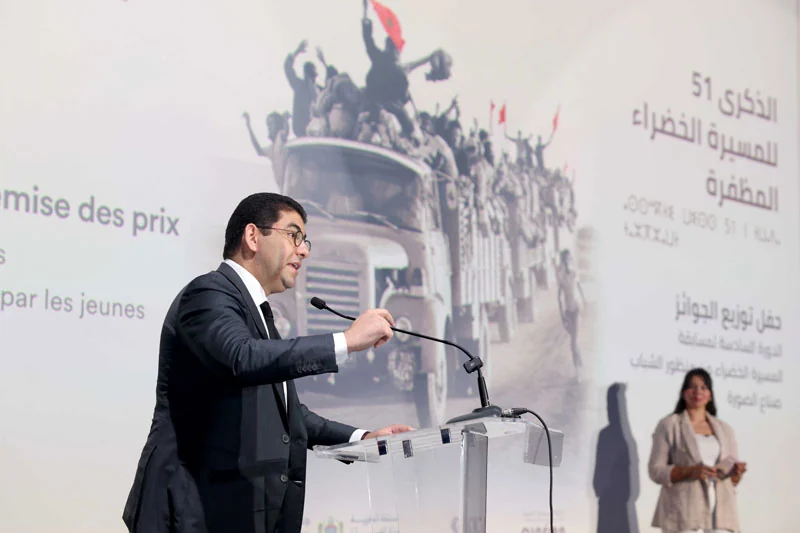
As Morocco prepares to restructure its National Press Council through Draft Law No. 26.25, the country’s Minister of Youth, Culture and Communication, Mohamed Mehdi Bensaid, emphasized the urgent need for a sustainable economic model for media outlets, stating that only a small fraction of media companies in the country are generating significant profits.
Speaking Wednesday during a parliamentary session of the Education, Culture, and Communication Committee, Bensaid acknowledged that most Moroccan media enterprises operate in what he described as a “quasi-militant” mode, surviving with minimal resources.
“There is a need to support media entrepreneurs who are striving to find a viable economic model,” he said. “Those who succeed in doing so gain editorial independence and become less reliant on continuous government or external funding.”
The minister stressed that journalism cannot be separated from media entrepreneurship. “There’s no journalism without media companies, and no company can survive without a clear economic model,” he noted.
Bensaid also clarified that since 2020, state support for the press has been redirected primarily to benefit journalists directly, particularly those working in the struggling print sector. This approach, he argued, has helped alleviate social pressures on media professionals.
He announced that a national conference on Morocco’s advertising market is scheduled for September, aiming to address the outflow of advertising revenues to foreign platforms, often without the payment of value-added tax (VAT). “Moroccan companies are losing significant financial resources to foreign advertisers who don’t pay VAT,” he said.
Defending the development of local media companies, Bensaid said their growth would benefit not only journalists but also technicians and other professionals in the sector. He also underscored the importance of upholding collective labor agreements.
On the contentious issue of publisher representation within the National Press Council, the minister rejected what he called attempts to politicize the debate. “Some see themselves as a minority and use this issue to stir controversy,” he said.
Regarding the council’s role in mediation and arbitration, Bensaid clarified that any complainant may appeal the council’s decisions or take legal action through the judiciary, which retains authority to impose prison sentences—unlike the council.
Parliamentarian Al Ayachi Farfar of the Istiqlal Party had earlier voiced concerns over the council’s arbitration powers, arguing that the framework effectively grants journalists a form of immunity.
Bensaid reiterated that one of the challenges is encouraging the public to first turn to the council for complaints, which offers non-custodial sanctions.
He also warned of the growing problem of fake news in Morocco, noting that both the government and parliament have suffered its consequences. Plans are underway, he said, for the Press Council to develop tools allowing media outlets to verify information more efficiently.
Finally, the minister addressed the issue of disciplinary procedures under the new legislation. “Sanctions will be applied in a graduated manner and may target both journalists and media companies, in line with practices in other sectors,” Bensaid concluded.






add your comment
Terms of publication : Not to offend the writer, people, sacred things, or attack religions or the divine self, and refrain from racist incitement and insults.