
A draft decree designed to implement Morocco’s ambitious multilingual education strategy is drawing criticism from key institutional stakeholders, raising doubts about the country’s readiness to roll out Tamazight instruction nationwide starting next school year.
The proposed legislation, Decree No. 2.21.448, falls under the broader Framework Law 51.17 on education reform. It seeks to define the structure and application of “linguistic engineering” across all levels of the Moroccan education system, including preschool, primary, secondary, vocational, and higher education.
However, sources close to the discussions say the current version of the draft has failed to incorporate several critical recommendations previously issued by the Higher Council for Education, Training, and Scientific Research. The council had provided its latest opinion in July 2023.
The Legal Affairs Committee, part of the national implementation body overseeing Framework Law 51.17, resumed discussions on the draft decree earlier this week. According to sources familiar with the talks, representatives from the Higher Council reiterated concerns over gaps in the text and the lack of consideration for their earlier feedback.
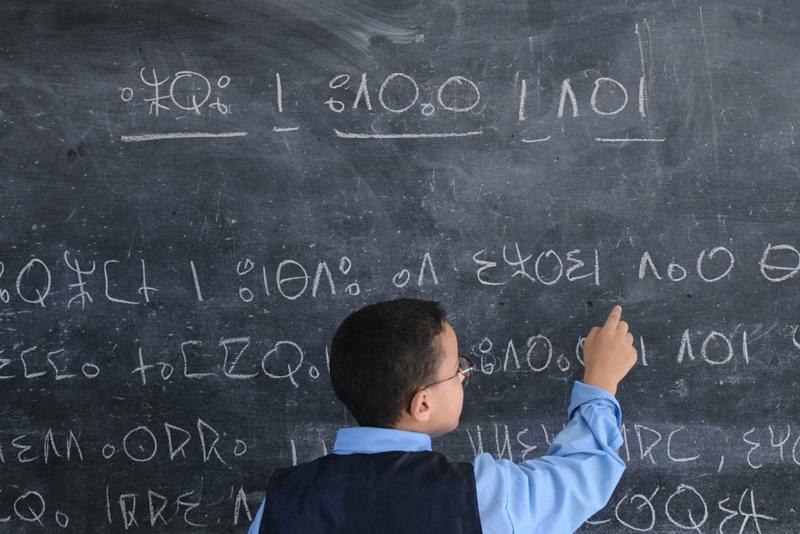
In particular, one of the main points of contention revolves around the feasibility of generalizing the teaching of Tamazight in all public and private primary schools, starting from the first grade as early as the 2025 academic year.
Officials and observers alike point to the Ministry of Education’s current shortage of qualified Tamazight instructors. While the issue is particularly acute in the private education sector, sources say the problem is systemic and extends to public schools across the country.
As the law is being formulated in the form of a decree, it will not be subject to lengthy parliamentary debate. Once approved by the Government Council and published in the official gazette, it will carry full legal weight.
In recent weeks, the government has begun engaging with representatives of private educational institutions under the umbrella of the General Confederation of Moroccan Enterprises (CGEM).
Their participation in the legislative discussion only began recently, signaling a late-stage inclusion of private stakeholders in a process that has drawn out over several months.
The draft decree maintains much of the structure from the earlier version submitted to the Higher Council. It outlines a language strategy that would introduce both Arabic and Tamazight at the preschool level, focusing on oral expression and familiarization. French or another foreign language would also be introduced in early childhood education, aligning with pedagogical practices at that stage.
In primary education, the proposal mandates instruction in Arabic, Tamazight, and French across all six grades. From the fifth year onward, schools would have the option to introduce English or Spanish, depending on available resources.
In middle school, students would continue with Arabic and French, and gradually integrate Tamazight as part of a broader rollout plan. English would become a compulsory subject and would also be used to teach scientific and technical subjects. Spanish could be offered as an optional language in select institutions, depending on staffing and capacity.
The high school curriculum would build on this foundation, with a long-term goal of achieving fluency in Tamazight. English would continue to be a key instructional language, particularly in STEM fields, while Spanish would be introduced as an optional third foreign language where needed. These changes are intended to reflect the country’s cultural diversity and respond to regional economic and social needs.
At the vocational training level, the draft introduces mandatory instruction in English across all technical programs, in addition to existing languages used in instruction. Spanish may also be added as a third training language, again subject to institutional capacity and regional demand.
In higher education, the decree calls for the expansion of academic tracks and research programs in Arabic, Tamazight, and various foreign languages, particularly English and Spanish. It also supports offering university-level instruction in multiple languages to prepare students for global competitiveness.
Despite the scope and ambition of the draft decree, serious logistical and structural challenges remain. Education experts warn that without sufficient investment in teacher training and curriculum development, the nationwide implementation of this multilingual policy could fall short.
The shortage of Tamazight teachers is especially pressing, with many regions, particularly in rural and underserved areas, lacking the human resources needed to meet the policy’s demands.
The government continues to solicit feedback from ministries and institutional partners, but for now, the draft remains under review. While the push for linguistic diversity in Moroccan classrooms reflects the country’s multicultural identity and long-term development goals, its success will depend largely on the pace and quality of implementation.
As the new school year approaches, the education ministry faces growing pressure to translate its multilingual vision into sustainable and inclusive reform.




add your comment
Terms of publication : Not to offend the writer, people, sacred things, or attack religions or the divine self, and refrain from racist incitement and insults.