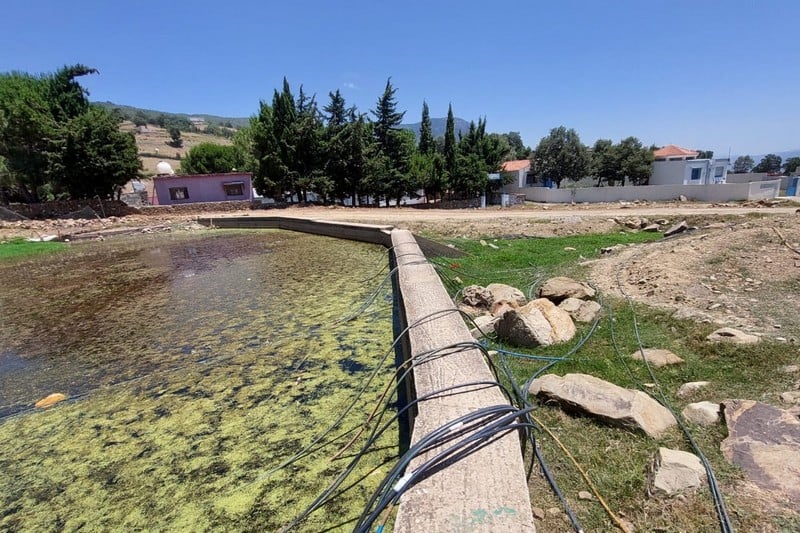
Villages in Morocco’s northern provinces of Taounate and Chefchaouen are grappling with a severe water shortage, as rising temperatures and alleged mismanagement leave entire communities without access to drinking water.
Residents have issued urgent appeals to local authorities, including the provincial governor, calling for emergency solutions amid what they describe as worsening “thirst conditions.”
Many report walking long distances with plastic containers in search of water, with no access to water trucks, fountains, or temporary relief.
“We carry bottles and walk kilometers. There are no water trucks, no taps, nothing,” one resident from Taounate said in a widely circulated video. “Children and women are suffering. We urge the governor to act.”
The crisis comes despite Taounate’s abundant water resources, including Dam Al Wahda, the largest dam in Morocco and one of the largest in Africa, which recently recorded a 57% fill rate following heavy March rains.
Critics argue the issue lies not in water scarcity but in poor management and inequitable distribution.
Abdellah El Jout, a member of the Coordination of Historic Cannabis Cultivation Areas, said Chefchaouen, which receives the highest rainfall in Morocco, now faces desert-like conditions due to unchecked water diversion.
In both provinces, residents claim water is being siphoned off illegally via hidden pipelines to irrigate illegal cannabis plantations, further straining the already limited supply.
“Taounate is a water reservoir for Morocco, but it’s stingy with its own people,” El Jout said. “Local populations suffer while water feeds agricultural lands elsewhere.”
Local activists are urging authorities to deploy water tankers to the affected villages and accelerate stalled water connection projects. They also demand stronger enforcement against unauthorized water usage.
Despite recent rainfall boosting reserves at Dam Al Wahda, which holds up to 3.5 billion cubic meters of water, access remains unequal.
The dam supplies drinking water to over 20 rural communes and irrigates 115,000 hectares of farmland, most of it in western regions far from Taounate.
As the summer heat intensifies and taps remain dry, residents are left questioning why a region so rich in water continues to suffer from chronic thirst.






add your comment
Terms of publication : Not to offend the writer, people, sacred things, or attack religions or the divine self, and refrain from racist incitement and insults.