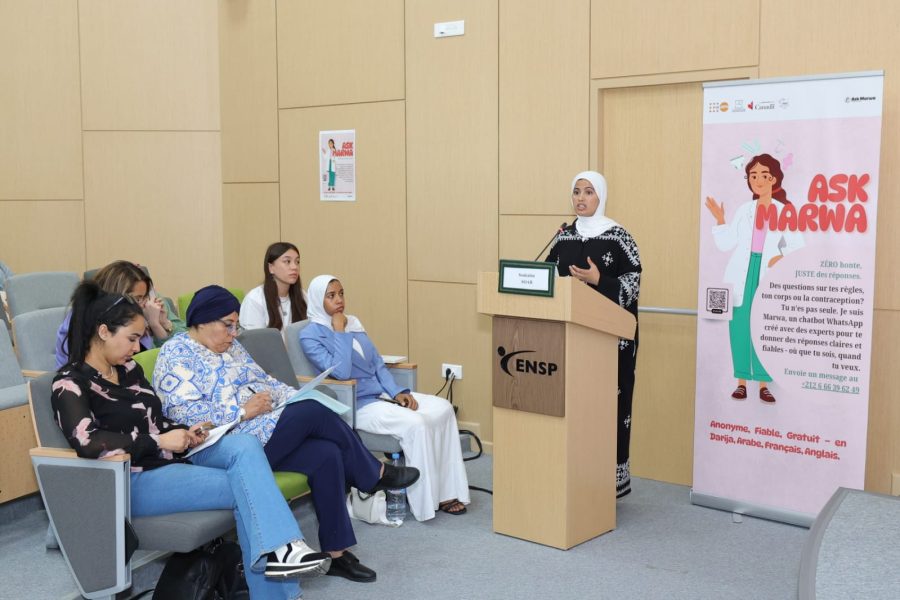
Global and local stakeholders gathered in Morocco on Wednesday, May 28, to celebrate World Menstrual Hygiene Day. The event culminated in the announcement of “Ask Marwa,” the country’s first AI-powered chatbot designed to educate and empower girls about their menstrual health.
Held under the theme “Artificial Intelligence for the Well-being of Girls,” the event brought together the United Nations Population Fund (UNFPA), Morocco’s Ministry of Health and Social Protection, the Economic, Social and Environmental Council (CESE), and various civil society actors.
Menstrual poverty was at the center of discussion, the notion indicates the inability to afford or access menstrual hygiene products, adequate sanitation facilities, and the education required to handle menstrual health effectively.
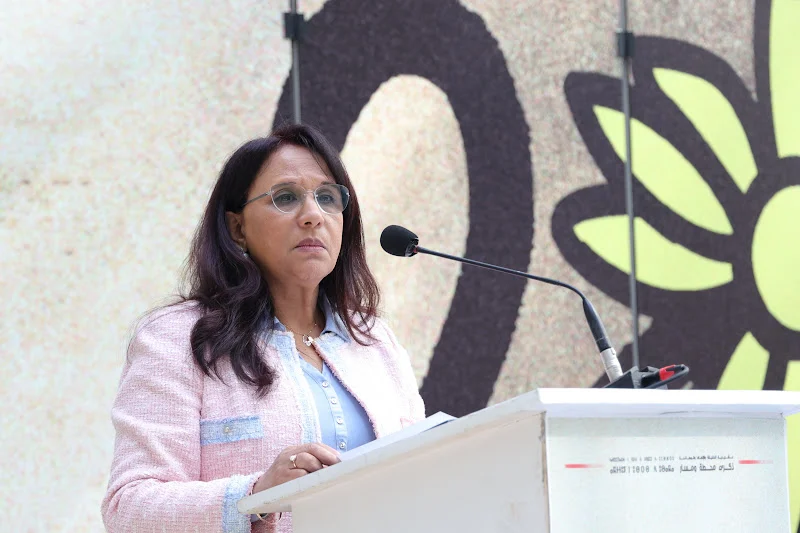
Marielle Sander, representative of the United Nations Population Fund (UNFPA) in Morocco, described menstrual poverty as a “silent violence that hinders girls’ autonomy and comes with a heavy economic cost.”
Sander’s speech underscored the importance of breaking misconceptions around menstruation to ensure girls have access to proper hygiene, education, and protection from harmful practices.
“Ask Marwa”, the AI-powered chatbot, is a step in the right direction. A joint effort between the Ministry of Health and Social Protection and Project Soar, the AI tool is set to launch on June 18 and will expand access to health and hygiene information for women and girls across Morocco, while helping to break taboos.
“Periods are neither dirty nor shameful,” says Maryam Montague, president of Project Soar, “They are natural, universal, and invisible. But we are here to make them visible.”
The initiative aligns with Morocco’s National Strategy for Sexual and Reproductive Health, while the chosen theme reflects a bold and innovative vision, emphasizing how emerging technologies can transform access to information, tailor services to real needs, and strengthen prevention efforts.
“Ask Marwa” will be accessible via WhatsApp, providing a confidential experience and reliable medical advice in Darija, Morocco’s national dialect, Arabic, French, and English.


add your comment
Terms of publication : Not to offend the writer, people, sacred things, or attack religions or the divine self, and refrain from racist incitement and insults.