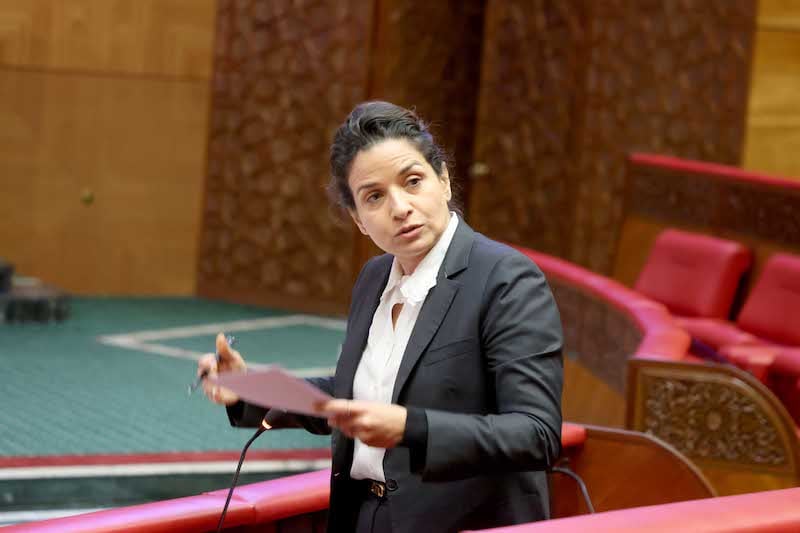
Morocco and Nigeria have completed key feasibility and engineering studies for the 25 billion dollar Africa-Atlantic gas pipeline and are now moving to establish a joint special purpose vehicle (SPV) to lead its implementation, Energy Transition Minister Leila Benali announced before the House of Councillors.
Benali confirmed that the intergovernmental agreement and the host country agreement have been approved by all member states involved, setting the stage for investment structuring and cross-border coordination.
The SPV, currently being finalized between Rabat and Abuja, will manage the next phases of development, financing, and construction.
The pipeline, which will span over 6,000 km and cross 13 African countries, is expected to transport 15 to 30 billion cubic meters of natural gas annually, providing energy to nearly 400 million people. A final investment decision is anticipated by the end of 2025.
Benali described the project as a cornerstone of Morocco’s strategy to become a regional energy corridor connecting Africa, Europe, and the Atlantic Basin, and emphasized its potential to stimulate industrial, digital, and job-generating growth across West Africa.
In tandem, Morocco launched a national gas infrastructure initiative last April, aiming to connect the ports of Nador, Kenitra, and Mohammedia to Dakhla, and ultimately linking to the Africa-Atlantic pipeline.
Benali also revealed that installed electricity capacity has reached 12 GW in 2025, with renewables accounting for 5.4 GW, reflecting over a 5% increase since 2021.
Investment in the grid has quintupled, while annual renewable investments have quadrupled.
Other reforms include a draft law to transform the National Office of Hydrocarbons and Mines into a joint-stock company and new mandates for energy efficiency agencies to include decarbonization and the circular economy.
Benali also highlighted falling electricity costs, driven by competitive tenders like the Noor Atlas solar project, which offered prices below 0.40 MAD/kWh.
She affirmed that once structural reforms are complete, these savings will translate directly to consumer bills.




add your comment
Terms of publication : Not to offend the writer, people, sacred things, or attack religions or the divine self, and refrain from racist incitement and insults.