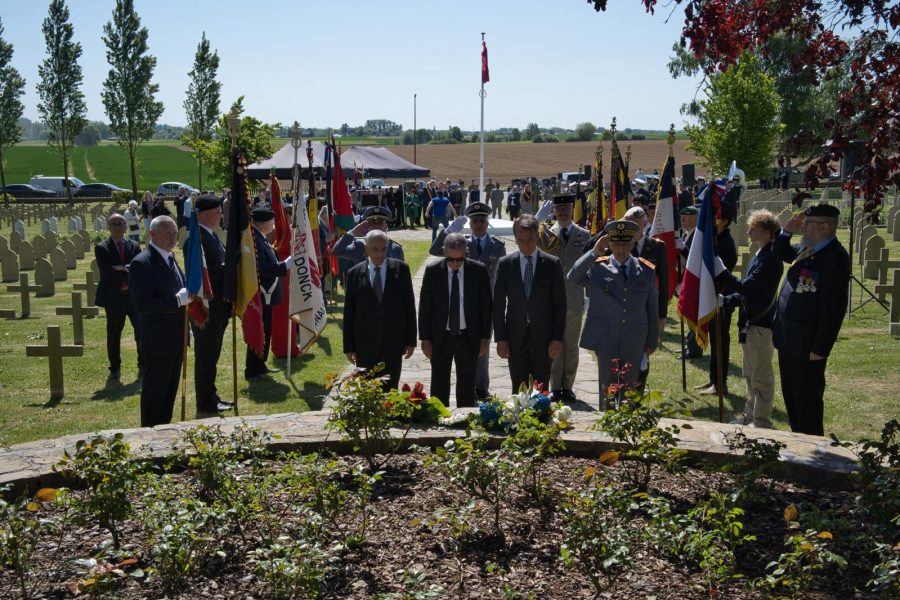
Belgian towns Gembloux and Chastre held commemorative ceremonies on Sunday to mark the 85th anniversary of the Battle of Gembloux, paying tribute to Moroccan soldiers who fought and died alongside Allied forces in the face of Nazi and fascist aggression during World War II.
Ceremonies took place at the Fourth Army Corps memorial in Gembloux and the French national military cemetery in Chastre, about 40 kilometers south of Brussels. Moroccan officials and members of the diaspora gathered alongside Belgian and French dignitaries to honor the fallen.
The Moroccan delegation included Mustapha El Ktiri, High Commissioner for Former Resistance Fighters and Army of Liberation Members; General Youssef El Mehdi, head of the Royal Armed Forces’ military history directorate; and Moroccan Ambassador to Belgium Mohamed Ameur.
Speakers emphasized the courage and unity displayed by Moroccan troops during the May 1940 battle, highlighting their integration into Allied ranks regardless of race, religion, or origin. They called for sustained remembrance of their sacrifices as a model for future generations and a reaffirmation of shared human values.
Gembloux, 11 mei 2025: De heer Ambassadeur nam vandaag deel aan de jaarlijkse herdenkingsceremonie van de Slag bij Gembloux, waar honderden Marokkaanse soldaten in mei 1940 het leven lieten.
Meer details: https://t.co/gOEFGaZVTH pic.twitter.com/MqOybpO8hC
— Le Maroc en Belgique et au Luxembourg (@AmbMarocBeLux) May 11, 2025
El Ktiri described the battle as “a heroic saga reflecting the loyalty and bravery of Moroccan soldiers” who answered King Mohammed V’s call to support the Allies. He noted the event underscores Morocco’s long-standing commitment to universal principles and its historical role in defending freedom.
Belgian State Minister André Flahaut also paid tribute to the foreign troops who died fighting for Europe’s liberty. “We must remember those who came from afar to defend Belgium and Europe against occupation,” he said, stressing Morocco’s prominent contribution.
On May 14, 1940, Moroccan forces—specifically the 7th Regiment—arrived at the front after a two-day march and immediately engaged in fierce combat with Nazi forces. Despite suffering heavy casualties and facing encirclement, the Moroccan troops held their ground, playing a key role in delaying the German advance.
Many of the Moroccan soldiers killed in the battle remain buried in Chastre, now a solemn site of remembrance and reflection.

add your comment
Terms of publication : Not to offend the writer, people, sacred things, or attack religions or the divine self, and refrain from racist incitement and insults.