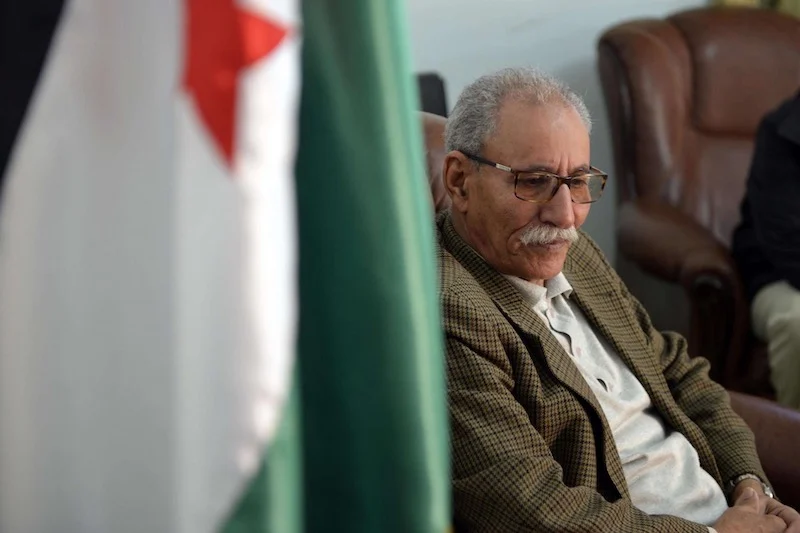
Brahim Bachir Bella, who serves as the Polisario Front’s Interior Minister, has acknowledged that “Morocco’s proposed autonomy plan is now among the options being seriously considered to resolve the Sahara conflict,” marking a notable departure from Polisario’s long-held hardline stance.
He also expressed readiness to “engage in UN-led negotiations, as long as they are serious and based on the principle of self-determination.”
Bella’s remarks come at a moment of deepening crisis in the Tindouf camps, where violent protests have erupted earlier this month, following the killing of an unarmed civilian by Algerian forces near the Al Arkoub area.
The incident has triggered widespread anger and frustration, with public demonstrations against both the Polisario leadership and Algerian authorities, calling for a return to Morocco—a reflection of growing disillusionment among Sahrawis who have lived for decades in limbo under Algerian control.
At the same time, international backing for Morocco’s autonomy plan continues to grow, with the United States reaffirming its support, calling the initiative “the only serious, credible, and realistic solution” to the conflict, building on the recognition first formalized in 2020 under President Donald Trump.
Moroccan Foreign Minister Nasser Bourita has also intensified a diplomatic push across key capitals, including Paris, Madrid, and several in Eastern Europe—Slovenia, Hungary, Estonia, Moldova, and Croatia—to consolidate support for Morocco’s autonomy plan under UN auspices and strengthen bilateral ties to advance Morocco’s position on the Sahara.
Together, the unrest within the camps, coupled with shifting diplomatic dynamics, is intensifying pressure on the Polisario to reassess its position and prepare those in the camps for a different path.
Polisario retreat signal:
Taleb Bouya Abahazem, a prominent figure from the Moroccan Sahrawi tribes, views the apparent shift in tone of the so-called Minister of the Interior as a forced move, indicative of internal pressures and international influence.
The Deputy President of the International Union for Support of Autonomy told Hespress that the key point is that the statement came from the Interior Minister, not Foreign Affairs, signaling an effort to calm rising tensions in the Tindouf camps amid stalled progress and reduced international support.
This comes amid a deepening humanitarian and political crisis in the camps, marked by shrinking international aid and growing accusations of mismanagement and diversion of humanitarian resources by the Polisario leadership.
Abahazem noted that “the Polisario is on the defensive as international support grows for Morocco’s autonomy initiative, seen as a realistic and credible solution aligned with global consensus,” with countries like Hungary, Estonia, and others backing it.
He believes the recent statement hints that self-determination may no longer mean separation, with autonomy under Moroccan rule now debated in the camps, aiming to ease internal divisions and counter international isolation, especially with calls to label the Polisario a regional security threat.
This occurs as a new report by the Foundation for Defense of Democracies (FDD) urges “the US to designate the Polisario Front as a foreign terrorist organization due to alleged ties with Iran, Hezbollah, and jihadist networks.”
Abahazem highlighted that the majority of the Sahrawi population supports Morocco’s autonomy initiative, viewing the Polisario’s retreat as a sign that the long-standing conflict, which has hindered regional development and integration, is nearing resolution.
Paradox in play:
Said Bouchakouk, an academic expert on development, argues that the recent statements from the so-called Polisario Interior Minister highlight confusion and contradictions in their political discourse, particularly as global consensus grows around a political solution to the Sahara conflict.
He emphasized that “this reflects the Polisario’s lack of decision-making independence, aligning closely with Algeria’s military regime,” which provides them with financial, military, and diplomatic support.
Bouchakouk believes that the shifting geopolitical situation in the Sahel and Sahara, along with rising security threats, makes Morocco’s 2007 autonomy plan the best choice for regional stability. He criticized the Polisario leadership and Algeria for their growing isolation, unable to adapt to changing realities.
He concluded that while the Polisario tries to appear open to dialogue, their actions reveal diplomatic failure, while Morocco’s diplomatic success strengthens its international presence and weakens the separatist cause.





add your comment
Terms of publication : Not to offend the writer, people, sacred things, or attack religions or the divine self, and refrain from racist incitement and insults.