Despite the announcement of Joe Biden’s victory in the US presidential election, Donald Trump did not concede defeat and announced legal action. The transition is likely to be tense in a highly divided America.
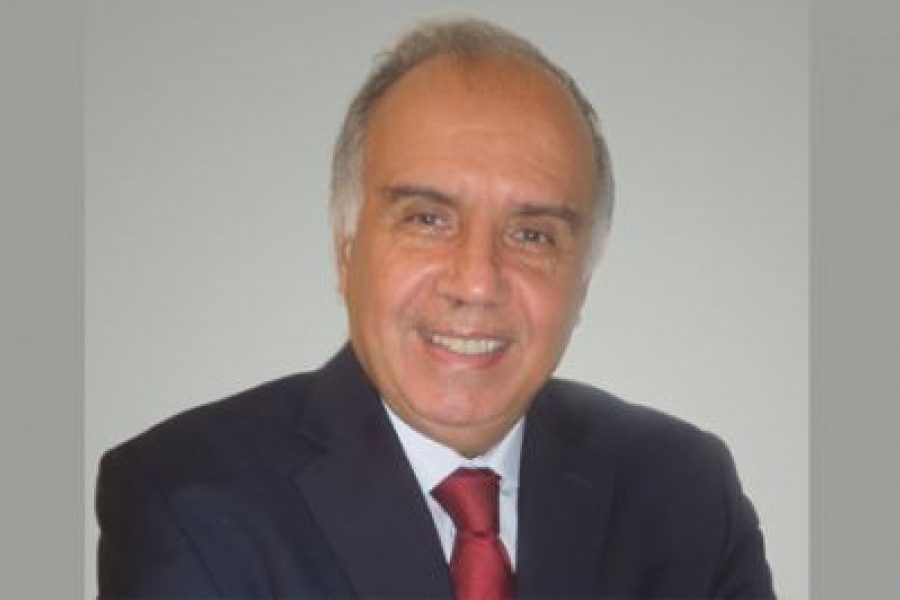
In an interview with the Moroccan News Agency (MAP) in Washington, Uri Dadush, Senior Fellow at the Policy Center for the New South (PCNS) decodes the stakes of this election and the challenges ahead for the future tenant of the White House on domestic and foreign fronts. He also outlines the prospects of US-Morocco Partnership. On this last point, Former World Bank senior official and Principal of Economic Policy International, LLC, expects “no significant change” in these relations that will continue to be “cordial and mutually beneficial.”
For the United States, Morocco is both “an example of moderate policies and a stable country in an unstable region,” notes the university professor and consultant at Mckinsey and Co.
– What are your main takeaways from a US presidential race that was very tense and too close to call ?
The polarization of the electorate is extreme, but in the end Biden’s victory is clear. He won the popular vote by over 4 million and the electoral college by a wide margin (even though Georgia and North Carolina are still to be called).
– President Donald Trump is still refusing to concede, meanwhile president-elect Joe Biden has already launched a transitional plan to control the pandemic and tackle the economic challenges. How do you see the dynamics ahead in Washington DC?
Biden will be sworn in January whether Trump concedes or not, as the legal challenges are certain to fail on lack of evidence that material infractions occurred. However, the transition will be more complicated given the lack of collaboration. More importantly, Trump undermines the faith of his supporters in elections and institutions by maintaining that the election was stolen. His stance could also be a sign that he intends to play an obstructive role as de facto leader of the Republican base even after he leaves the Presidency. The implications for the Biden presidency and, indeed, for the cohesion of the Republican party could turn out to be major – making all aspects of US governance more complicated. How this turns out is very difficult to tell at present.
– On foreign policy, do you expect sharp divergences between Trump and Biden administrations?
Yes. Biden will seek to revitalize alliances with Europe and Japan, to return to a supportive stance of multilateral institutions, to reduce trade tensions, to rejoin the Paris Agreement, etc. He will be tough on China – which is viewed as the US’s main geopolitical rival — but he will not want to treat China as an enemy. Instead, he will deal with China as a competitor with whom deals can be made, indeed have to be made. Biden is a realist and he understands that China is not going away. He will try and make a deal with Iran and – while supporting Israel and the peace process with Arab countries that Trump promoted – he will take a more equidistant stance on the Israel-Palestine conflict.
– Finally, the close relationship between Morocco and the United States extends at all levels from economic to social and cultural. How do you see the way forward under the Biden administration?
I do not see a significant shift in US-Morocco ties, and they will continue to be cordial and mutually beneficial under Biden. The US sees Morocco as an example of moderate policies, and as a stable country in an unstable region, one that is making progress towards pluralistic and representative institutions. The Free Trade Agreement between the US and Morocco is an important pillar of the relationship (…). The new Administration provides a good opportunity for both the parties to rethink how their commercial partnership can be made more productive. This would help Morocco cement its friendship with the United States. It is also worth noting that, by increasing its commercial presence in the US, Morocco would reduce its excessive reliance on European markets, which are – it should be recognized – the slowest growing in the world.



add your comment
Terms of publication : Not to offend the writer, people, sacred things, or attack religions or the divine self, and refrain from racist incitement and insults.